
posted on September 21, 2026
Looking for ways to boost your income? You might be wondering if renting out your car worth it.
Listing your vehicle on car rental platforms like Turo can help offset some ownership costs and turn a depreciating asset into an additional source of revenue. On Turo, you can rent out your car for anywhere from one day to a few months and earn passive income, hassle-free.
Before you list your car on Turo, it’s helpful to understand how making money on Turo works, what costs and considerations you need to factor in, and how to set your vehicle listing up for success. Ultimately, renting your car out on Turo is one of the easiest ways to earn extra money from a vehicle that would otherwise sit idle in your driveway.
In this guide, we’ll cover:
- The short answer: Is renting out your car on Turo worth it?
- What you could earn renting out your car on Turo
- Real costs to factor in
- Weighing the pros and cons of hosting on Turo
- How to maximize your earning potential on Turo
- How to list your car on Turo
- Who is best suited to becoming a host on Turo?
- Frequently asked questions
The short answer: Is renting out your car on Turo worth it?
Renting out your car on Turo is a savvy side hustle that can let you passively earn extra income (especially if your vehicle sits unused for long stretches). Becoming a Turo host is a straightforward process, and the platform handles all the admin and heavy lifting (like guest screenings and customer support), so you don’t have to figure out the logistics on your own.
The car owners who tend to get the most out of Turo include those:
- With an underused vehicle (such as a second or third car) that sits primarily unused in a garage or driveway
- With a desirable, reliable, and well-maintained vehicle that’s in reasonably new condition
- Situated within easy access of convenient locations like major airports, city centers, college towns, or popular tourist destinations
While there are some situations where renting your car on Turo doesn’t make sense (such as if you have no backup transportation, rely on your car for daily use, and live in a very remote or low-demand area), many vehicle owners find Turo to be a practical way to earn money from an existing asset.
By figuring out how much you could earn on Turo, factoring in the costs of renting out your car, and weighing the pros and cons, you can make an informed decision about whether becoming a Turo host is right for you.

What you could earn renting out your car on Turo
On Turo, hosts in the US earn an average of $10,489* per car per year. That works out to be $874* per month with cars booked for 15* days per month (on average).
Typically, Turo hosts earn more as their portfolio expands. For example, hosts with 3 cars earned $32,547* average annual earnings, while hosts with 5 cars earned $52,445* average annual earnings.
It makes sense why people rent out their cars on Turo**. Globally, there are over 3.6M+ active guests and 340,000+ active vehicles operating across 28,000+ cities.
Earnings on Turo vary by vehicle type, location, and how often the car is listed as available to rent. The platform helps hosts set the right price for their vehicle using dynamic pricing, which calculates the optimal daily rate (balancing price with booking probability).
Real costs to factor in
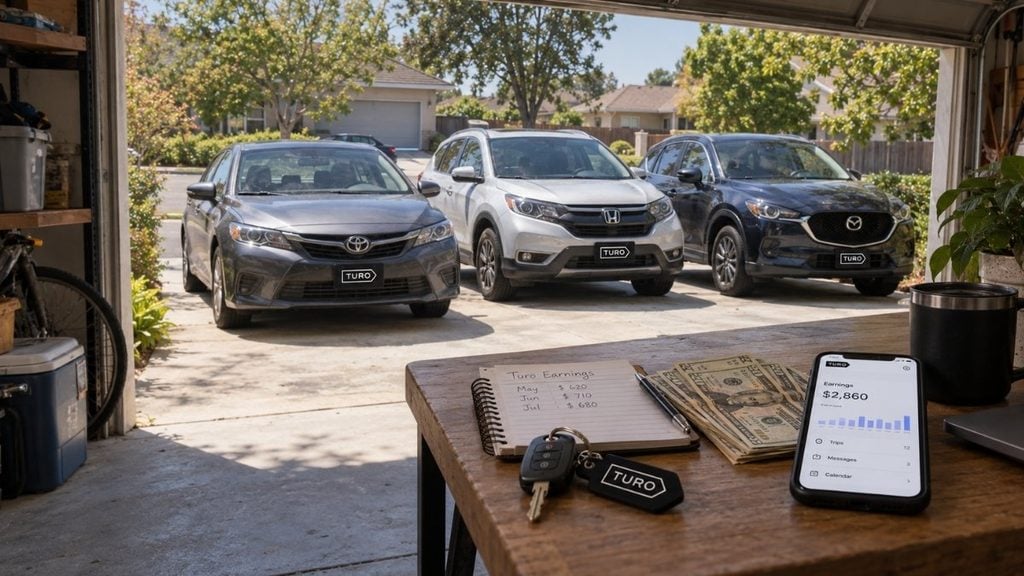
There are several costs to consider when renting out your car on Turo. While there are no hidden fees, there are common expenses to keep in mind, including:
- Wear and tear: While not an upfront cost, renting out your car means additional mileage and more frequent usage, which can lead to signs of wear and tear, minor interior damage, as well as depreciation.
- Cleaning fees: To meet Turo’s cleaning policy, you must ensure your car is cleaned between trips, and regular professional cleaning is highly recommended.
- Time: Tasks like photographing and listing the car, communicating with guests, and handling pickup/drop-off are all part of being a Turo host. Make sure to factor this time into your schedule and ensure you can make it work alongside your other commitments.
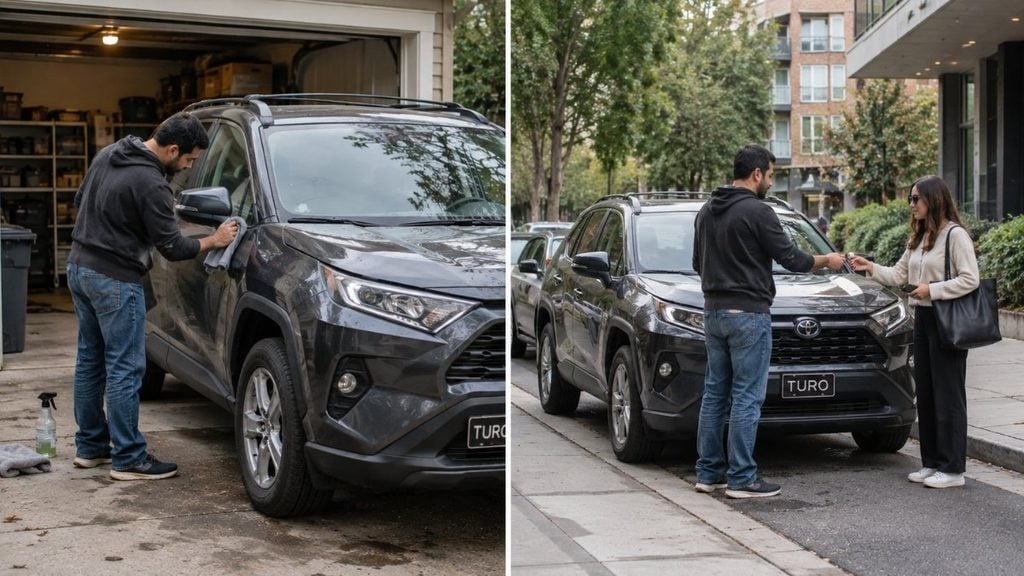
Turo doesn’t charge hosts a fixed listing or rental fee. Instead, the platform uses a “host take rate” to show the percentages you’ll earn from each trip booked. This figure is determined by the earnings plan you choose (which determines your out-of-pocket expenses if your car is damaged during a booking).
Variable host take rates in select US markets
For example, Turo applies a variable host share in Austin, Dallas, Detroit, Las Vegas, Maui, Philadelphia, Phoenix, San Diego, and Seattle. Host share in these markets will vary based on earnings plan and how far in advance a guest books a trip.
The table below shows the host share for hosts in these markets based on the earnings plan and number of days in advance that a guest books.
| Days in advance | More peace of mind plan | Balanced plan | More earnings plan |
|---|---|---|---|
| 28+ days | 80% | 90% | 100% |
| 14-27 days | 75% | 85% | 95% |
| 3-13 days | 70% | 80% | 90% |
| 0-2 days | 65% | 75% | 85% |
Weighing the pros and cons of hosting on Turo
If you’re looking to turn an unused second car into a revenue-generating rental car, there are plenty of perks worth considering.
With no surprise fees, liability insurance included as standard, and the ability to let the platform set a competitive rental price for you, hosting on Turo can be a smart way to earn. It’s also important to consider the potential downsides to ensure you know exactly what to expect as a Turo host.
| Pros of hosting on Turo | Cons of hosting on Turo |
|---|---|
| Turns an idle asset into income, especially for a second car or one used occasionally | Added wear on the vehicle, which affects resale value over time |
| Flexible, low-commitment; no fixed schedule required and the ability to customize when your car is available to book | Risk of interior/exterior damage from guest use |
| Up to $750,000 in liability insurance included for third-party claims, and the ability to choose from varying levels of vehicle damage reimbursements | Not truly passive income; requires responsiveness, calendar management, and occasional troubleshooting |
| Guest screening and reviews add a layer of trust | Income isn’t guaranteed or consistent, especially for a new listing still building reviews |
| 24/7 roadside assistance available for all trips | Potential earnings are dependent on the vehicle type, condition, location, and how often it’s available to rent |
Tip from the author: Looking for a hands-off way to rent your car out on Turo? Consider Turo’s passive income hosting options. Turo matches you with an experienced host in your area. They’ll handle everything, from listing your car to guest communication and more.
How to maximize your earning potential on Turo
The best ways to increase your earning potential on Turo are to optimize your listing, boost your vehicle’s visibility in the search results, increase your performance rating as a host, and consider listing multiple vehicles on the platform.
- Upload 10+ high-quality, well-lit photos from multiple angles: This is one of the biggest drivers of click-through and is the best way to show vehicle condition, cleanliness, and unique features.
- Opt into Dynamic Pricing: Use Turo’s default pricing tool as a starting point, and adjust based on local demand and seasonality.
- Keep the calendar as open as possible: Availability is one of the biggest levers for bookings, so aim to make your vehicle as readily available as possible (and consider lowering your advance notice windows).
- Consider delivery: Offering free airport and custom delivery widens the pool of interested guests and gives your listing a competitive advantage.
- Keep the car clean and well-maintained: This supports strong reviews, which in turn supports future bookings.
- Stay active on the platform: Keep your calendar up to date, update listing photos, and respond promptly to requests to change a trip.
- Pay attention to your performance as a host: Achieve and maintain a high performance rating; becoming an All-Star Host gives you more visibility, extra bookings, and exclusive rewards.
- Increase your portfolio: The more vehicles you rent out, the more potential income you can earn. Keep in mind that new cars and unique vehicles tend to be more attractive to potential guests, as these are vehicle types they won’t be able to find in a rental car company’s fleet.
Learn more ways to increase your earning potential on Turo with our guide to optimizing your vehicle listing.

How to list your car on Turo
Ready to list your car on Turo? As long as you’re at least 21 years old, you can follow these step-by-step guidelines to get started:
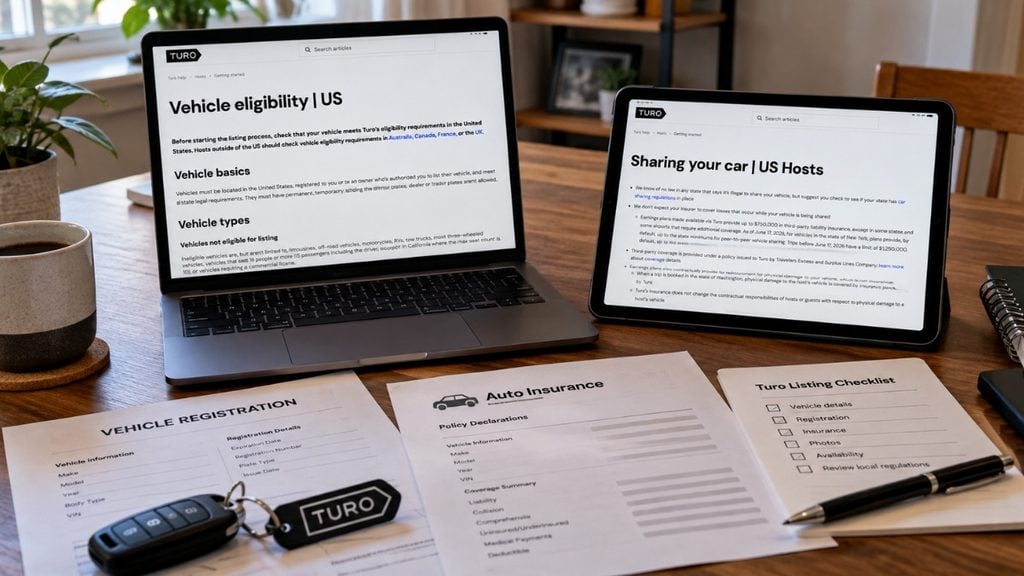
- Confirm you meet Turo’s minimum requirements: Check that you meet vehicle eligibility requirements, have valid car insurance, meet legal and insurance standards and requirements for your region, and be sure to acknowledge the Vehicle tracking and technology policy.
- Become a host: Use the Turo app or website to get started.
- Create your listing: Enter your car’s license plate number, vehicle make, model, and year, and upload at least 10 high-resolution photos. Check and confirm that the features list is accurate (this is automatically generated by Turo).
- Confirm your vehicle settings: Set your vehicle’s availability and specific pickup/return hours in your host settings. Adjust your trip preferences to include advance notice, trip buffers, and trip duration settings so you only receive trips that fit your schedule.
- Complete your host orientation webinar: Make sure to attend a brief virtual host orientation webinar; this is mandatory before your listing can go live.
Who is best suited to becoming a host on Turo?
Not sure if renting your car on Turo is the right choice for your situation? The hosts who tend to find the most success on Turo include:
- Owners with a second car, a car used only part of the week, or one sitting unused for long stretches (e.g., while traveling overseas).
- Owners of unique, EV, or in-demand vehicles that can command stronger interest and pricing.
- Owners who are comfortable with occasional guest communication and light logistics in exchange for extra income.
Keep in mind that if you rely on the car daily and are unwilling to handle guest communication, becoming a Turo host might be a less ideal fit.
Frequently asked questions
Is it worth it to rent out my car on Turo?
For many hosts, listing a car on Turo can be a great way to put an underused vehicle to work and earn extra income. How much you can earn depends on factors like your vehicle, local demand, pricing, and availability, but hosts have control over when their car is available to book, making it easier to fit hosting around their schedule.
How much does it cost to rent out a car on Turo?
Listing a car on Turo is free, with no sign-up or monthly fees. When a trip is booked, hosts choose from available protection plans that determine what percentage of the trip price they keep and how much they may be responsible for if their vehicle is damaged during the trip.
Is renting out a car considered passive income?
Renting out a car is more accurately described as semi-passive income. While it doesn’t require active daily work, hosts do need to respond to booking requests, manage their calendar, and occasionally coordinate pickup, drop-off, and cleaning. However, you can consider a more passive method of hosting by working with a co-host on Turo.
What type of car is best for renting out on Turo?
Reliable, well-maintained vehicles in good condition tend to perform best on Turo, and vehicles that would otherwise sit unused for meaningful stretches of time offer the clearest financial case for hosting.
See what your car could earn on Turo
The best way to know if renting out your car is worth it isn’t to guess — it’s to check what your specific vehicle could earn based on your make, model, and location. Turo’s Carculator takes the guesswork out of the equation, giving you a realistic starting point based on real demand in your area.
Ready to see what your car is worth? Check your car’s earning potential and turn downtime into extra income on your terms.
*The annual figure was calculated by taking the average monthly earnings from US Turo hosts during 2025 (January 1, 2025 through December 31, 2025) and multiplying by 12. Earnings have not been reduced to reflect vehicle ownership costs like maintenance and insurance. Figures are rounded down to the nearest dollar.
**Total host earnings calculated from the company’s inception to October 31 2025. Number of global active guests, vehicles, and cities based on the last 12 calendar months from November 2025
Share your car, earn extra cash
Cover your car payments or earn some extra cash by sharing your car whenever you’re not using it.
Get startedHit the road
Browse thousands of cars for every occasion and budget near you, or wherever you’re going.
Browse cars
Lucinda Starr
Lucinda Starr is a travel and automotive writer with 5+ years of firsthand experience road-tripping across Australia, New Zealand, and beyond. She writes road trip guides for Turo, drawing on her experience behind the wheel to share practical insights on long-distance drives, destinations, and vehicles. Her travels have taken her across Australia’s East Coast, Victoria’s Great Ocean Road, the Northern Rivers, Byron Bay, and both islands of New Zealand. One of her most memorable journeys was an 11-day, 2,600+ km route from Auckland to Punakaiki and Queenstown. Lucinda has a particular passion for classic, rugged 4WD vehicles and the freedom they bring to exploring new places.