
posted on October 6, 2026
Owning a car is pitched as the most flexible way to get around, but buying and maintaining a car comes with plenty of hidden costs that most owners don’t realize.
Beyond the sale price and monthly loan payments, there are unexpected repairs, rising insurance premiums, and hefty fuel costs that quickly turn this asset into an ongoing expense.
But owning your car doesn’t have to be the only option. Monthly car rentals on Turo give you a car for an extended period without taking on many of the ongoing costs and responsibilities of vehicle ownership.
In this guide:
- The hidden costs of owning a car
- Adding it all up: the true cost of ownership
- How monthly car rental on Turo works
- Common scenarios where renting a car saves you money
- Myths and misconceptions about long-term car rental, debunked
- Hidden ways to save with Turo
- Frequently asked questions about car ownership costs
The hidden costs of owning a car
From registration fees to title transfer fees and even fuel expenses, owning a car comes with plenty of hidden costs. While repairs, routine maintenance, and even depreciation might seem small, stacked together they add up to costs not reflected in the initial purchase price.
Depreciation
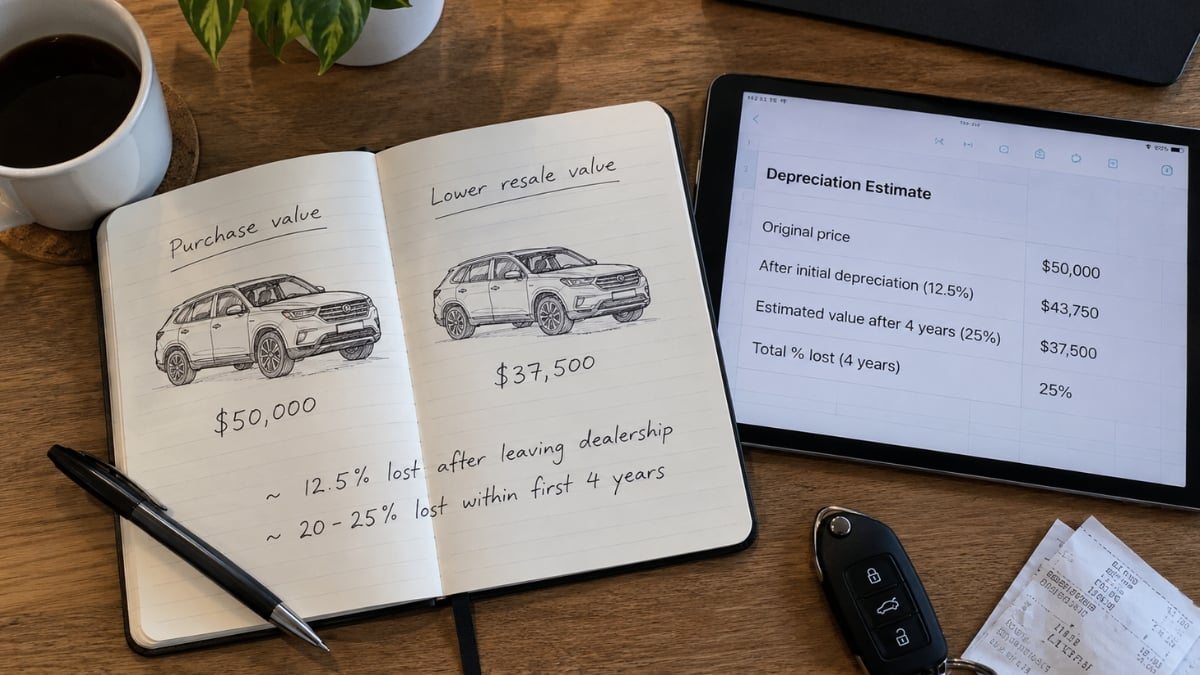
The single most overlooked car ownership cost is depreciation (a.k.a. the silent loss of value over time). Depreciation starts the moment you buy a car, with new vehicles losing around 12.5% of their value as soon as you drive it off the dealership lot. Within the first four years, cars typically lose 20-25% of their value, with depreciation continuing each year after that steadily.
Depreciation is steepest in the first year, as retail pricing for new cars is much higher than what dealers or private buyers will pay. While it’s possible to sell a used car in good condition for a reasonable price, the resale value is significantly lower than the retail price you’ve paid, meaning you’ll never recoup the total purchase price.
Depreciation is such a significant (but hidden) vehicle ownership cost because it doesn’t happen in a single transaction. There’s no immediate hit to your wallet or money physically leaving your account. Instead, it stays invisible until you try to sell the car or trade it in at a dealership. If you’ve taken out a car loan, depreciation can have an even bigger impact: if your car depreciates faster than you’re able to pay down the loan’s principal amount, you could end up owing more than the vehicle is worth.
Financing and interest costs
When most buyers take out a car loan, many overlook how interest rates and loan terms can impact the total price. While most buyers focus on monthly loan payments, interest payments can have a huge impact over the life of the loan.
Let’s say you’ve taken out a car loan of $30,000 at a 7% interest rate. The length of the loan has a big impact on the total vehicle cost, meaning you’d be paying around $5,000 extra in this scenario. Plus, if you’ve taken out a variable loan and your lender decides to increase interest rates, your monthly payments will increase.
| Metric | Short-Term Loan (3 Years) | Long-Term Loan (7 Years) |
|---|---|---|
| Monthly Payment | ~$927 | ~$452 |
| Total Interest Paid | ~$3,380 | ~$8,000+ |
| Total Vehicle Cost | ~$33,380 | ~$38,000+ |
While longer loan terms generally have lower monthly payments, the amount you’ll pay in interest over the entire loan term is higher. Plus, there may be loan establishment fees and account-keeping fees that increase the total amount you’ll pay, too.
Insurance premiums
Insurance premiums are one of the most expensive hidden costs of owning a car and often catch owners by surprise. The biggest challenge is that premiums aren’t static. Most owners see their premiums rise over time, especially as inflation rises, repair costs increase, and severe weather events become more frequent.
When car insurance renewal comes up, car owners can be surprised by an unexpected rise in premiums. Plus, it’s common for insurers to charge extra fees for things like canceling policies mid-term, as well as admin fees.

Registration, title, and inspection fees
Registration, title, and inspection fees are some of the most overlooked costs of car ownership. While buyers often focus on the car’s sticker price or monthly loan payments, these upfront and ongoing costs vary widely and can add up quickly.
Buying a car means paying to put it legally in your name, which usually includes a title transfer and sales tax at purchase. After that come the recurring costs: registration renewals, plus safety or emissions inspections in states that require them.
Because these fees seem small, people often overlook them. There’s no single price tag, just ongoing DMV visits, forms, and renewal notices spread across the year.
Maintenance and unexpected repairs
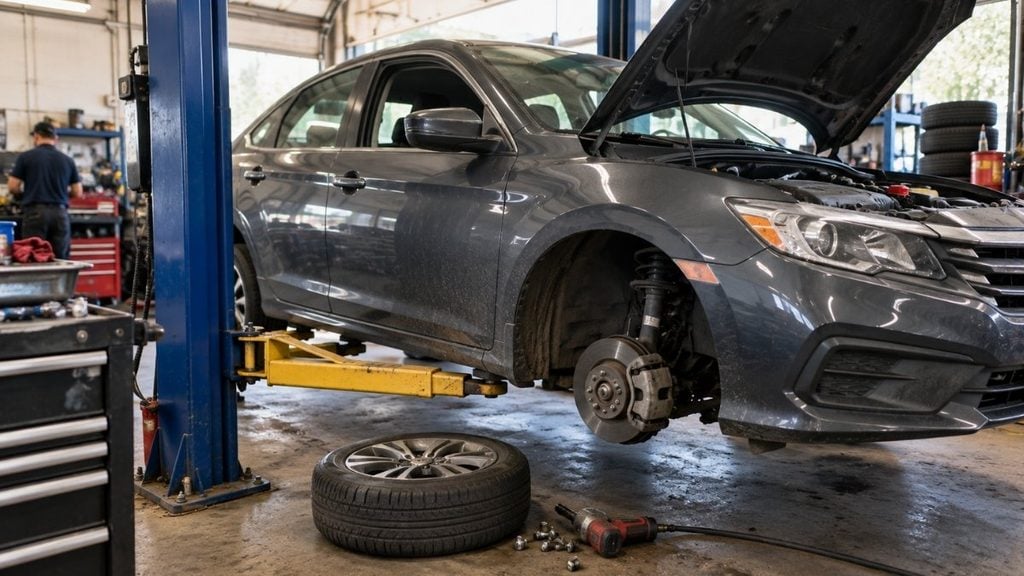
While routine maintenance (like oil changes, tire rotations, and new brakes) is somewhat predictable, maintenance and repair costs can often pop up unexpectedly.
Unexpected repairs can throw off your monthly budget and tend to increase in frequency as your car ages and comes out of warranty. Plus, if your car has high-tech features (like integrated sensors, cameras, and complex infotainment systems), repairs can snowball into big expenses.
Plus, skipping minor work and delaying regular maintenance can actually cost you more in the long run, turning small fixes into major mechanical failures and part replacements.
Fuel, tolls, and parking
Fuel costs, tolls, and parking fees are some of the most overlooked costs of owning and running a car. These smaller transactions may seem low-value, but they add up over time.
Fuel (or even EV charging) costs fluctuate with market prices, so they’re harder to budget for than a fixed payment. How often you drive, your car’s fuel efficiency, and gas prices in your local area all influence how much you’ll pay, too.
Tolls and parking fees can also add up fast, especially if you’re commuting long distances or parking frequently in urban areas. Commuter garages can be expensive, metered street parking adds up fast, and confusing street signs can lead to parking tickets and extra fees you didn’t anticipate.
Tip from the author: Want to see how much car ownership is really costing you? Add up everything you spent over the past 12 months (not just the purchase price or monthly payments) to see how this cost compares with your assumptions.
Adding it all up: the true cost of car ownership
According to AAA, the average cost of owning a car is $12,297 a year (roughly $1,025 a month). Plus, you need to add on the upfront costs of buying the car, with buyers spending around $39,000 on average for a new vehicle in the US.
Hidden costs like depreciation, interest, insurance, repairs, and all the smaller fees stack up, and most of them keep running whether you drive every day or barely at all.
That’s where renting a car on Turo comes in. Instead of taking on a long list of ongoing costs, you pick the car you want, pay for the time you need it, and skip the loan, the depreciation, and the dealership. Here’s how the two options compare side by side.
| Cost category | Owning a car | Renting on Turo |
|---|---|---|
| Upfront cost | Down payment, taxes, fees | No down payment |
| Depreciation | Ongoing, and you absorb it | Not your asset |
| Financing and interest | Ongoing if financed | No loan |
| Insurance | Ongoing, and can rise at renewal | Protection plans are purchased for each trip, not an ongoing fixed cost |
| Maintenance and repairs | Ongoing and unpredictable | Handled by the vehicle owner at their expense |
| Registration and fees | Recurring | No title or registration to manage |
| Fuel, tolls, and parking | You pay | You pay |
| Flexibility to stop using the car | Requires selling the car | Ends when the trip ends |
How monthly car rental on Turo works
Want the convenience of your own car, without the hidden costs of owning it? Securing a long-term car rental on Turo gives you the exact car you want with flexible pickup options, competitve pricing, and none of the costs associated with a car purchase.
Here’s how it works:
- Search for monthly rentals: Enter your city and dates, and book for a month or more.
- Choose the exact car you want: Compare listings by vehicles like SUVs, sedans, hybrids, EVs, and more.
- Book in the app: Everything is handled online, from booking to messaging the car owner.
- Pick up or have it delivered: Options vary by listing, so check what’s available near you.
- Extend or end as plans change: Your rental follows your timeline, not the other way around.
Renting on Turo allows you to skip the hidden costs of depreciation, avoid interest payments on a car loan, and skip unexpected repairs that you didn’t budget for. While you’ll still need to pay for fuel, tolls, and parking, these are no longer fixed costs; instead, you’ll only need to pay when you drive.
Monthly rental suits anyone who doesn’t drive enough to justify ownership’s fixed costs. Many vehicles offer discounted pricing for longer bookings, so browse long-term car rentals to see what’s available near you.
Want to know whether it’s cheaper to buy or rent a car? Dive into our side-by-side cost comparison.
Common scenarios where renting a car saves you money
Renting a car on Turo is usually most affordable if you’re only driving occasionally, need the car for a fixed period, or are relocating temporarily. Here are five situations where a monthly rental on Turo can beat car ownership costs.
You live in a city and barely drive
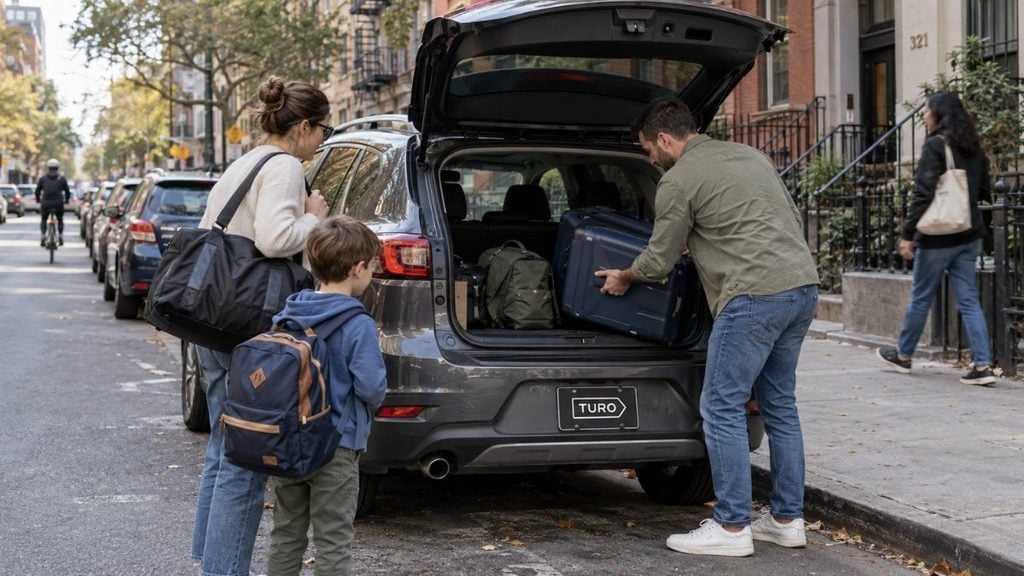
If you walk or take public transit most days, your car probably spends most of its life parked. Garage fees add up fast in places like New York City, and you’re paying them on a car that hardly moves. Renting a car means you only pay when you need wheels, like for a summer month or a busy season of trips.
You’re relocating or on a temporary assignment
Buying a car for a short-term stay means title fees, registration, and sales tax, then selling it again when the temporary visit or work assignment ends. Renting keeps things simple. Whether you’re relocating temporarily for work, moving to a new city for a few months, or on a travel nursing assignment, renting tends to be a more affordable and flexible option.
You’re in between cars
Maybe your last car lease just ended, or you sold your car and haven’t found the next one. A rental gives you time to shop without pressure, so you don’t rush into a loan you’ll regret.
You spend part of the year somewhere else
If you’re a snowbird or spend a season away, a car at home just sits there, aging and losing value. Renting only for the months you’re in town means you’re not paying to keep a car idle.
You want to try an EV or hybrid before you buy
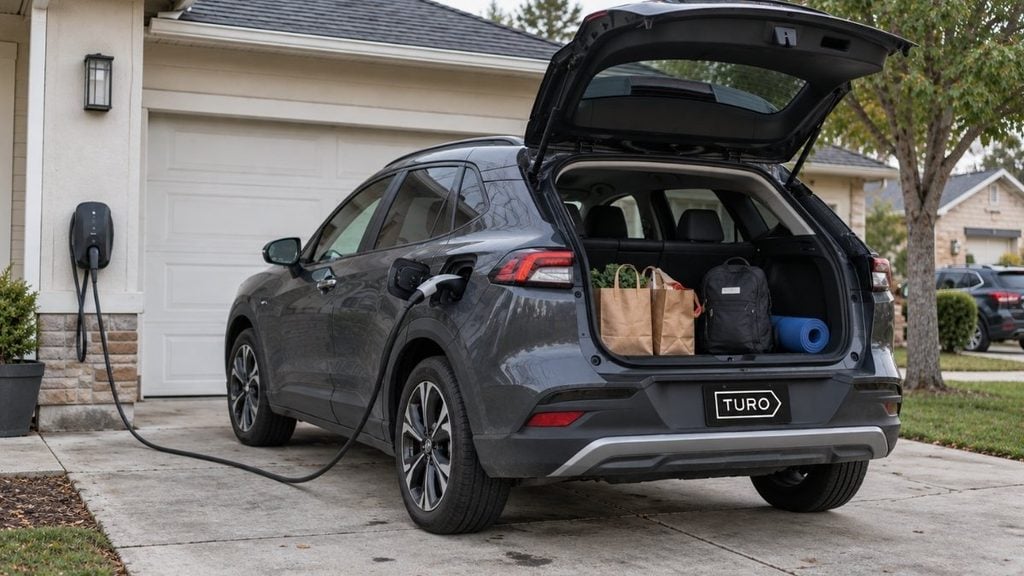
Committing to a loan for a car type you’re not sure suits your life is a big leap. A month behind the wheel of an EV or hybrid car shows you how charging, range, and daily driving actually fit your routine.
Myths and misconceptions about long-term car rental, debunked
Renting a car for a longer period of time can feel like a big step, and a few common worries put people off. Here’s what you need to know about the real costs of renting a car long-term on Turo.
| The myth | The reality |
|---|---|
| “Renting long-term always costs more than owning.” | Not necessarily: Ownership costs keep running whether you drive or not, while a rental matches how much you actually use a car. |
| “I’d be paying every month with nothing to show for it.” | You’re paying for access, not an asset: You don’t build equity, but you also don’t absorb hidden costs like depreciation, loan interest, or repair bills. |
| “Monthly rentals are only for travelers.” | Plenty of people use them close to home: If your car’s in the shop for an extended repair or you’re between vehicles, renting can be a convenient way to save. |
| “I’ll be stuck with whatever car is available.” | You choose the exact car: The car you book is the car you drive, so you can pick a compact for commuting or something roomier for a road trip. |
| “There’ll be surprise fees at the end.” | Check the total before you book: Compare each listing’s mileage allowance with your usual driving, since allowances can vary. |
More ways to save with Turo
There are plenty of ways to save on your car rental booking including:
- Filter for fuel-efficient cars: A hybrid, EV, or efficient compact can reduce fuel costs over a month of regular driving.
- Look for longer-booking discounts: Many vehicles offer discounted pricing for extended or monthly bookings, so check each listing before you book.
- Book outside peak periods: Car owners set their own prices, and rates tend to climb in busy seasons. Flexible dates can help you save.
- Match the mileage allowance to your driving: Compare each listing’s allowance with your usual commute so nothing catches you off guard.
- Use pickup and delivery options: A convenient pickup spot, or delivery where it’s available, can save you time and transportation costs.

Frequently asked questions about car ownership costs
What are the most overlooked costs of owning a car?
Depreciation, loan interest, insurance increases at renewal, and unexpected repairs are the most overlooked costs of owning a car. These hidden costs rarely make it into the first budget because the focus tends to land on the purchase price or monthly payment.
Is it cheaper to rent a car long-term instead of owning one?
Whether it’s cheaper to rent a car long-term instead of owning one depends on how much you drive and how long you need the vehicle. Renting can make more financial sense for occasional or temporary needs, while owning can be more cost-effective for frequent, high-mileage driving. For a closer look, see our guide to buying vs. renting a car to compare costs.
Does renting a car avoid all ownership costs?
No, renting a car does not avoid all ownership costs, but it avoids the big expenses. Renting allows you to skip depreciation, loan interest, and the hassle of title and registration. Fuel or charging, tolls, and parking still apply whether you rent or own.
What hidden costs should I budget for before buying a car?
Before buying a car, plan for more than the monthly loan payment. Set aside room for financing costs, interest rates, insurance, registration and title fees, maintenance and repairs, tolls, parking fees, and more. Fees vary by state, so check your local DMV for what you’ll owe.
Rent instead of own your car with Turo
Depreciation, interest, registration fees, and other hidden costs of owning and running a car add up fast. Renting on Turo lets you sidestep the loan, the dealership, and the long-term commitment, so you only pay for the time you need a car.
Whether you’re between cars, relocating, or tired of paying for a car that mostly sits in the driveway, a monthly rental lets you drive on your own timeline. Ready to skip the hidden costs? Browse monthly rentals and find the car that fits your budget.
Share your car, earn extra cash
Cover your car payments or earn some extra cash by sharing your car whenever you’re not using it.
Get startedHit the road
Browse thousands of cars for every occasion and budget near you, or wherever you’re going.
Browse cars
Lucinda Starr
Lucinda Starr is a travel and automotive writer with 5+ years of firsthand experience road-tripping across Australia, New Zealand, and beyond. She writes road trip guides for Turo, drawing on her experience behind the wheel to share practical insights on long-distance drives, destinations, and vehicles. Her travels have taken her across Australia’s East Coast, Victoria’s Great Ocean Road, the Northern Rivers, Byron Bay, and both islands of New Zealand. One of her most memorable journeys was an 11-day, 2,600+ km route from Auckland to Punakaiki and Queenstown. Lucinda has a particular passion for classic, rugged 4WD vehicles and the freedom they bring to exploring new places.