by Molly Isaac
posted on May 13, 2026
Have you ever seen a place that barely looks real? The best things to see in Zion National Park range from soaring red rock canyons and sculpted sandstone cliffs to riverside walks, scenic drives, and some of the most famous hikes in the American Southwest.
While adventure seekers come for Angels Landing and The Narrows, Zion’s landscape is just as compelling and rewarding for slower-paced travelers.
In this guide, we’ll be covering:
- Zion National Park: What you need to know before you visit
- The top things to see and do in Zion National Park
- Exploring Zion: By interest
- Frequently asked questions about visiting Zion National Park
Zion National Park: What you need to know
A little preparation goes a long way in Zion National Park, particularly during spring and summer when crowds, parking, and permits become part of the experience.
- Location: Springdale, Utah — approximately 2.5 hours from Las Vegas, 4.5 hours from Salt Lake City, and 1.5 hours from Bryce Canyon National Park.
- Entry fee: $35.00 — though the America the Beautiful annual pass covers entry and is worth considering for multi-park trips through southern Utah.
- Getting around: During peak season, the Zion Canyon Scenic Drive is closed to most private vehicles and operates via the park’s free shuttle system. Shuttles run regularly between the visitor center and the canyon’s major trailheads and viewpoints. In summer, parking in Springdale and catching the town shuttle into the park is often the easiest option.
- Best time to visit: Spring (March–May) and fall (October–November) offer the best balance of mild weather and manageable crowds. As one of the most visited national parks in the summer, it can feel crowded on popular trails, but early starts (before 8 am) make a significant difference. Winter is quieter, and the canyon can be stunning in snow, though some trails and roads close seasonally.
- Permits to know about: Angels Landing requires a permit, obtained via lottery through the NPS reservation system — book well in advance. The Narrows may close during high water periods (typically March–June due to snowmelt). Check current conditions before your visit.
- How many days: Two full days cover the highlights comfortably. Three or more days allow time for Kolob Canyons, the Zion-Mt. Carmel Highway, and a more relaxed pace during your visit.

The top things to see and do in Zion National Park
From iconic hikes to beautiful drives or cultural stops, here is everything you need to know about Zion National Park.
1. Hike The Narrows
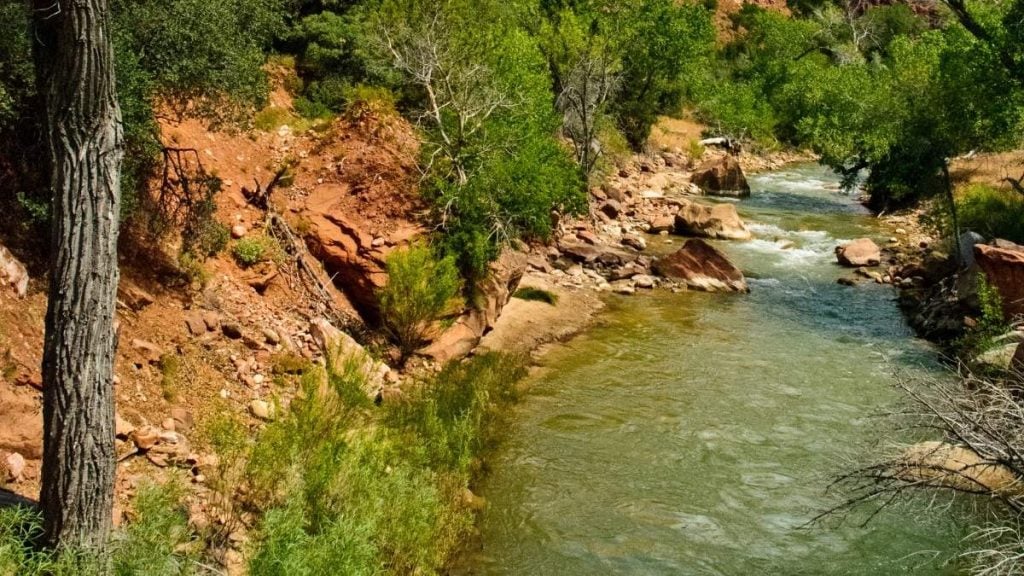
The Narrows is an iconic experience you won’t want to miss — a hike where the Virgin River becomes the trail itself, winding between Navajo sandstone walls that rise around 1,000 feet high and narrow to just 20–30 feet apart in places.
Most park visitors begin via the Riverside Walk before wading upstream into the canyon, turning back whenever they’ve had enough. The full top-down route requires a permit and an overnight backpacking setup.
Conditions change constantly throughout the year, and The Narrows often closes during spring snowmelt when water levels and currents become dangerous. Flash floods are a very real risk in Zion, so always check conditions before entering the canyon.
Waterproof footwear and a sturdy walking stick make a huge difference here, especially on the slippery river rocks underfoot, and rental gear is easy to find in Springdale.

Tip from the author: We recommend visiting The Narrows in late summer or early fall for the best combination of warm air temperatures and lower water levels. If you arrive before 8 am, there’s a good chance you’ll experience the first stretch of canyon in near silence.
2. Take the Zion Canyon Scenic Drive
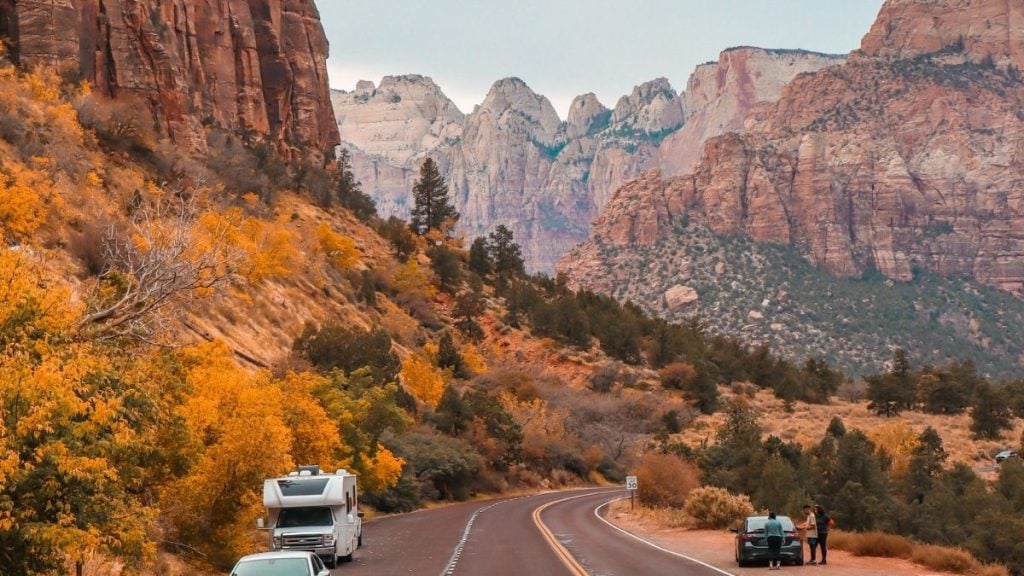
Even if you never lace up your hiking boots, the Zion Canyon Scenic Drive provides one of the park’s most memorable experiences. The route cuts through the canyon floor, flanked by soaring red and cream sandstone cliffs reaching 2,000 feet, while the Virgin River weaves beside you.
During peak season, the drive is accessed via the park’s free shuttle system rather than private vehicles, making it easy to explore Zion.
Along the route, look out for stops like the Court of the Patriarchs, Zion Lodge, the Emerald Pools trailhead, and Weeping Rock area.
The shuttle is fully accessible and ideal for visitors wanting to experience the canyon without committing to a strenuous hike.

3. Hike Angels Landing
- Distance: 5.4 miles round trip
- Elevation gain: 1,488 feet
- Difficulty: Strenuous
- Permit required: Yes — advance lottery booking via recreation.gov
Angels Landing is one of the most famous hikes in the US National Park System — and easily one of Zion National Park’s most intense experiences.
The trail climbs steeply through Walter’s Wiggles, a series of 21 tight switchbacks, before reaching Scout Lookout and continuing along a narrow sandstone ridge with chain handholds and steep drop-offs on both sides.
It’s an unforgettable hike for confident hikers, but the final half-mile is not for anyone uncomfortable with heights — the exposure is very real. If you want the views without the chain section, Scout Lookout still delivers incredible panoramas across Zion Canyon and can be reached without continuing to the summit.
Remember, Angels Landing now operates on a permit system, with hikers needing to secure either an advance lottery spot or a day-before permit through the National Park Service.


Tip from the author: We recommend starting the Angels Landing trail as early as possible — ideally at or before sunrise — both to beat the heat and to have the chain section largely to yourself.
4. Walk the Riverside Walk to The Narrows gateway
- Distance: 2.2 miles round trip
- Difficulty: Easy — paved and flat
- Accessibility: Wheelchair accessible
The Riverside Walk is one of Zion National Park’s most underrated experiences — a flat, paved path following the Virgin River as the canyon walls grow higher and closer with every step.
It’s a beautiful walk in its own right, accessible to almost all fitness levels, including families with strollers and visitors using mobility aids.
The trail ends at the entrance to The Narrows itself, meaning even visitors who don’t plan to wade into the river can still experience the full scale and atmosphere of Zion’s famous slot canyon.

5. Drive the Zion-Mount Carmel Highway
- Distance: 10 miles (Zion Canyon junction to east entrance)
- Drive time: 30–45 minutes without stops
Season: Year-round (tunnel has size restrictions — check nps.gov for vehicle dimensions)
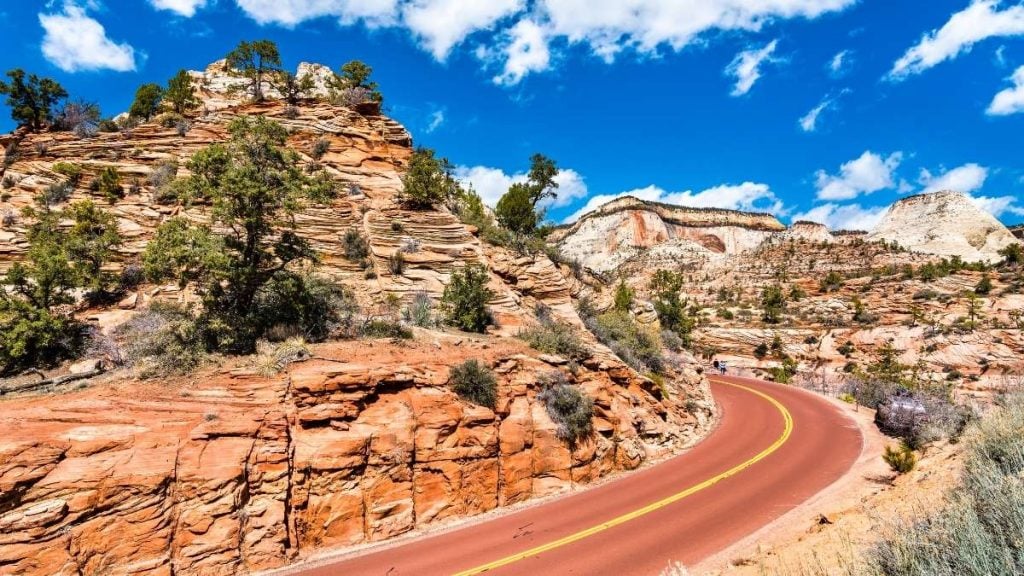
The Zion-Mt. Carmel Highway is one of the most scenic short drives in the American Southwest, climbing from the floor of Zion Canyon through steep switchbacks before passing through the mile-long Zion-Mount Carmel Tunnel, completed in 1930.
On the eastern side, the landscape changes almost instantly — sheer canyon walls give way to pale sandstone domes, sculpted slickrock, hoodoos, and wide-open desert plateaus that feel completely different from the canyon below.
Some of the best stops are within walking distance, the Canyon Overlook Trail, for sweeping views back into lower Zion Canyon, and pullouts through the slickrock section.
Large vehicles, RVs, and trailers may require a tunnel escort and permit, so it’s worth checking current size restrictions before driving the route.
6. Explore Kolob Canyons
- Location: Northwestern section of Zion, accessed via I-15 (Exit 40) — approximately 40 minutes from Zion Canyon Visitor Center
- Scenic drive: 5-mile Kolob Canyons Road
- Season: Road typically open spring through fall; check conditions in winter
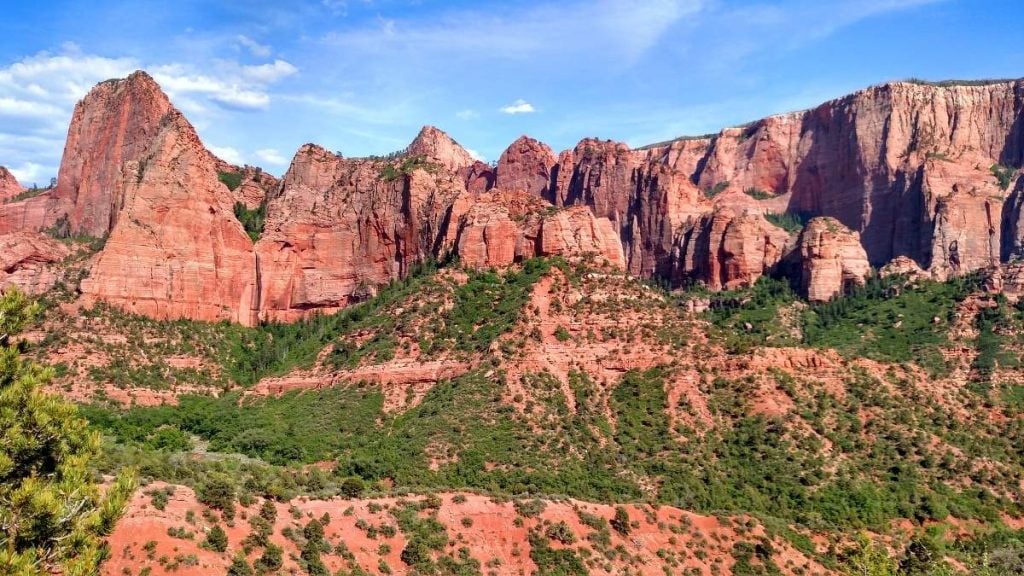
Kolob Canyons feels like Zion National Park’s hidden gem — a separate section of the park filled with steep red rock finger canyons, massive sandstone walls, and far fewer visitors than the main canyon.
The 5-mile Kolob Canyons Road is worth the detour alone, climbing gradually to a spectacular viewpoint overlooking the canyon system.
For those wanting more, the easy Timber Creek Overlook Trail delivers extraordinary views in just a 1-mile round trip, while the Taylor Creek Trail is a more moderate option winding deeper into the canyon.
Kolob Canyons is the insider move for experiencing similarly dramatic scenery with far fewer people around.
Tip from the author: Kolob Canyons has its own small visitor center just off Interstate 15, and it’s worth popping in for trail updates, maps, and current conditions before heading into the canyon.
7. Hike the Emerald Pools Trail
- Distance: Lower pool: 1.2 miles round trip | Upper pool: 3 miles round trip
- Difficulty: Easy (lower) to moderate (upper)
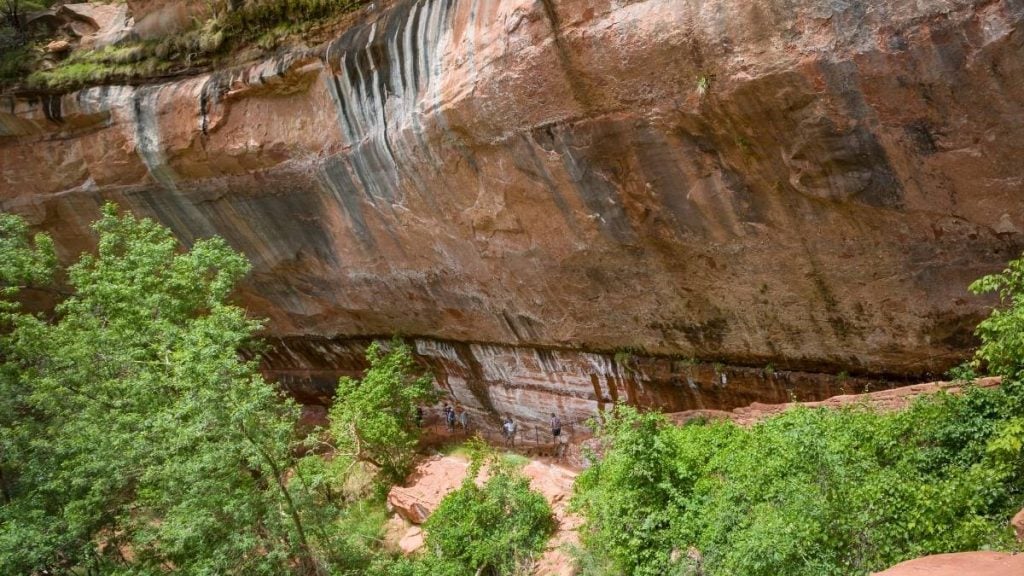
The Emerald Pools Trail leads to a series of green-tinged pools tucked beneath the canyon walls, fed by seasonal waterfalls and surrounded by hanging gardens and surprisingly lush vegetation for the desert.
The hike is split into tiers, allowing visitors to stop at the lower pool for an easier walk, continue to the middle pools, or push on to the upper pool for a longer, more rewarding experience.
Water flow is usually strongest in spring and early summer, while during late summer and fall, the waterfalls can slow to a trickle depending on recent rainfall.
The lower pool trail is especially popular with families, providing easy access to beautiful canyon scenery.
8. Ride the park shuttle and explore at your own pace
The free Zion Canyon Shuttle is an easy, convenient way to experience the park, giving visitors access to many of Zion’s major trailheads and viewpoints.
A good strategy is to ride straight to the final stop at Temple of Sinawava, then work your way back through the canyon, hopping on and off wherever the scenery pulls you in.
The Pa’rus Trail also makes a great connector route — a flat paved path following the Virgin River between the visitor center and Canyon Junction, accessible to cyclists, mobility aids, and leashed dogs.

9. Visit the Zion Human History Museum
With exhibits spanning over 12,000 years of human presence in the canyon, the Zion Human History Museum covers everyone from the Ancestral Puebloans and Southern Paiute to early Mormon settlers and the park’s first visitors.
Included with park entry, it’s well worth spending 30–45 minutes here — especially if the trails are crowded, or you need a break from the midday heat.
The short orientation film shown throughout the day is also one of the best introductions to Zion’s landscape, geology, and cultural history before heading deeper into the park.
10. Stargaze in Zion Canyon
Thanks to its remote desert location and limited light pollution, Zion National Park is a certified International Dark Sky Park and an exceptional place to stargaze.
Some of the best spots are along the Pa’rus Trail or at quieter pullouts within Zion Canyon, especially if you wait at least 90 minutes after sunset and give your eyes time to adjust to the dark.
It’s one of the park’s most underrated activities — particularly for visitors staying overnight in Springdale.
Exploring Zion: By interest
Are you visiting with kids, chasing adrenaline, or here for the scenic drives? Zion National Park has something for every kind of traveler.
Zion National Park for families
Not every hike has to be steep or strenuous. These family-friendly spots make it easy to experience the park at a slower pace.
- Riverside Walk: This riverside trail follows the Virgin River beneath towering canyon walls and hanging gardens, leading to the start of The Narrows. It’s one of the most peaceful walks in Zion National Park — stroller-friendly and manageable for all ages.
- Lower Emerald Pools Trail: A rewarding but short, easy hike passing sandstone cliffs, small waterfalls, and surprisingly lush pockets of greenery hidden within Zion’s red rock landscape.
- Junior Ranger Program: Pick up a booklet from the visitor center and complete activities throughout the park to earn an official Junior Ranger badge from a park ranger. It’s a fun way for kids to learn more about Zion’s wildlife, geology, and history.
- Zion Canyon Shuttle: The open-air shuttle system rides through Zion Canyon is part of the experience itself, with dramatic canyon scenery visible the entire way. It’s an easy way to explore the park without hiking.
- Pa’rus Trail: One of the only trails where leashed dogs are allowed. The flat terrain and huge canyon views make it ideal for families with pets.
Zion National Park for non-hikers and those with limited mobility
Some of Zion’s best scenery can be experienced from your car.
- Zion Canyon Scenic Drive (via shuttle): Sit back and let the canyon come to you — the shuttle stops are well-spaced, and the views from the road are genuinely remarkable.
- Zion-Mt. Carmel Highway scenic drive: This spectacular route climbs through open red rock landscapes, narrow switchbacks, and the historic Zion-Mount Carmel Tunnel. Most standard vehicles can access it, though check the restrictions for larger vehicles.
- Kolob Canyons Scenic Drive: A scenic 5-mile drive through the Kolob Canyons section of the park provides some of the most incredible landscapes. The viewpoint at the end of the road offers truly beautiful scenery without needing to hike.
- Zion Human History Museum: A worthwhile stop for exhibits on Zion’s geology, Indigenous history, and early settlers — plus a welcome break from the heat with air conditioning and huge canyon views outside.
- Zion Lodge: Right in the heart of Zion Canyon, the lodge is a great place to slow down over lunch or coffee while surrounded by soaring cliffs and shaded cottonwood trees.
Zion National Park for adventure seekers
For those chasing the bigger adrenaline rush, discover some of the most iconic and challenging adventures in the American Southwest.
- Angels Landing: One of the most famous hikes in the National Park System, known for its narrow canyon ridgeline, chain-assisted climbs, and dizzying canyon views. A permit is required.
- The Narrows (top-down route): A permit-required multi-day adventure through the Virgin River Narrows, following towering slot canyons, river crossings, and remote stretches of Zion that few visitors ever see.
- Canyoneering: Zion is considered one of the world’s premier canyoneering destinations, with guided descents through narrow slot canyons like Pine Creek Canyon available through licensed operators.
- Observation Point Trail via East Mesa: An alternative to Angels Landing, this route delivers even higher views across Zion Canyon from the rim above. Access is typically via the park’s east side.
- West Rim Trail: A longer and more remote backpacking route winding through high desert plateaus, dramatic canyon overlooks, and some of Zion Park’s most expansive scenery.
Frequently asked questions about visiting Zion National Park
How many days do you need at Zion National Park?
At least two full days are needed to experience many of Zion National Park’s biggest highlights, including The Narrows, Emerald Pools, scenic canyon drives, and either Angels Landing or an alternative like Observation Point.
However, with three or more days, explore the Zion-Mt. Carmel Highway, Kolob Canyons, and enjoy the park at a far more relaxed pace.
If you’re combining Zion with Bryce Canyon or the Grand Canyon, two focused days in Zion is usually the sweet spot.
Do I need a permit to visit Zion National Park?
For a permit to visit Zion National Park, you’ll need to pay a general entry fee or purchase an America the Beautiful national parks pass — this covers entry to national parks and federal recreation sites across the US.
Most hikes and activities inside Zion National Park don’t require additional permits, although Angels Landing is the major exception, and it’s important to plan ahead for peak season — permits are allocated through the National Park Service lottery system on recreation.gov.
The Narrows may also close seasonally, so always check current conditions before visiting.
When is the best time to visit Zion National Park?
Spring and fall are generally considered the best times to visit Zion National Park, with milder temperatures, better hiking conditions, and fewer extremes in the canyon.
Summer is peak season — and as one of the busiest national parks in the US, Zion can become extremely crowded. It’s essential to visit in the early morning (before 8 am) to avoid the crowds and intense heat.
Winter is far quieter and can be incredibly beautiful, though icy conditions can sometimes close higher-elevation trails.
Can I drive through Zion National Park?
Yes — several scenic roads in Zion National Park are open year-round to private vehicles, including the Zion-Mt. Carmel Highway and Kolob Canyons Road.
However, Zion Canyon Road and the Zion Canyon Scenic Drive operate on a shuttle-only system during much of the year.
Guests staying at Zion Lodge can drive farther into the canyon during limited access windows.
How do I get to Zion National Park?
Zion National Park is around 2.5 hours from Las Vegas, 4.5 hours from Salt Lake City, and roughly 1.5 hours from Bryce Canyon, making it an easy addition to a wider southern Utah road trip.
Most visitors fly into Las Vegas before driving northeast through the desert toward the park, though St. George Regional Airport is closer with more limited flight options.
If you’re starting in Las Vegas, Turo offers a wide range of vehicles to make up your perfect trip.
Plan your Zion adventure with Turo
Zion National Park is the kind of place that’s best experienced with a bit of preparation. Early starts, scenic detours, quieter corners of the park, and long desert drives all become part of the adventure when it’s on your schedule.
Whether you’re starting in Las Vegas or Salt Lake City, or renting a vehicle as part of a southern Utah road trip, Turo gives you the freedom to choose a vehicle that suits your trip. Browse cars on Turo and enjoy Zion National Park on your terms.

Share your car, earn extra cash
Cover your car payments or earn some extra cash by sharing your car whenever you’re not using it.
Get startedHit the road
Browse thousands of cars for every occasion and budget near you, or wherever you’re going.
Browse cars
Molly Isaac
Molly Isaac is an experienced travel and automotive writer who loves the freedom of exploring new places in her own way and at her own pace. Her driving adventures have taken her through France and Italy, along Route 66, and across Australia, from its coastlines to the desert. She has a particular soft spot for Jeeps, preferably with the roof down, and for trips shaped by nature, spontaneity and a sense of adventure. For Turo, she writes practical, inspiring guides to scenic drives, family road trips and nature-filled escapes, helping travellers plan memorable journeys and choose a vehicle that feels right for the experience.