posted on December 7, 2025
Few routes capture the spirit of the American Southwest like the drive from Denver, Colorado, to Las Vegas, Nevada. Crossing the Rocky Mountains to the red deserts of Utah and Nevada, the Denver to Vegas drive offers some of the most spectacular scenery in the country. Think: winding canyon roads, stone arches, and wide, sunlit valleys that seem to stretch forever.
This suggested route is for the road trip lovers. In just over 11 hours, you’ll travel through changing landscapes that move from alpine peaks to arid plateaus, with national parks like Arches, Canyonlands, and Zion waiting just off the highway. Whether you’re chasing outdoor adventures, natural wonders, or simply a scenic route to Sin City, this drive shows off the best of the West, one breathtaking view at a time.
In this guide, we’ll be covering:
- Denver to Vegas drive: Overview
- Your road trip map from Denver to Vegas
- Top tips for driving from Denver to Vegas
- Your stop-by-stop Denver to Vegas road trip itinerary
- Top places to stop between Denver and Vegas
- Frequently asked questions about the Denver to Vegas drive
An overview of the drive from Denver to Vegas
- Drive time: 11 hours 15min (direct route)
- Drive distance: 750 miles (direct route)
- Suggested road trip length: 3 to 5 days
- Recommended itineraries:
- The Moab Route (I-70 West to I-15 South): The classic scenic route, passing Glenwood Springs, Arches National Park, Canyonlands, and Zion before reaching Las Vegas.
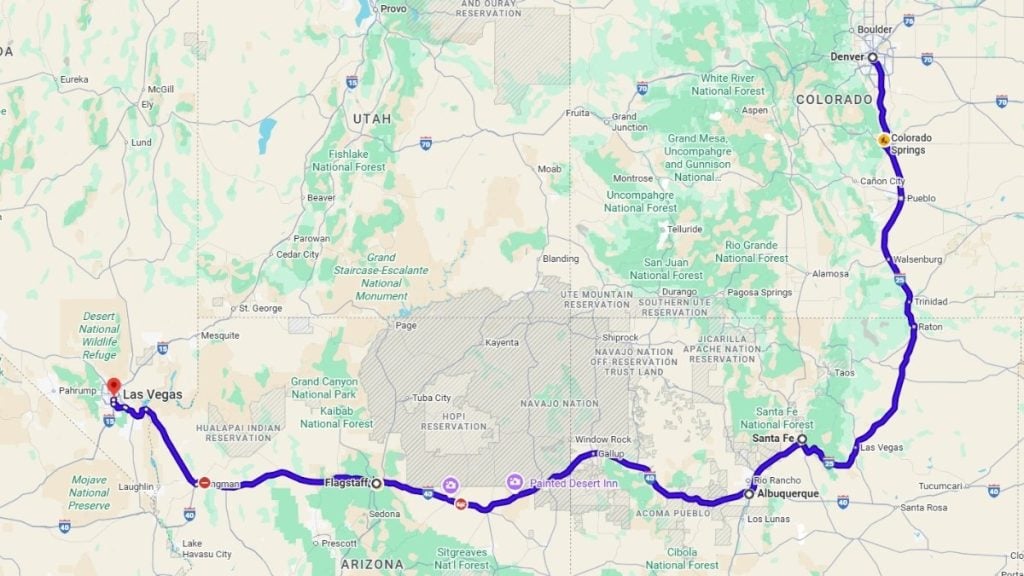
- The Albuquerque Route (I-25 South to I-40 to I-15 North): A longer southern route that takes you through Santa Fe, Albuquerque, Flagstaff, and the Grand Canyon
- Top stops:
- Glenwood Springs
- Moab
- Zion National Park
- Santa Fe
- Flagstaff
- Grand Canyon National Park
- Gas stations and EV chargers along the drive: Both routes are well equipped with gas stations and rest stops. EV drivers will find charging points in major towns, including Grand Junction, Moab, and Flagstaff, as well as several spots near national parks like Zion and Arches.
- Driving conditions and recommended vehicle: The roads are generally in excellent condition, but expect steep climbs and variable weather through the Rockies. A reliable SUV or crossover with good mileage is ideal for comfort and handling, especially if you plan to detour through the parks or mountain roads.
Distance from Denver to Vegas
The distance from Denver to Las Vegas is roughly 750 miles, depending on which route you take. The fastest option along I-70 West and I-15 South takes about 11 hours of driving time, while the longer Albuquerque Route can stretch closer to 13 hours.
Both routes cover a mix of mountain passes, desert plains, and scenic highways, making it a true cross-section of the American Southwest. It’s a long drive, but with national parks, charming towns, and plenty of photo-worthy stops along the way, it never feels dull.
Denver to Vegas drive time
Driving from Denver to Las Vegas takes around 11 hours via the most direct route on I-70 West and I-15 South. If you’re planning to stop at places like Glenwood Springs, Moab, or Zion National Park, it’s best to spread the trip across two or three days.
The southern route through Santa Fe and Albuquerque takes closer to 13 hours, but it’s a great option if you want to see a different side of the Southwest, with historic Route 66 towns, wide desert views, and fewer mountain climbs.
When to go from Denver to Vegas
The best time to drive from Denver to Vegas is spring or fall, when temperatures are mild and the roads through the Rockies are clear. In April to June and September to October, you’ll get comfortable driving conditions, fewer crowds in national parks like Arches and Zion, and plenty of sunshine without the desert heat.
Winter can bring snow and icy stretches over mountain passes, especially near the Continental Divide, while summer means higher temperatures once you hit Utah and Nevada. The trip is doable year-round, but planning around the weather conditions will make for a smoother and more scenic drive.
The best Denver to Vegas route
There’s no wrong way to make the beautiful Denver to Vegas drive, but the route you choose depends on what kind of trip suits you best.
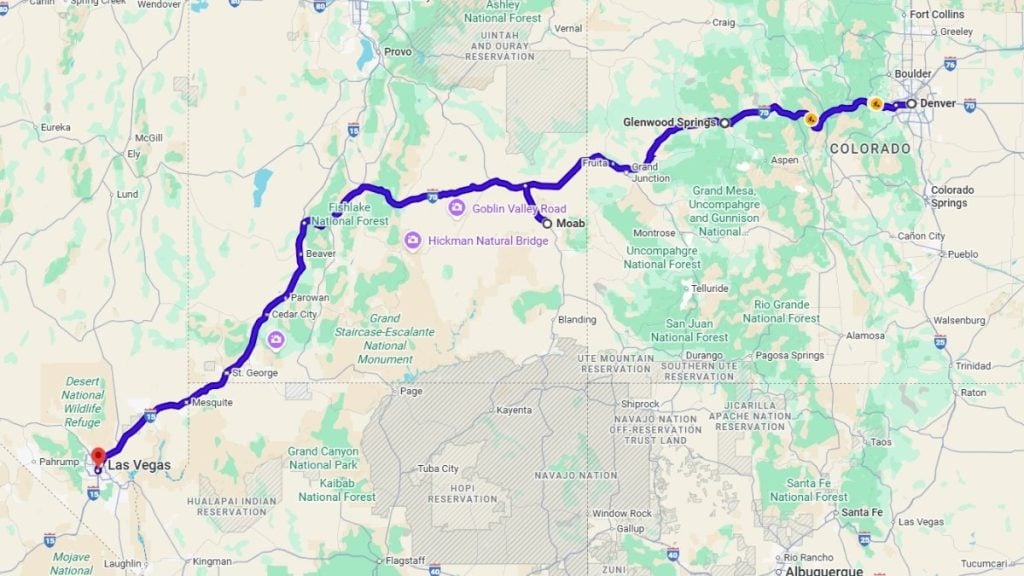
The Moab Route (I-70 West to I-15 South) is the most scenic. It takes you through mountain towns like Glenwood Springs and Grand Junction before opening up into Utah’s red rock country, home to Arches and Canyonlands National Parks. From there, the road winds past Zion before dropping into the Nevada desert on the way to Las Vegas.
The Albuquerque Route (I-25 South to I-40 to I-15 North) is a little longer but packed with character. It passes through Santa Fe and Albuquerque, both known for their art, history, and food, then continues west toward Flagstaff, the Grand Canyon, and the wide desert landscapes of Arizona.
If you’re short on time, the Moab Route is faster and filled with natural beauty. If you’d rather take your time and see more of the American Southwest’s culture and history, the Albuquerque Route is the way to go.
The best stop between Denver and Vegas
If you’re taking the Moab Route, the best halfway stop is Moab, Utah. It’s surrounded by some of the most spectacular landscapes in the country, with Arches National Park, Canyonlands National Park, and the Colorado River all just minutes away. You’ll find plenty of accommodation, dining options, and scenic trails for every skill level, making it a great place to spend a full day before heading west.
If you’re following the Albuquerque Route, plan to stop in Flagstaff, Arizona. This charming mountain town sits near the San Francisco Peaks and offers easy access to Route 66, the Grand Canyon, and several other national parks. It’s a comfortable overnight stop with a unique blend of history, nature, and great food.
Your road trip map from Denver to Vegas
Top tips for the drive from Denver to Vegas
The Denver to Vegas drive is long but rewarding, with plenty of great places to pause along the way. Planning a few key stops, whether for gas, food, or a quick photo, makes the journey smoother and far more enjoyable. Expect changing speed limits through the mountains, stretches of open highway with few services, and some serious scenery that will make you want to pull over more than once.
Driving conditions: What is the road from Denver to Vegas like?
- The road from Denver to Las Vegas takes you from steep, winding mountain passes to wide desert highways, so conditions can vary dramatically. Snow and sudden storms are possible in the Rockies, especially around the Continental Divide in winter and spring, while Utah and Nevada roads are typically dry and sunny most of the year.
- Rest stops and fuel stations can be limited between Grand Junction and Moab, so it’s smart to fill up before long stretches. Speed limits also tend to change frequently, slowing through mountain towns and increasing across open desert roads, so keep an eye out as you go.
- Some sections of I-70 and I-15 may include tolls, depending on your route. Make sure your rental car covers electronic toll payments, or consider bringing cash just in case.
Recommended type of car for the drive
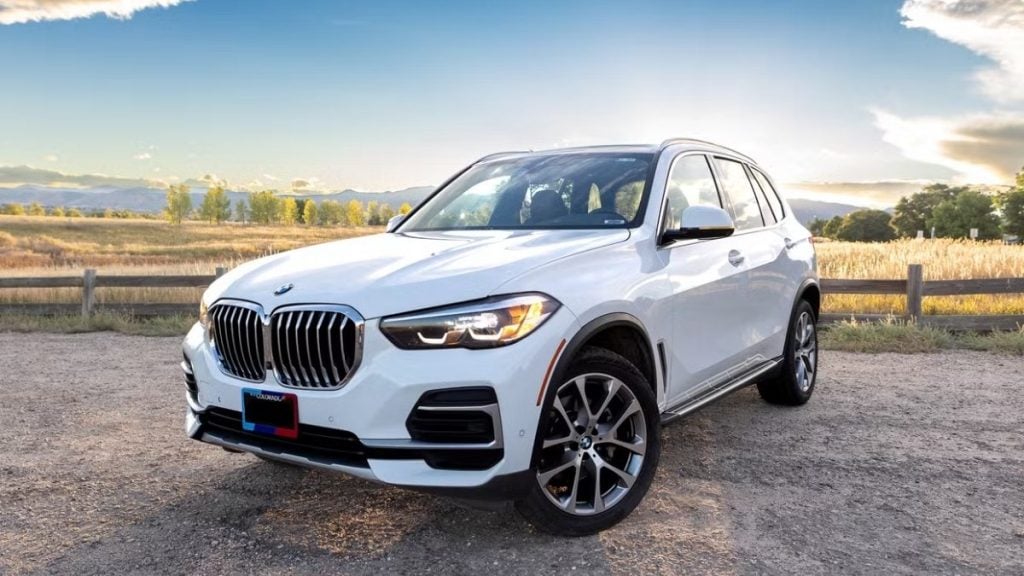
For the Denver to Vegas drive, an SUV or hybrid is the best fit. You’ll want something with enough power for the mountain climbs and space for gear if you’re stopping at national parks like Arches or Zion. A fuel-efficient model or hybrid is great for covering long distances between towns, while EV drivers will find charging stations in Grand Junction, Moab, and Flagstaff.
Tip from the author: You can browse cars for hire from locals in Denver on Turo. Whatever vehicle you need for the perfect road trip.
How to stay safe on this road trip
- Keep an eye on the forecast, especially when crossing the Rockies. The weather can turn quickly up there, and no one wants to be caught in a surprise snowstorm or sudden downpour mid-drive. A quick check before you hit the road can make all the difference.
- Take regular breaks and don’t be shy about pulling over to stretch or swap drivers. The desert stretches through Utah and Nevada can be long and quiet, so it’s a good idea to pack some snacks, extra water, and a charger just in case you’re out of range for a bit.
- Plan ahead for fuel and charging stops, especially if you’re heading towards places like Moab or Zion. Some sections are pretty remote, so topping up when you can is always a smart move. And with winding mountain roads, it’s best to go easy, watch the speed limits, and stay alert for wildlife.
The perfect Denver to Vegas drive itinerary
There are two main routes for the Denver to Las Vegas road trip, each offering a different way to experience the American Southwest.
The Moab Route, via I-70 West and I-15 South, is perfect for nature enthusiasts and outdoor adventurers. You’ll pass through Colorado’s ski resorts and mountain towns like Glenwood Springs before reaching the red rock landscape of Utah’s Arches National Park, Canyonlands National Park, and Zion National Park. This route is made for hikers, photographers, and anyone who wants to spend time surrounded by beautiful scenery and stunning views.
The Albuquerque Route, via I-25 South and I-40 West, is better suited to road trippers who love culture, natural history, and wide-open desert scenery. You’ll travel through Santa Fe and, of course, Albuquerque, both known for their art, architecture, and great dining. Then you’ll continue past Flagstaff, the iconic Route 66 landmarks, and the Grand Canyon National Park before reaching Sin City, Las Vegas.
Itinerary 1. The Moab Route (I-70 West to I-25 South)
- Stop by stop itinerary:
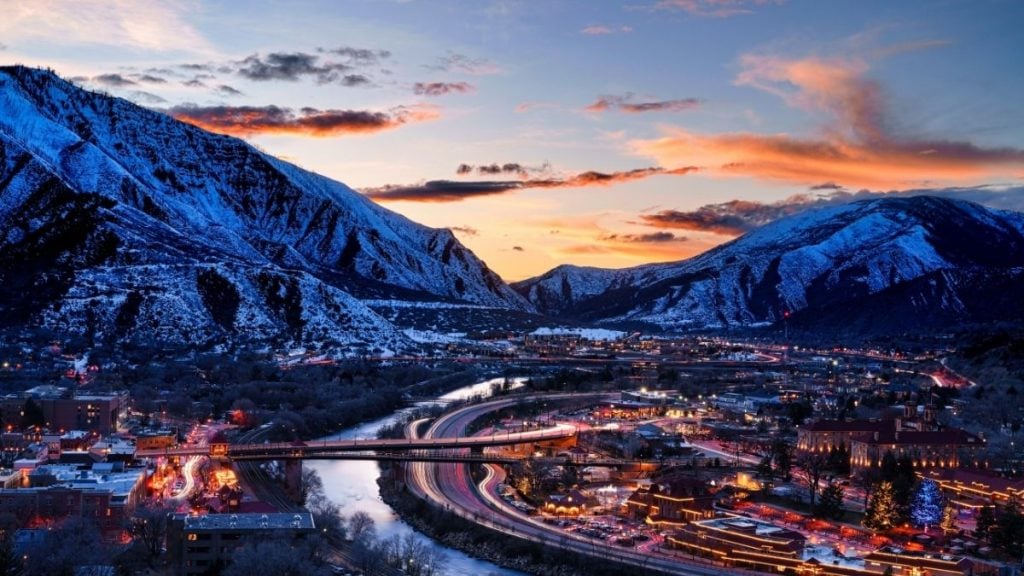
- Stop 1: Glenwood Springs, Colorado
- Stop 2: Moab, Utah
- Stop 3: Las Vegas
- Drive time: 12 hours
- Driving distance: 816 miles
- Best things to see and do along the way: Glenwood Springs, Glenwood Caverns Adventure Park, Zion National Park.
Itinerary 2. The Albuquerque Route (I-25 South to I-40 to I-15 North)
- Stop by stop itinerary:
- Stop 1: Santa Fe, New Mexico
- Stop 2: Albuquerque
- Stop 3: Flagstaff, Arizona
- Stop 4: Las Vegas
- Drive time: 14 hours 30min
- Driving distance: 1,033 miles
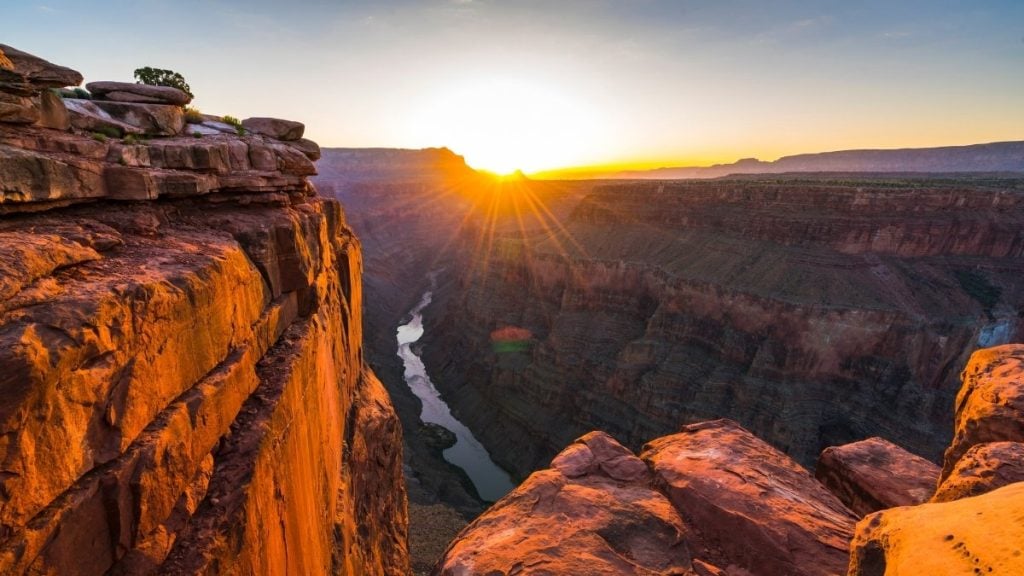
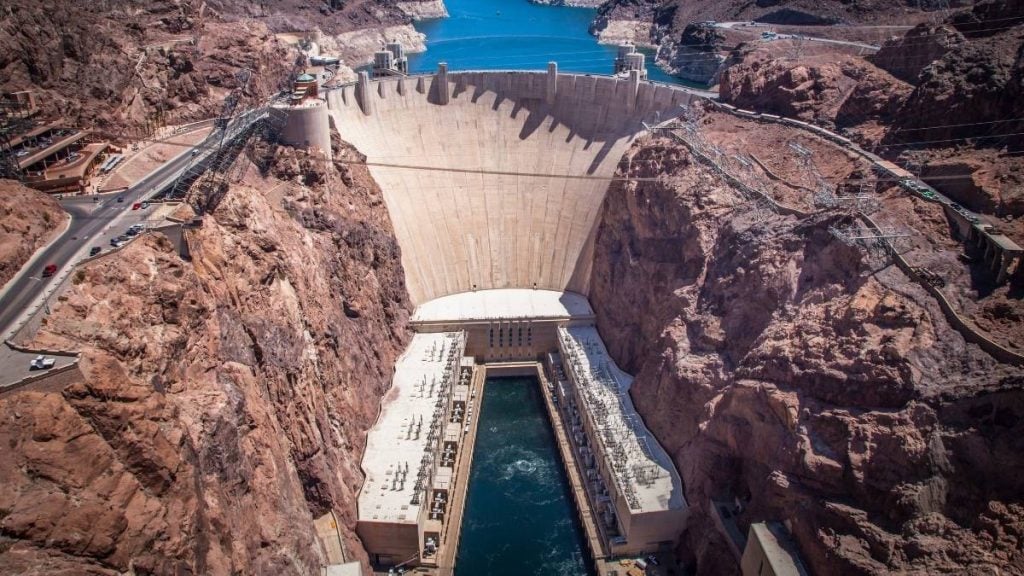
- Best things to see and do along the way: Meow Wolf Albuquerque, Route 66, Grand Canyon, Hoover Dam.
Top places to stop between Denver and Vegas
No matter which route you take, there’s no shortage of incredible stops along the Denver to Vegas drive, from national parks and scenic trails to historic towns and family-friendly attractions.
Top stops for nature lovers
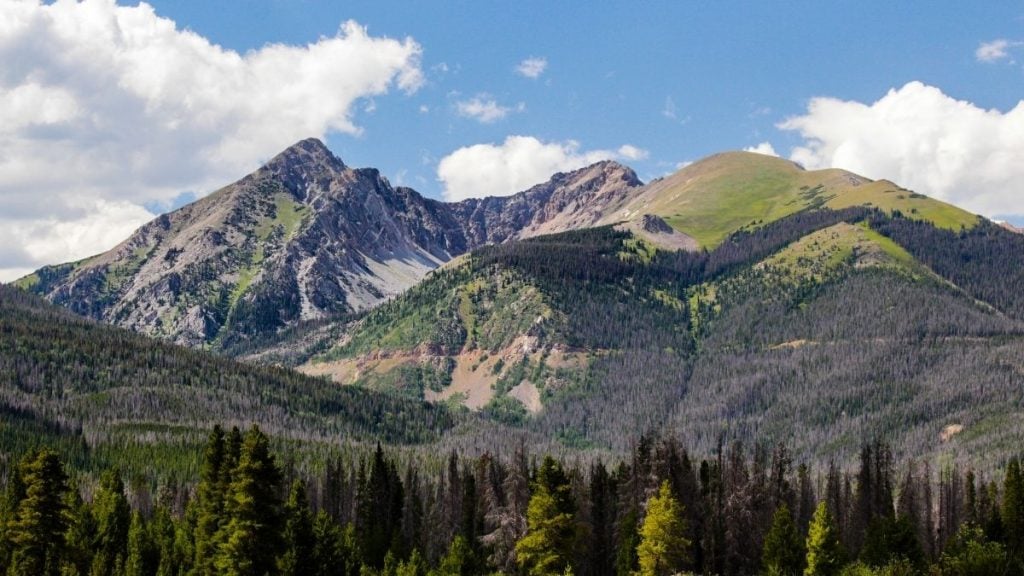
- Rocky Mountain National Park: Towering peaks, alpine lakes, and scenic trails that suit all skill levels make this one of Colorado’s must-see national parks.
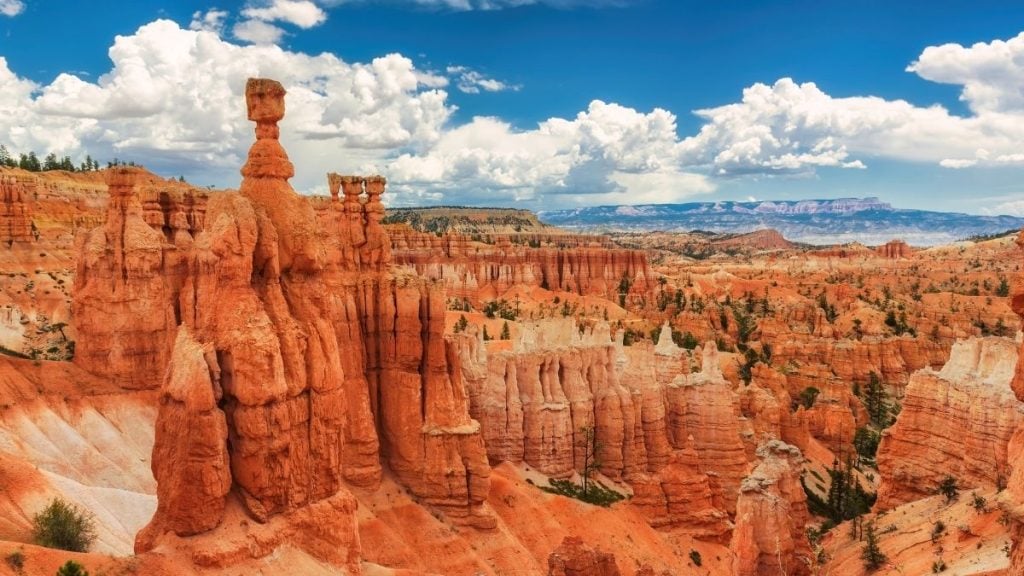
- Bryce Canyon National Park: Famous for its red rock spires and natural amphitheaters. If you’re a morning person, the sunrise here is definitely worth the early start.
- Colorado River: Follow its winding path through canyons near Moab or take a guided rafting trip for a closer look at the desert’s natural beauty.
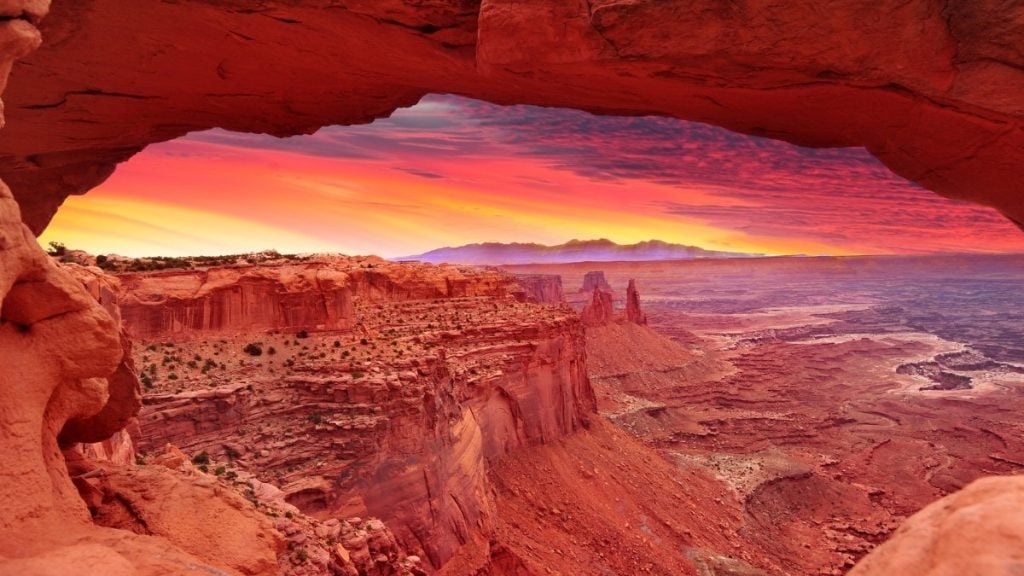
- Canyonlands National Park: Vast desert views, stone arches, and hiking trails that lead to some of the most breathtaking scenery in the Southwest.
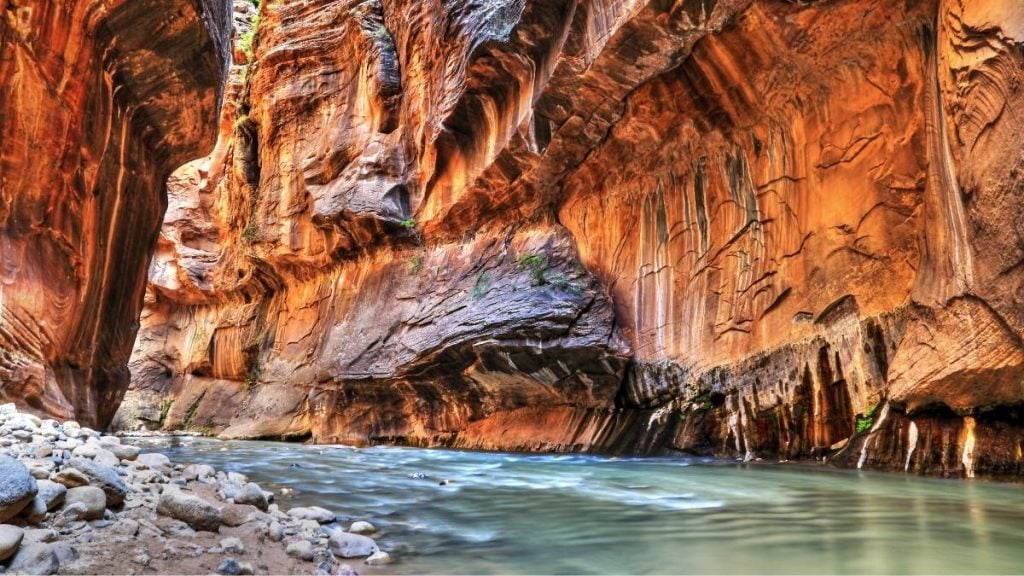
- Zion National Park: Towering cliffs, slot canyons, and riverside trails combine into one of the most unforgettable hiking destinations in the U.S.
Top stops for families
- Meow Wolf Santa Fe: An immersive, otherworldly art experience full of colour, light, and imagination — great for kids and adults alike.
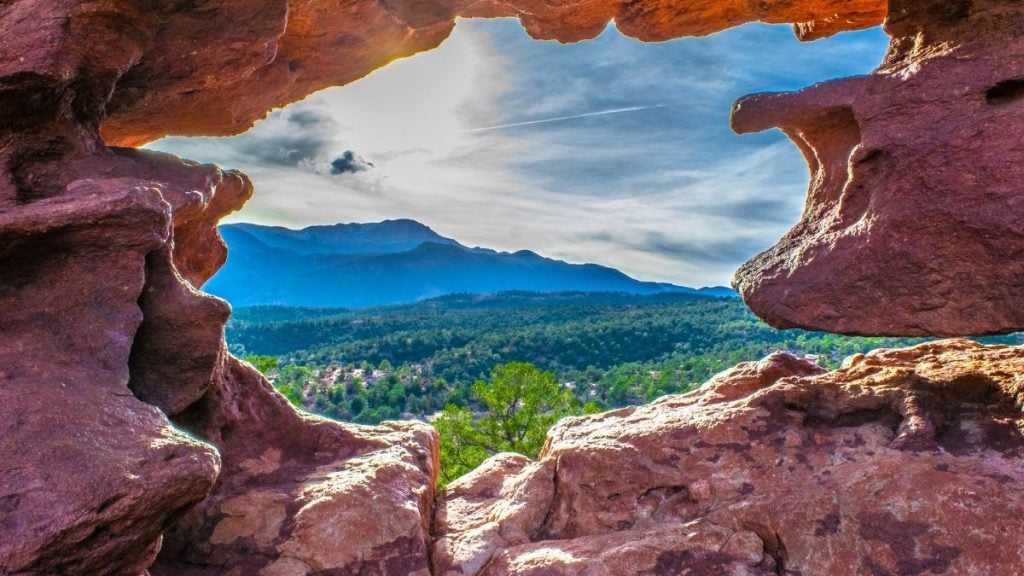
- Garden of the Gods (Colorado Springs): A free public park filled with dramatic red rock formations and short, scenic trails that are easy to explore.
- Glenwood Hot Springs: A family favourite for generations, offering huge thermal pools and nearby attractions like Glenwood Caverns Adventure Park.
- Grand Canyon National Park: A must-see for any family road trip, plan a few hours for viewpoints, short hikes, and the visitor centre’s interactive exhibits.
- Zion National Park: Family-friendly hiking trails, wildlife viewing, and an easy shuttle system that makes getting around simple and fun.
Top stops for history buffs:
- Cedar Breaks National Monument: A natural amphitheatre of red and orange cliffs that also tells the story of the region’s volcanic past.
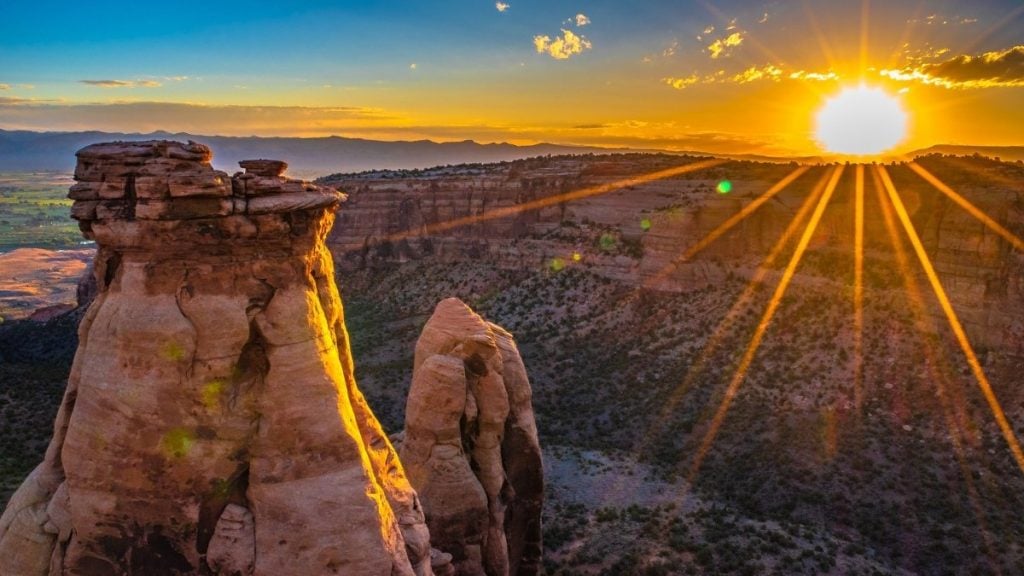
- Colorado National Monument: Sweeping canyon views, ancient rock formations, and scenic drives through one of Colorado’s most underrated parks.
- Historic La Fonda on the Plaza (Santa Fe): One of the oldest hotels in the U.S., filled with Southwestern art and stories from centuries of travellers.
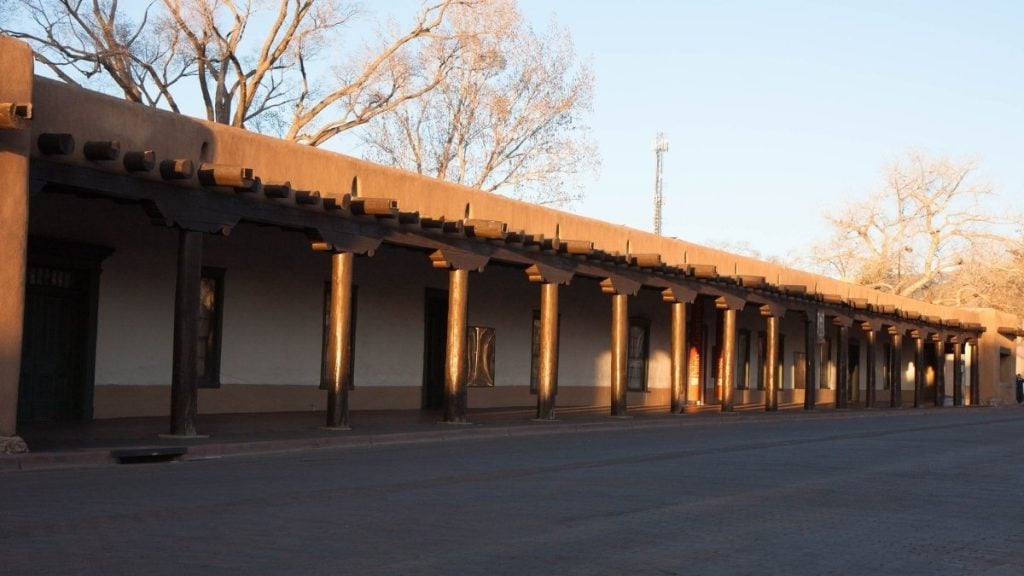
- Palace of the Governors (Santa Fe): A National Historic Landmark showcasing New Mexico’s long and layered history.
- Route 66: Drive along America’s most iconic highway through New Mexico and Arizona, where vintage motels and classic diners still capture the spirit of the open road.
Frequently asked questions about the Denver to Vegas road trip
Is it worth driving from Denver to Vegas?
Yes, absolutely. The Denver to Vegas drive is full of incredible scenery, from the Rocky Mountains to Utah’s red rock deserts and beyond.
How many days does it take to travel from Denver to Vegas?
It’s recommended to spread it over three to five days to get a chance to explore national parks, mountain towns, and scenic hiking trails along the way.
How long is the Denver to Vegas road trip?
The trip covers roughly 750 miles and takes about 11 hours by the fastest route.
Can you tackle the Denver to Vegas road trip in reverse?
Yes, the Vegas to Denver road trip offers the same amazing views in reverse, and it’s just as easy to plan.
Can I get from Denver to Vegas by train or bus?
You can travel from Denver to Vegas by rail, but it’s not a direct route and takes much longer than driving. Bus options are available too and usually take around 17–18 hours.
Final word: Planning the Denver to Vegas road trip of a lifetime
The Denver to Vegas drive showcases the best scenery in the American Southwest. Taking you from snow-capped mountains to red rock deserts and everything in between. Whether you take the faster Moab route or the longer Albuquerque route, every mile has something worth stopping for.
A beautiful trip year-round, with endless options for detours, hikes, and small-town stops along the way. However you plan it, you’ll end the journey with a new appreciation for the sheer variety of landscapes between Colorado and Nevada. While you’re planning your perfect road trip route, browse Turo for a Denver rental car that fits your Rocky Mountain adventure.
Book your rental car in Denver with Turo
Ready to get moving? With Turo, booking the perfect rental car in Denver is easy. Choose from a wide range of vehicles from local hosts – whether you need a spacious minivan or an eco-friendly EV.
Skip the hassle of traditional rentals and take control of your trip from the very beginning. With flexible pick-up and drop-off options, you can hit the road whenever you’re ready and make the most of every moment. Get started with Turo and make your Denver to Vegas road trip an adventure worth remembering!
Share your car, earn extra cash
Cover your car payments or earn some extra cash by sharing your car whenever you’re not using it.
Get startedHit the road
Browse thousands of cars for every occasion and budget near you, or wherever you’re going.
Browse cars
Isobelle Walker
Isobelle is a writer who is passionate about what's on her front doorstep - she has road tripped the length and width of the beautiful Aotearoa, New Zealand multiple times, and believes the best way to travel is with a good playlist, a full tank, and friends and family on board. Typically, from the passenger seat, Isobelle is the list maker. The curator of the best spots for food, shopping, and stretching your legs. A keen photographer, she's always taking the scenic route and stopping at every cute and quaint small town along the way.