by Anna Hann
posted on 8 August 2025
The Jurassic Coast, stretching along the south coast of England, is one of the most fascinating coastlines you can explore on a road trip. Recognised as a UNESCO World Heritage Site, it tells a story 185 million years in the making, with cliffs, coves, and beaches that reveal layers of rock from the Triassic, Jurassic, and Cretaceous periods.
But it’s not just about geology. This Dorset road trip is also loved for its sweeping sea views and friendly seaside towns. You might come for the history, the coastal paths, the stunning scenery, the fossil hunting, or simply to spend time outdoors in a place that feels a little removed from the everyday. Along the way, you’re likely to collect a few travel stories of your own.

Jurassic Coast road trip itinerary
This Jurassic Coast road trip itinerary unfolds over five days, suiting those who prefer unhurried routes and places shaped by the landscape around them. The road trip winds past quiet farming villages, gorgeous beaches with rust-coloured cliffs, and coastal hills.
Although there are different ways you can explore the Jurassic Coast, this road trip itinerary begins in Exeter and follows the coastline eastwards through East Devon and Dorset, finishing at Studland Bay, loosely tracing the South West Coast Path. If you want to keep going, you can continue into the New Forest. You can also take this road trip itinerary in reverse, and start at Studland Bay, heading west, which makes a great option if you’re extending your road trip into Cornwall.
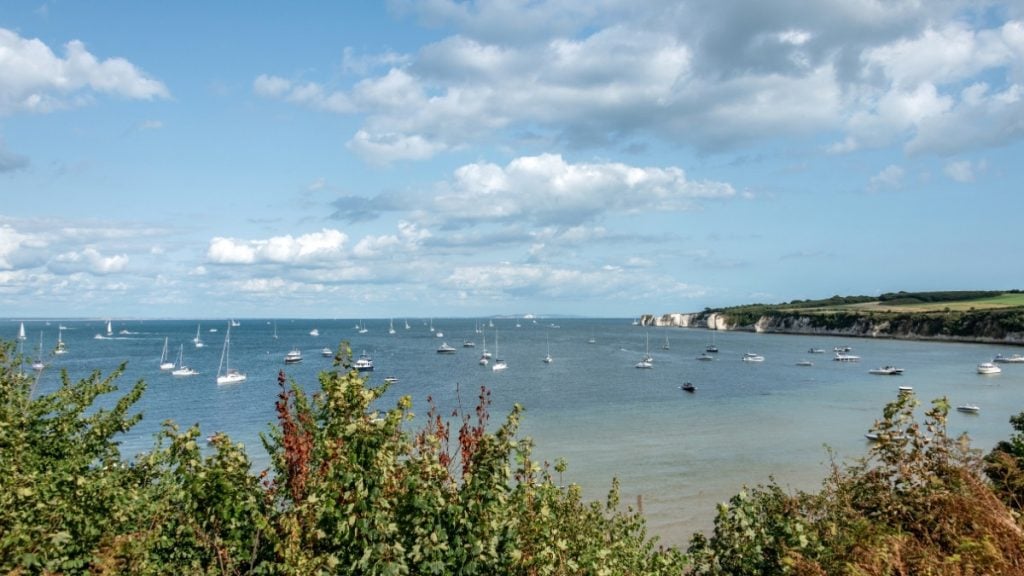
Much of the road trip follows a mix of open A-roads and narrow lanes that dip in and out of valleys. You’ll pass through towns like Sidmouth, Lyme Regis, and West Bay. Further along the route, you’ll reach highlights like Lulworth Cove and Durdle Door, where chalk cliffs and natural rock arches frame sheltered bays, and eventually Old Harry Rocks, marking the eastern end of the Jurassic Coast.
Day 1: Exeter to Sidmouth
Distance: Approximately 25 miles
Driving time: Around 1 hour (without stops)
Begin your Jurassic Coast road trip in historic Exeter
Start your Jurassic Coast road trip itinerary in Exeter, a lively university city in East Devon filled with amazing architecture and Roman history. Wander through the gothic grandeur of Exeter Cathedral and stroll the colourful houses along Exeter’s historic quayside. If you’re flying in, European airlines fly to Exeter, or you can reach the city from the main London airports by train and collect a car in Exeter from a local Turo host.

Peaceful animal encounters and coastal views
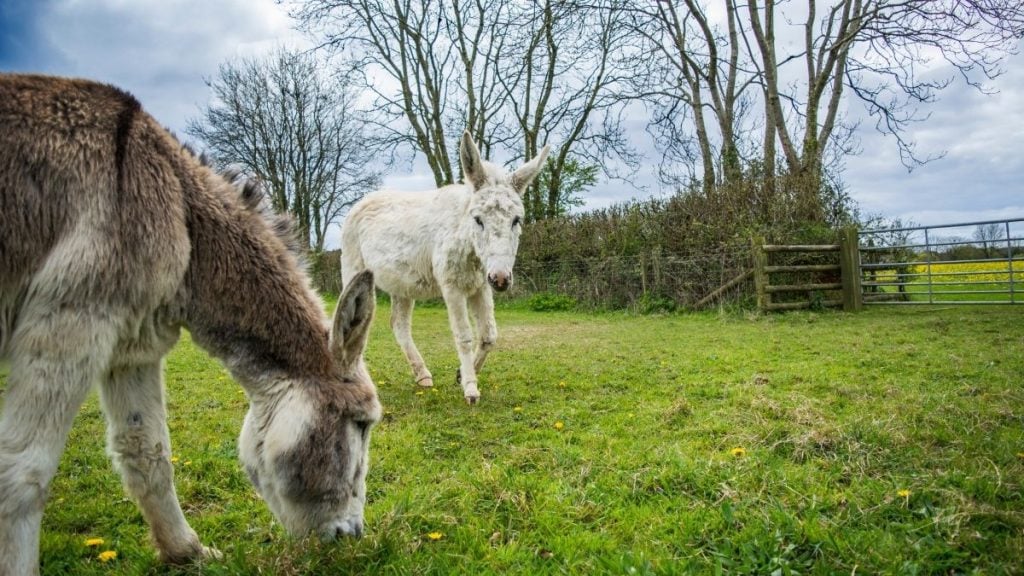
Drive southeast and stop at The Donkey Sanctuary near Sidmouth, a lovely family attraction with walking trails and a visitor centre. It’s a great place to stretch your legs and learn about animal welfare, following footpaths that lead through open fields and gentle hills.
Explore Ladram Bay
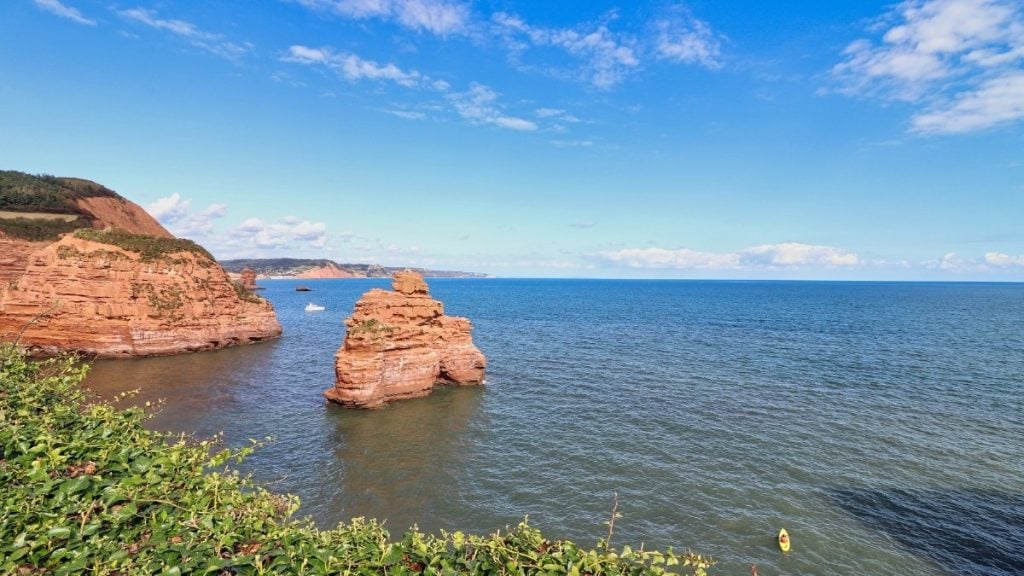
Continue the first day of your road trip with a visit to Ladram Bay. This small cove features dramatic red sandstone rock formations and a pebble beach. A walk on the coast path will give some terrific views over the Jurassic Coast cliffs, setting the scene for what lies ahead.
Arrive in Sidmouth
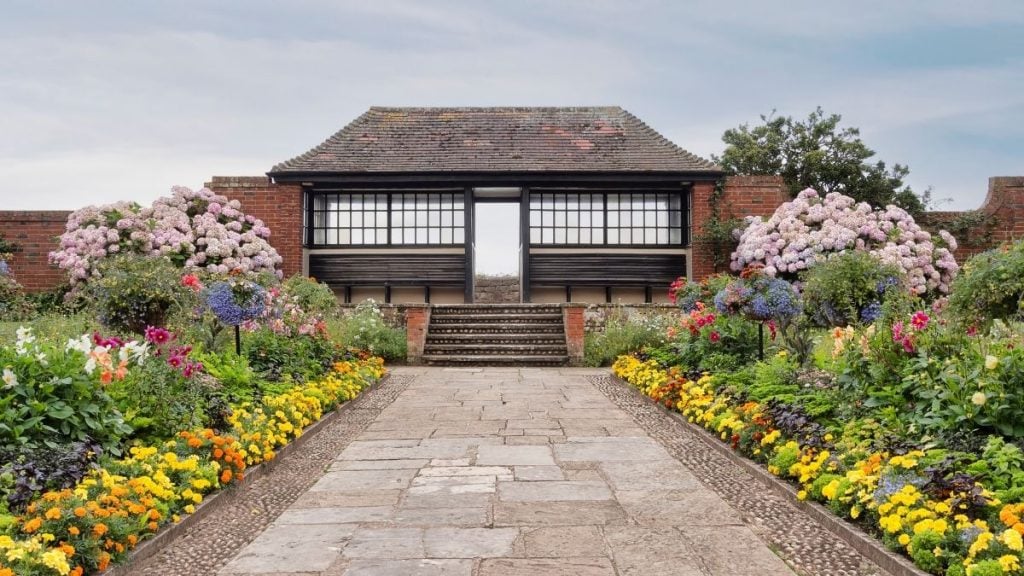
The last stop of today is Sidmouth, a charming spot known for its pretty cottages, Regency seafront, and relaxed pace. Stroll along the Esplanade, visit Connaught Gardens, or enjoy an ice cream stall near the beach.
Day 2: Sidmouth to Lyme Regis
Distance: Approximately 20 miles
Driving time: Around 45 minutes
Stop at Beer and Branscombe
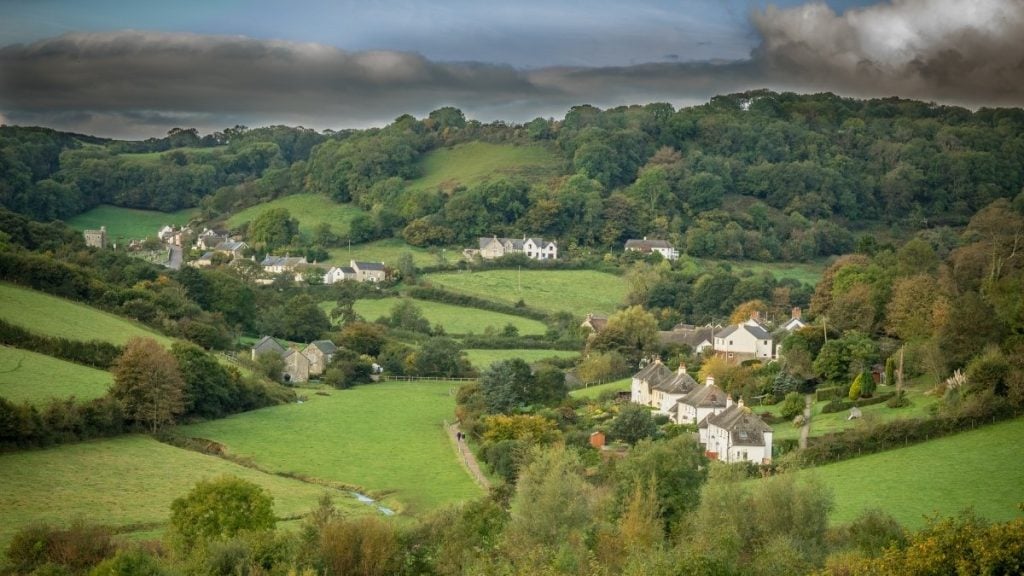
Head east along the coast road to Beer, a tiny fishing village tucked between chalk cliffs. It’s known for its use of Purbeck stone and traditional charm. Continue to Branscombe, home to thatched cottages and a working forge, with a good few hours of walking trails and views along the South West Coast Path if you fancy making a morning of it.
Fossil hunting at Charmouth Beach
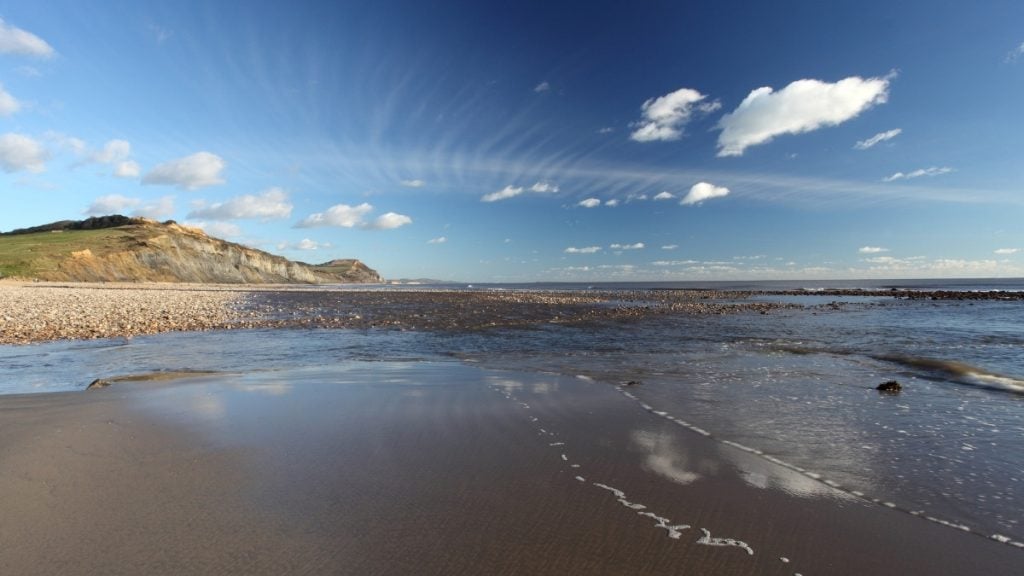
Charmouth Beach is one of the best places along the Dorset stretch of the Jurassic Coast for finding pre-historic fossils. The beach is backed by golden cliffs rich in layers of ancient mudstone and limestone, which erode steadily and reveal new discoveries with each passing season. The Charmouth Heritage Coast Centre is a great place to start, with helpful guides, maps, and displays of what to look for. They also run regular fossil walks led by experts, which are ideal if it’s your first time searching.
Ammonites are the most common find, but you might also spot belemnites, ancient reptile bones, or pieces of fossilised wood if conditions are right. Low tide is best, especially after a storm, when the sea has done some of the hard work for you. Even if you come away empty-handed, the beach itself is a lovely place to explore. From here, it’s just a short drive along the coast to Lyme Regis, finishing the Devon part of the Jurassic Coast and starting the Dorset Jurassic Coast, where the day ends with more fossil history and a stroll along the harbour.
Arrive in Lyme Regis, the fossil capital
Famous for Mary Anning and her fossil discoveries, Lyme Regis is a favourite place on any Jurassic Coast road trip. Wander the Cobb harbour wall, visit the Lyme Regis Museum, or pop into one of the many fossil shops. With local seafood restaurants and gardens with sea views, it’s one of the prettiest bays on the route.
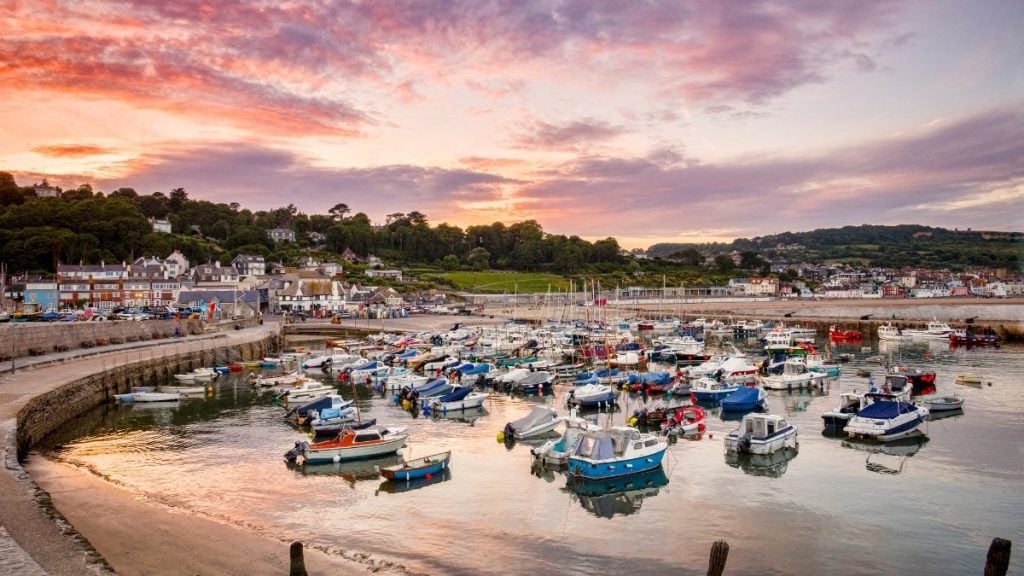
Day 3: Lyme Regis to West Bay
Distance: Approximately 15 miles
Driving time: Around 30 minutes
Climb Golden Cap
You might choose to take it slow in Lyme Regis this morning, especially since the next leg of the journey doesn’t involve much driving. Once you’re ready to move on, continue east on the Dorset Jurassic Coast to the Golden Cap Estate. The National Trust manages this stretch of coastline and offers some of the most rewarding walking in the area. The main draw is Golden Cap itself, which rises to 191 metres and marks the highest point on the entire Jurassic Coast.
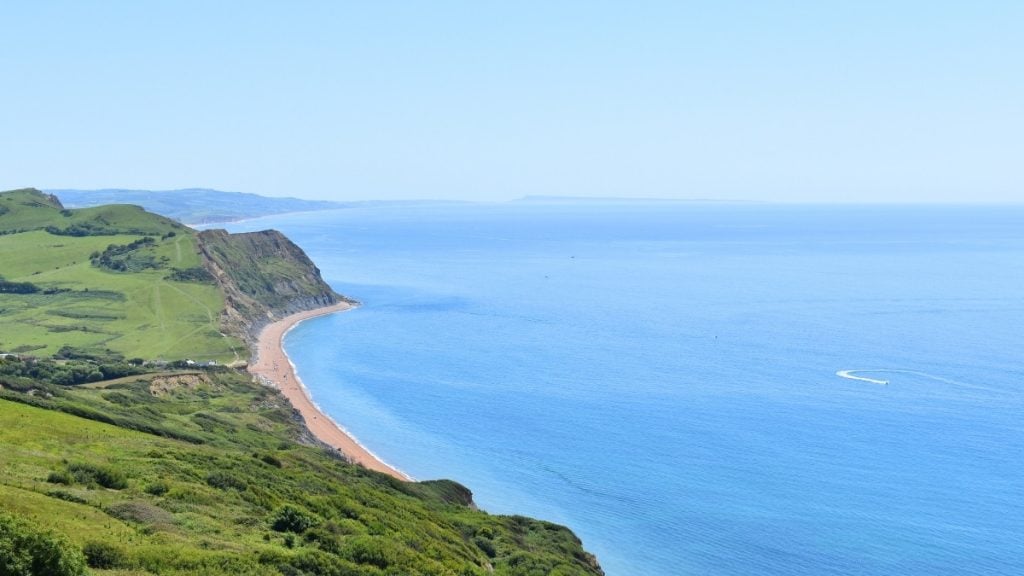
It’s a pretty steep climb in places, so good walking shoes are a must, but the views from the top are more than worth the effort. On a clear day, you can see all the way back toward Lyme Regis and far ahead along the coast toward Chesil Beach and Portland.
Visit Bridport and West Bay
A short drive inland brings you to Bridport, a market town known for its food scene, mini golf, and colourful houses.
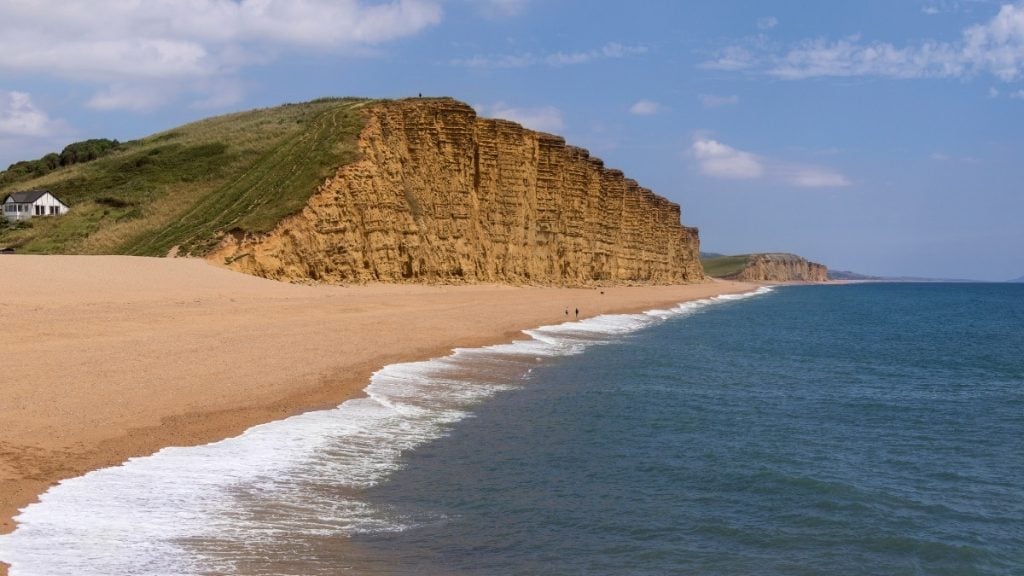
From Bridport, continue to West Bay on the Dorset Jurassic Coast, made famous by the TV series Broadchurch, West Bay is all about dramatic cliffs and classic coastal charm. Visit the visitor centre, enjoy fish and chips by the harbour, or take a short walk along the pebble beach. There’s parking in the main car park near the front.
Day 4: West Bay to Lulworth Cove
Distance: Approximately 35 miles
Driving time: Around 1 hour 15 minutes
Coastal wonders at Chesil Beach and Portland
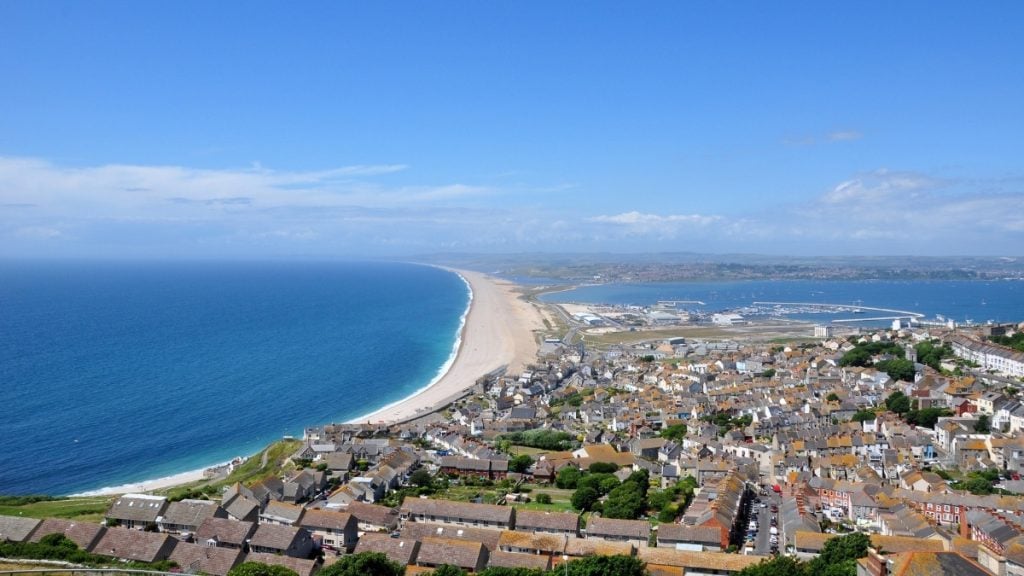
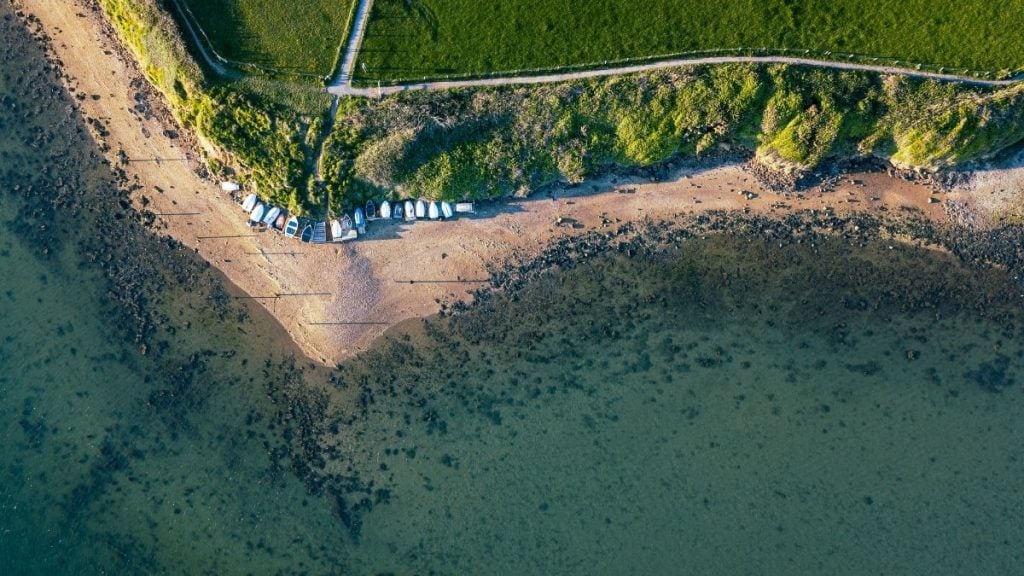
From West Bay, continue your Dorset road trip by following the coastal route toward Chesil Beach, an 18-mile sweep of shingle that runs in a narrow arc along the shore. On one side is the open sea, on the other, the Fleet Lagoon, a long and shallow body of water separated from the English Channel by the beach itself. The lagoon is sheltered and brackish, supporting a variety of bird life and marine species.
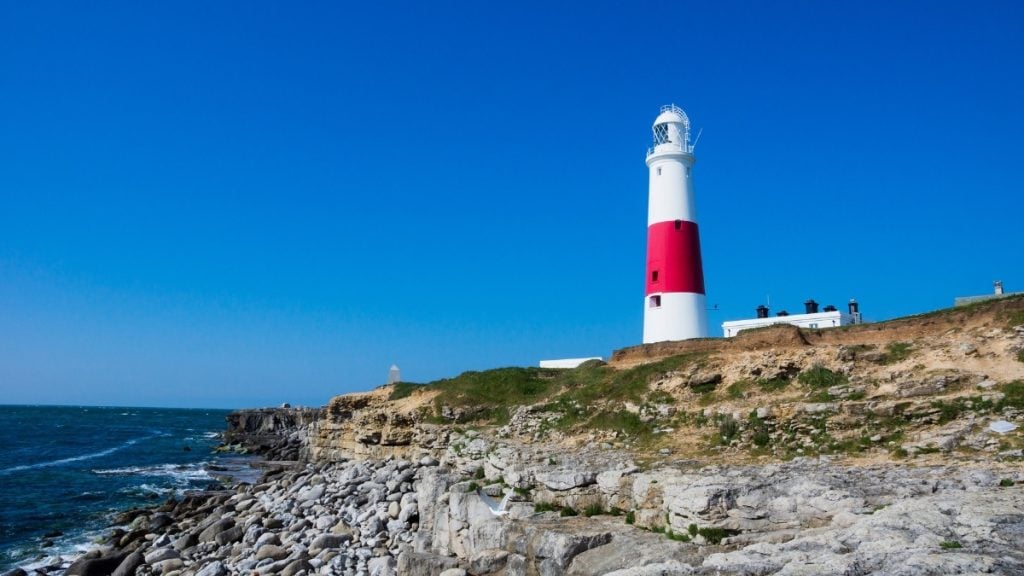
From there, head to the Isle of Portland and visit Portland Bill Lighthouse for wide views over the coast. The island has a distinct, exposed feel and a long history of quarrying Purbeck stone, which has been used in buildings across the UK for centuries.
Relax on the beach in Weymouth
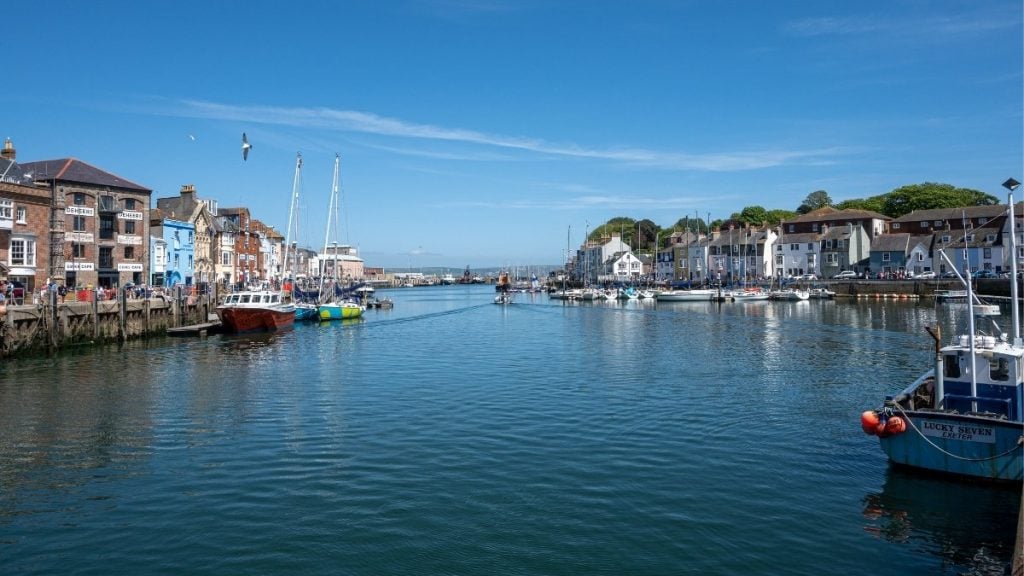
Stop in Weymouth, another typical British seaside town. The sandy arc of beach, funfairs, and promenade make it ideal for families. Grab lunch, enjoy the sloping sand dunes, or try out the mini golf before continuing on your Jurassic Coast road trip to Lulworth Cove.
Arrive at Lulworth Cove
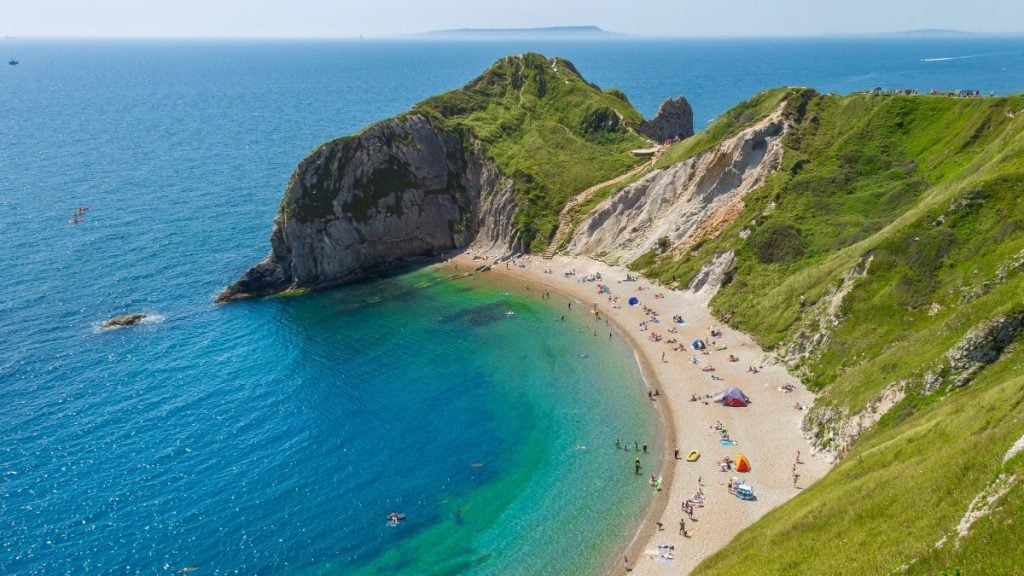
Lulworth Cove is one of the most distinctive and geologically important places along the Jurassic Coast. From the clifftops, its near-perfect circular shape is easy to spot and is the result of thousands of years of waves cutting through soft rock and curving inland.
The village of West Lulworth, which sits just behind Lulworth Cove, is a handy base for exploring the area. There’s a car park, a small visitor centre with helpful displays, a gift shop, and a small cafe for a post-walk break. It’s also where the path begins for the walk westward toward Durdle Door, a natural limestone arch and one of the most well-known places on the Jurassic Coast. The route climbs steadily through open grassland, with views back over Lulworth Cove as you gain height, before curving inland and then descending again toward the sea.

Partway along the trail, you’ll come to Man O’ War Beach, a quiet, crescent-shaped bay tucked below the cliffs. It’s less visited than neighbouring Durdle Door, which often makes it feel more peaceful. The beach is made up of smooth pebbles and slopes gently into clear, turquoise water that stays shallow close to the shore.
From above, the view down to Man O’War Beach is just as impressive, with layered headlands stretching out in both directions and the curve of the bay forming a near-continuous sweep from cliff to cliff. If you’re walking from Lulworth Cove, this is a rewarding pause before continuing on to Durdle Door.
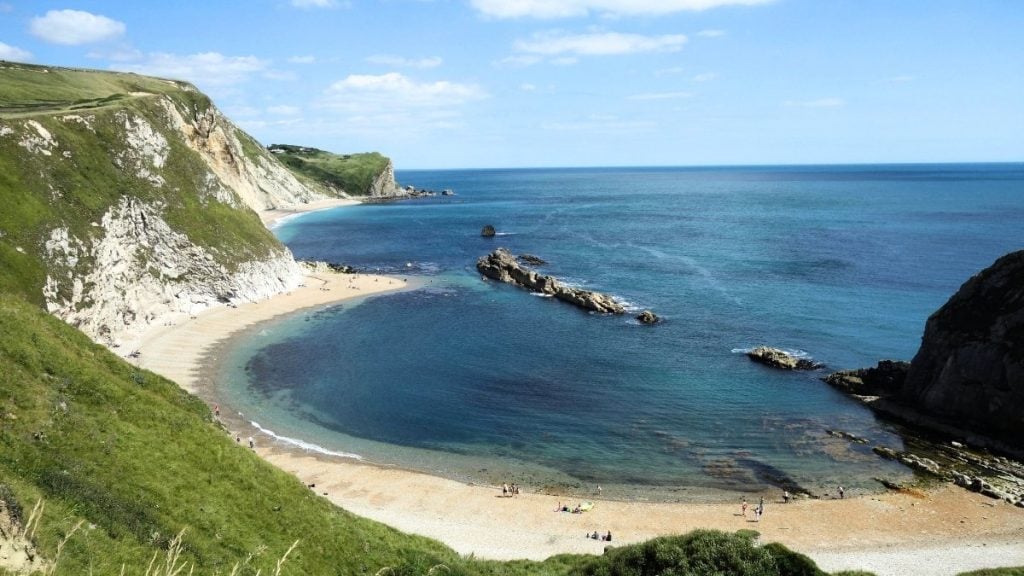
Explore Durdle Door
After leaving Lulworth Cove, the path climbs steadily through open grassland until you reach the top of a chalk ridge that runs along the coast. From here, the view suddenly opens up and Durdle Door comes into sight.
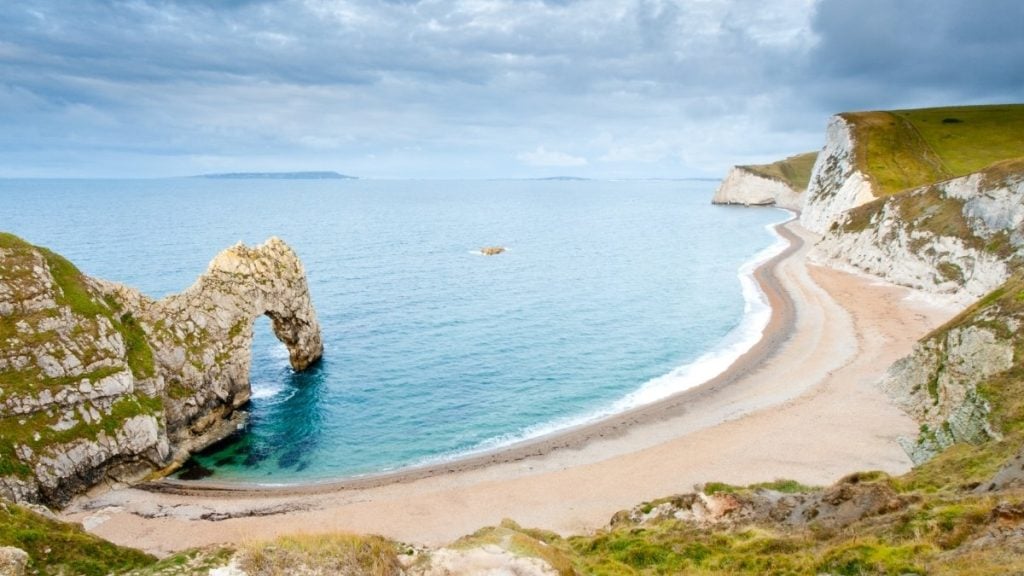
Durdle Door is a massive natural arch that rises from the sea, shaped by centuries of erosion, and is one of the most recognisable landmarks on the Jurassic Coast road trip. Seeing Durdle Door appear as you crest the hill is part of what makes the walk so memorable.
A steep flight of steps leads down to the beach. Even if you decide not to head down to the shore, the view from the ridge is just as impressive, with the curve of Man O War Beach to one side and the horizon stretching out in front of you.
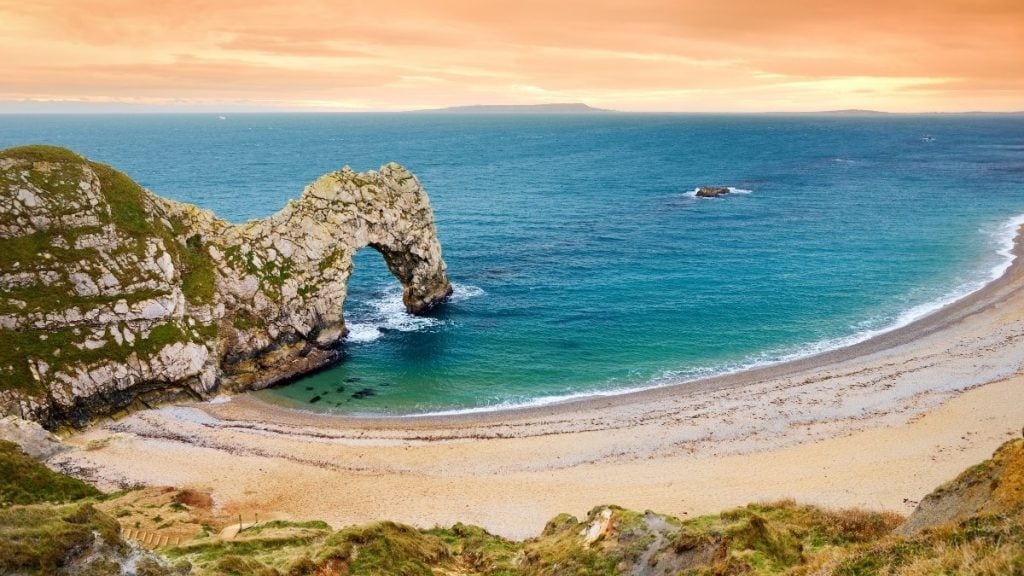
Detour to Kimmeridge Bay
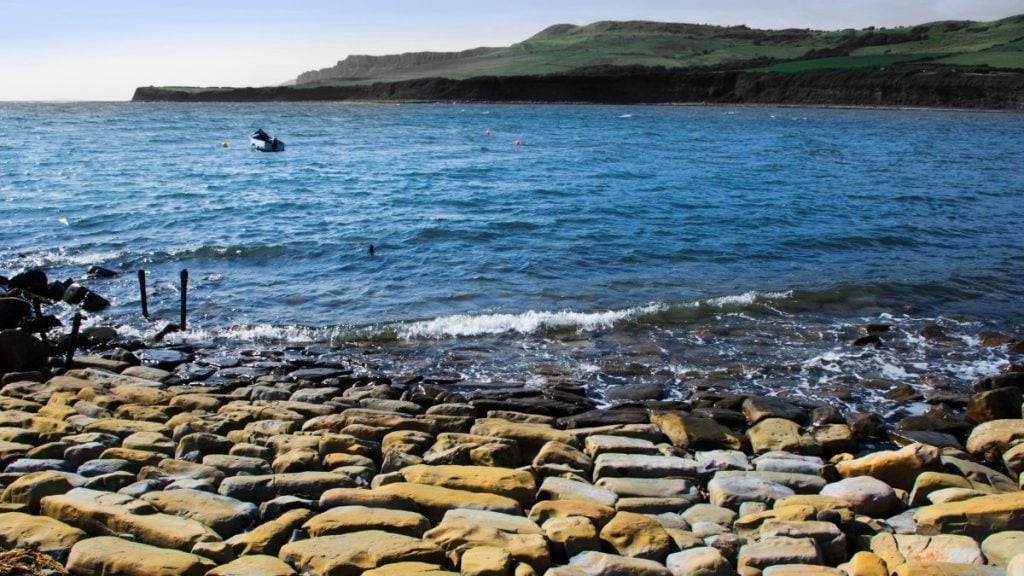
If time allows, from Lulworth Cove and Durdle Door, take a short detour east to Kimmeridge Bay, known for its rock pools, fossil-rich cliffs, and quiet setting. The shoreline of Kimmeridge Bay exposes layers of shale and limestone from the Jurassic and Cretaceous eras because of the continual erosion of the cliffs.
Extend your time around Kimmeridge Bay with a visit to the Wild Seas Visitor Centre or the Etches Collection Museum in Kimmeridge village, which houses a remarkable collection of marine fossils. This tiny fishing village is on private land, and access is via a private toll road, with a car park near the bay.
Day 5: Lulworth Cove to Studland Bay
Distance: Approximately 20 miles
Driving time: Around 45 minutes
Step into the past at Tyneham
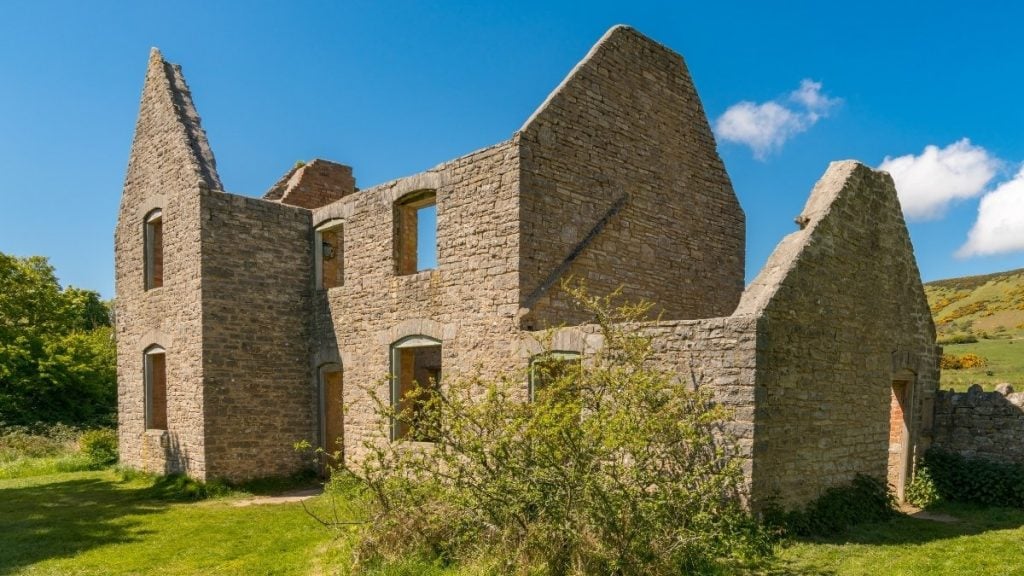
Start the day with a visit to Tyneham, a village that was evacuated during World War II and never brought back to life. In 1943, the residents were asked to leave so the surrounding land could be used for military training, and although they expected to return, they never did.
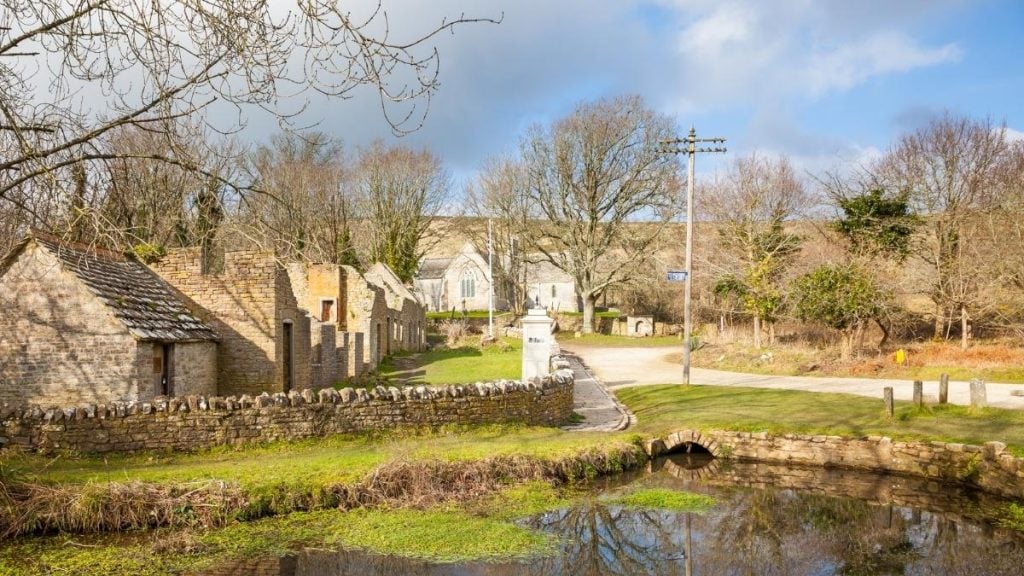
You can wander through roofless cottages, peek into the old schoolhouse with its neat rows of desks, and step inside the small village church, which now holds an exhibition about Tyneham’s past. Information signs fill in the details, but the setting itself does most of the storytelling. It’s a simple place with no cafés or shops, just a few benches, a lot of birdsong, and the kind of quiet that’s hard to find elsewhere. Despite its wartime origins, it feels oddly calm and well worth the short detour.
Explore Corfe Castle and the Purbeck Hills
Head inland to Corfe Castle, where the ruins of a once-mighty fortress sit dramatically on a grassy hilltop, looking out over the Purbeck countryside. Built by William the Conqueror and blown apart during the English Civil War, the castle is now a tangle of stone walls, hidden staircases, and tilted towers. Corfe Castle is ideal for anyone who likes their history with a bit of atmosphere. Managed by the National Trust, it’s easy to wander around Corfe Castle at your own pace, climb up to the viewpoints, and imagine what it must have looked like before cannon fire took its toll.
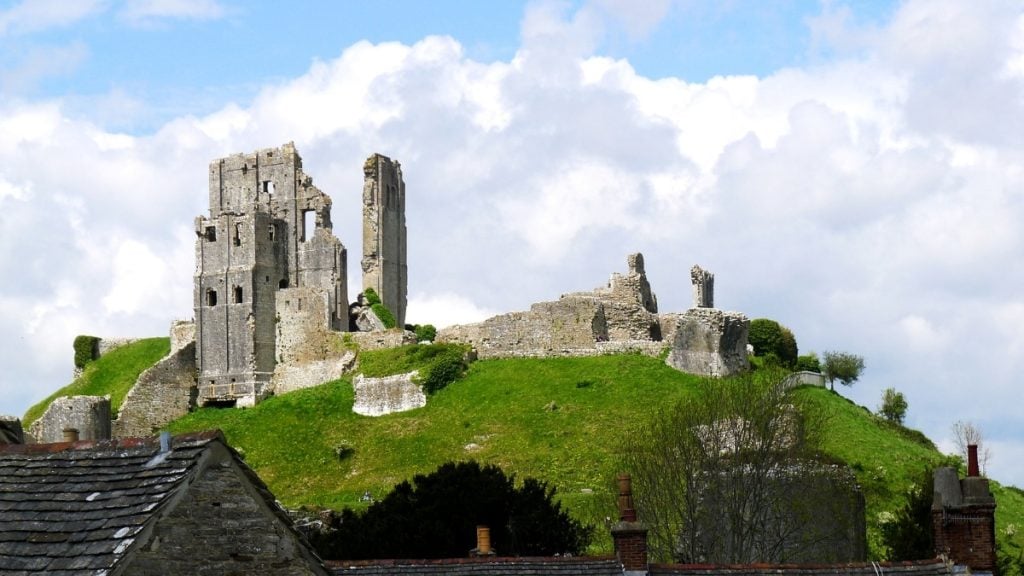
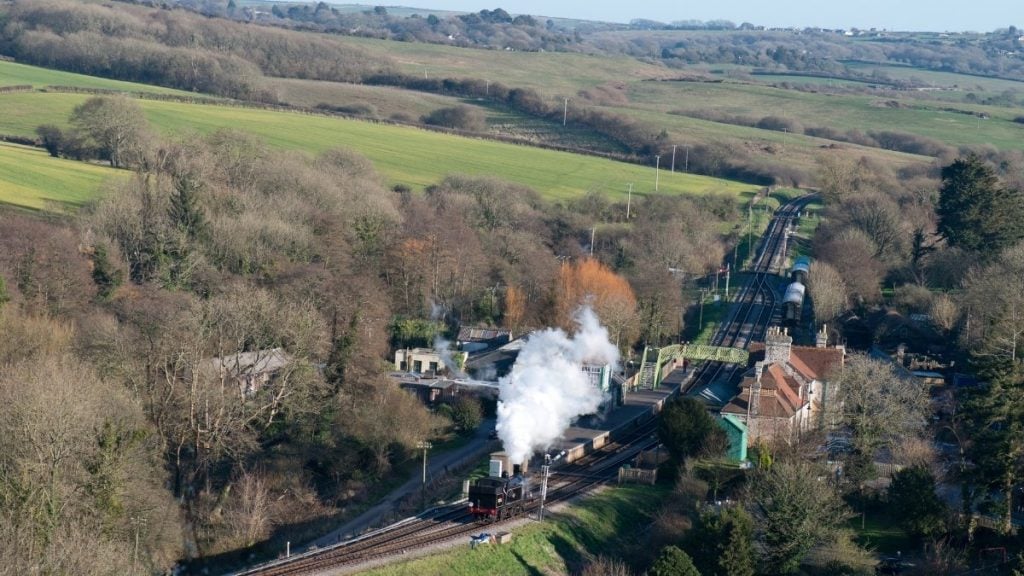
The village below Corfe Castle is compact and full of charm, with low stone cottages, narrow lanes, and a steady mix of cream teas and clinking pint glasses. A heritage steam train, the Swanage Railway, still runs through the valley, connecting Corfe to Swanage, and you might spot it passing while you browse a bookshop or sit outside with a sandwich. It’s the kind of place where you’ll want to slow down for a while. Fortunately, the next stretch of coast is only a short drive away.
Take an inland detour to Kingston Lacy
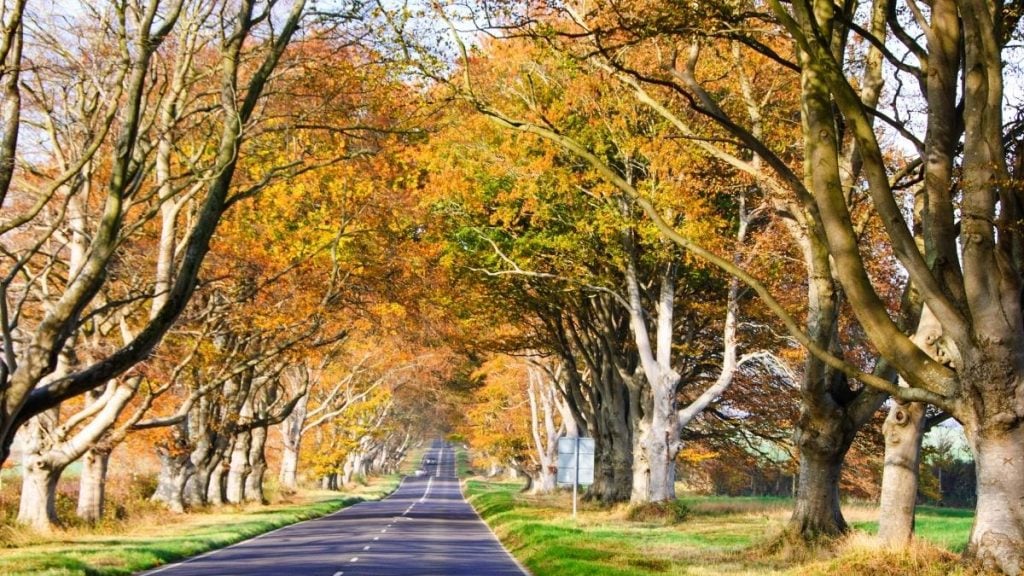
It’s worth heading slightly inland to explore Kingston Lacy, a grand country house surrounded by sweeping lawns and carefully kept gardens. It’s a National Trust property, and the estate feels a world away from the salty air and coastal paths.
Kingston Lacy was once the home of the Bankes family, who also owned Corfe Castle before it fell into ruin. Inside, you’ll find rooms preserved with great care, from glittering chandeliers to warm wood-panelled libraries. Outside, the gardens are ideal for a relaxed stroll, especially if you’ve spent the past few days walking steep cliffs and pebbled beaches. It’s a quieter, more refined stop that adds a bit of variety to the journey and gives you a chance to catch your breath before heading back toward the coast.
Studland Bay and Old Harry Rocks
Head back to the coast for your final stop at Studland Bay, a quiet stretch of shoreline with long sandy beaches, gentle dunes, and a nature reserve full of birdlife and wildflowers. It feels a little more laid-back than some of the busier spots along the route, which makes it a great place to slow down.
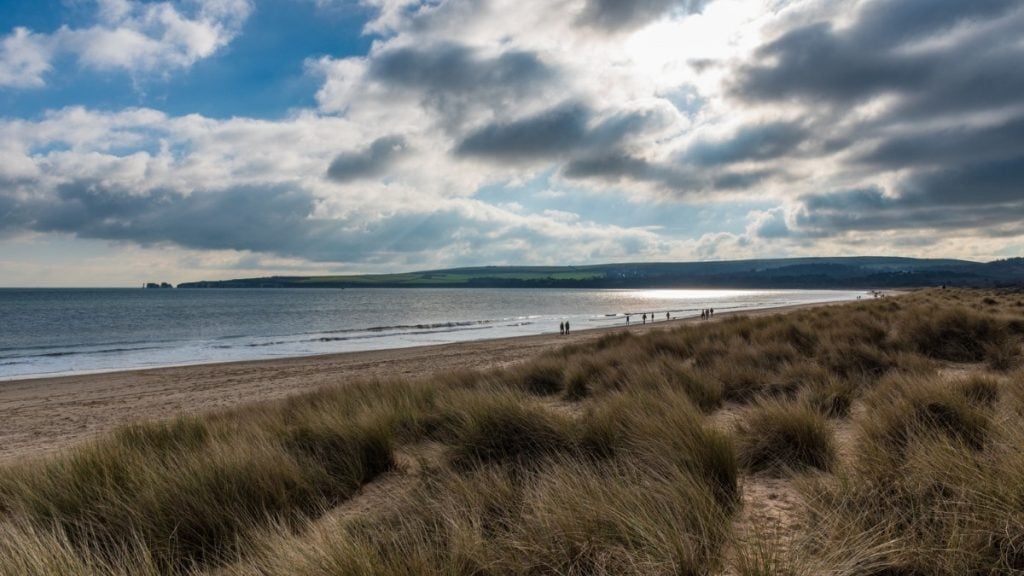
Knoll Beach has space to swim, paddle, or just sit for a while, and South Beach, a bit smaller and tucked further along, is a good option if you’re after something even more peaceful.
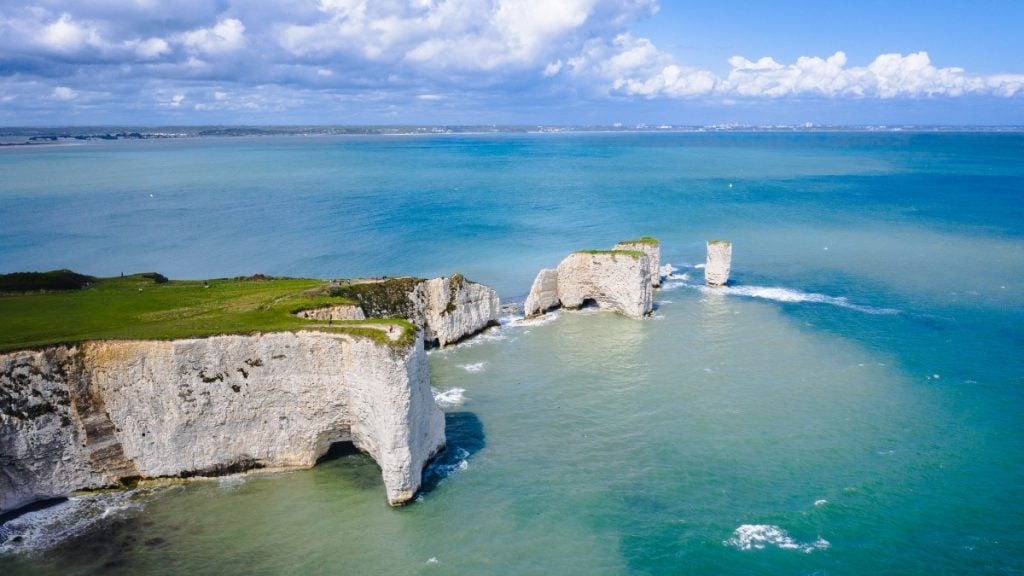
From the village, it’s an easy walk to Old Harry Rocks, a group of bright white chalk rock formations that mark the eastern edge of the Jurassic Coast. The trail follows the clifftop and is mostly flat, with wide views over the sea and back toward the headlands you’ve just explored. On a clear day, you can see across to the Isle of Wight.
Cross to Poole
From Studland, take the chain ferry at Shell Bay for a short ride across the entrance to Poole Harbour. The crossing only takes a few minutes and brings you into Sandbanks, a narrow spit of land known for its sweeping views, calm beaches, and some of the most sought-after real estate in the UK.
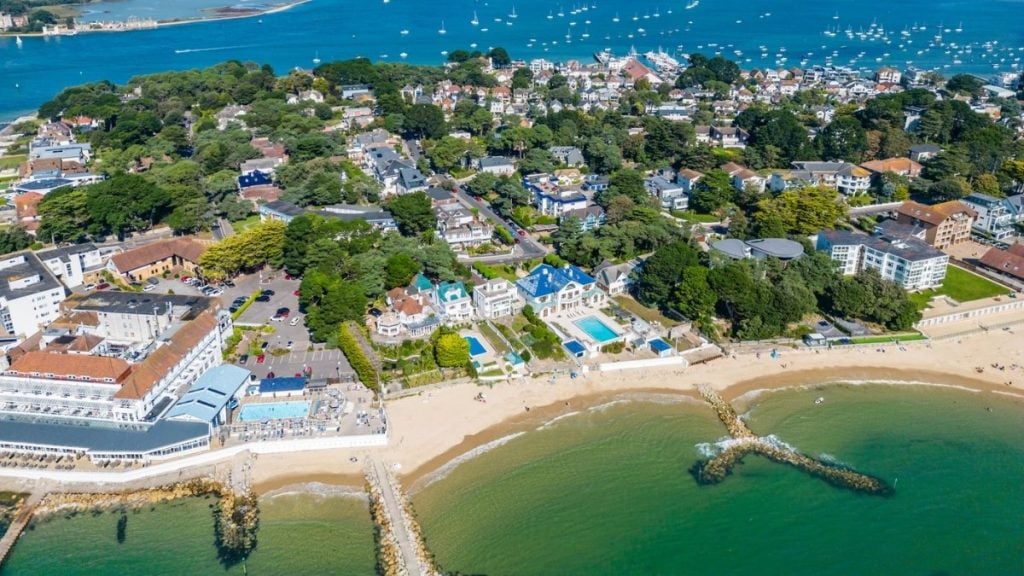
Once across, it’s worth spending some time in nearby Poole. The town has a working harbour with fishing boats, sailing clubs, and ferries coming and going throughout the day. You’ll find independent shops, cute tearooms, seafood restaurants, and a few quiet spots along the quay to sit with a drink and watch the tide roll in.
If you’re finishing your trip with a meal, Rick Stein’s restaurant in Sandbanks serves locally caught fish and shellfish with views across the water. It’s a relaxed way to end your Jurassic Coast road trip along the Dorset coast.
Best cars for the Jurassic Coast road trip
For this road trip, comfort, visibility, and flexibility matter more than power or speed. A compact SUV or estate offers a good balance for most people, with space for bags, walking gear, and the occasional picnic. If you’re packing light, a smaller car can be easier to handle on narrow lanes and in tighter car parks.
In summer, a convertible adds to the fun of those open coastal stretches, though you’ll need to plan for limited luggage space. The route is also increasingly accessible for electric cars with charging points in many towns and main car parks along the coast.
Where to pick up your car
Exeter is the most convenient starting point if you’re flying into Exeter Airport or arriving by train. It’s right at the western edge of the Jurassic Coast, and you’ll find plenty of Turo hosts offering easy pick-up near the city centre or station.
If you’re arriving via Bristol, it’s about 90 minutes from Exeter by car or train, so it’s a practical choice for beginning the road trip.
Those planning to drive the route in reverse and start with a Dorset road trip can collect a car in Poole or Bournemouth. Both towns are close to the final stretch of the Jurassic Coast and offer easy access to Studland Bay and Old Harry Rocks right at the beginning of the road trip.


Take control of your financial future and start building your car sharing business on Turo!
Get started
Browse thousands of cars for every occasion and budget near you, or wherever you’re going.
Browse cars