
posted on July 15, 2026
So, you’ve got an adventurous driving itinerary planned. Maybe you’re heading to Mount Rainer in the depths of ski season or towing a boat to Lake Tahoe during the summertime. If you’re comparing AWD vs. 4WD car models, this is the guide for you.
Understanding the difference between all-wheel drive and four-wheel drive models can help pick the perfect rental car for winter weather, camping trips, mountain road trips and more. To clear up the confusion, keep reading to discover everything you need to know when comparing AWD vs 4WD cars.
In this guide, we’ll be covering:
- What is AWD (all-wheel drive)?
- What is 4WD (four-wheel drive)?
- AWD vs. 4WD: Head-to-head comparison
- When to choose AWD
- When to choose 4WD
- What about two-wheel drive?
- AWD vs. 4WD by vehicle type
- Frequently asked questions

What is AWD (all-wheel drive)?
As the name suggests, all-wheel drive systems power all four wheels of the car simultaneously. AWD uses a system of differentials and clutches that distribute power to the wheels with the most grip.
Typically, AWD systems are automatic. Sensors monitor wheel slip and redistribute power to whichever wheels have the most traction, without the driver needing to do anything. This is what makes AWD vehicles a great fit for unpredictable road conditions such as rain, snow, ice, and gravel.
Some cars offer full-time AWD, which is always engaged and automatically detects wheel slip. Part-time AWD (commonly called “on demand” AWD) means the system typically operates as a two-wheel drive, but automatically engages all four wheels if a slip is detected. The latter is common on family SUVs and is a more fuel-efficient option for everyday driving.
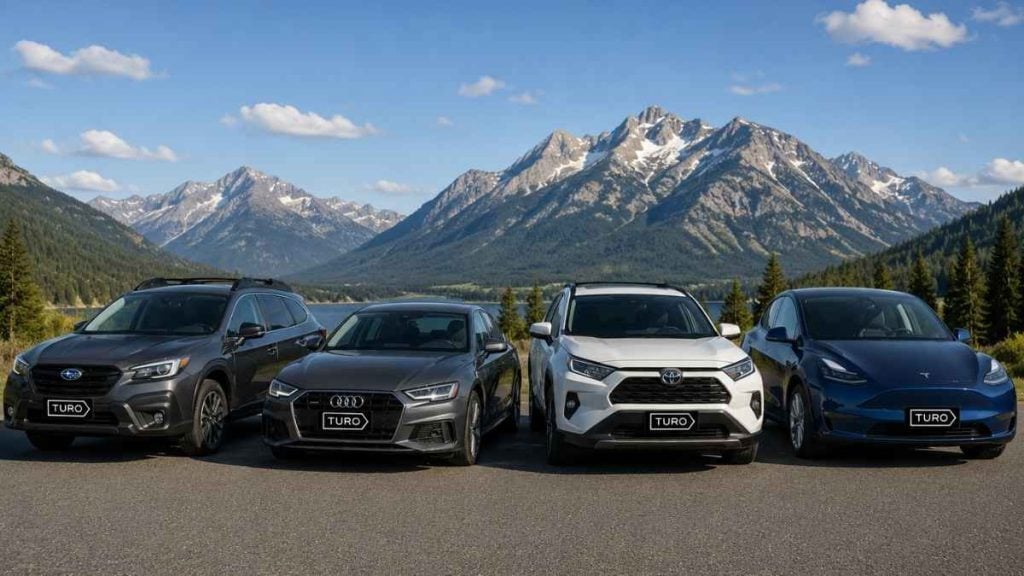
AWD is most common in SUVs, crossovers, performance sedans, and even electric vehicles. Subaru offers standard AWD on most models, while cars like the Toyota Camry and Mazda3 commonly offer AWD systems.
What is 4WD (four-wheel drive)?
Four-wheel drive systems also power all four wheels simultaneously. But the key difference is how it works: 4WD systems use a transfer case to lock the front and rear driveshafts together, meaning they rotate at the exact same speed. The result is that the car gains maximum traction, even in very low-traction conditions.
But 4WD should only be used in conditions with poor traction (such as driving in wet grass, deep snow, or dirt roads. Locking the axles together can put stress on the drivetrain when turning on dry, high-grip pavement.
Typically, 4WD systems are part-time and manually switched on by the driver using a switch or lever for low-traction conditions. Plus, 4WD systems have two different ranges designed for different conditions:
- High-range (4H) is intended for most 4WD conditions, such as off-roading or driving in deep snow.
- Low-range (4L) is intended for extreme conditions requiring maximum torque at very low speeds, such as pulling heavy loads to steep hill climbs.
Want to learn more about how car engines work? Dive into our complete guide to torque vs horsepower.
AWD vs. 4WD: Head-to-head comparison
While both 4WD and AWD systems send power to all four wheels, each functions very differently. AWD operates automatically and is best for on-road traction, while 4WD requires manual engagement and is best for heavy-duty off-roading.
| AWD | 4WD | |
|---|---|---|
| How it works | Automatic, uses differentials | Manual engagement, locks front and rear axles |
| Best for | Everyday driving, rain, light snow, paved roads | Serious low-traction conditions, unpaved surfaces |
| Can be used on dry pavement? | Yes, always | High range: only briefly; Low range: no |
| Driver input required? | No, fully automatic | Yes, driver engages manually |
| Fuel economy | Better than 4WD (especially part-time) | Lower, particularly in 4WD mode |
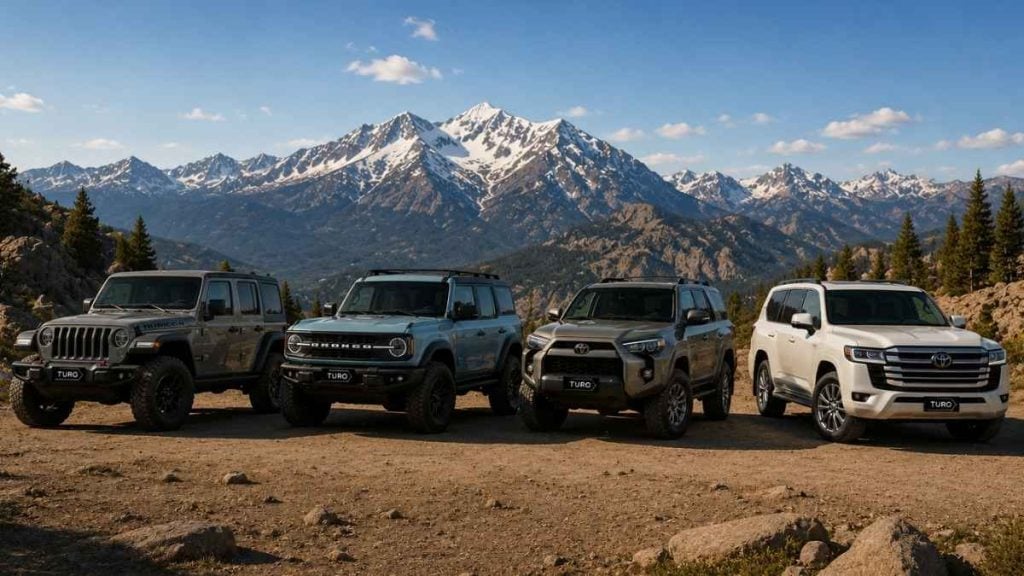
| Typical vehicles | SUVs, crossovers, sedans, wagons | Trucks, body-on-frame SUVs (4Runner, Bronco, Wrangler) |
| Traction advantage | Good in most slippery conditions | Maximum traction in extreme conditions |
| Ground clearance | Varies widely | Generally higher (truck-based vehicles) |
When to choose AWD
AWD is the right choice for everyday drivers seeking extra confidence in variable driving conditions (without having to do anything extra while behind the wheel).
AWD makes sense when:
- You drive in rain, light snow, or occasionally slippery conditions: AWD will automatically engage to provide added safety, without the driver needing to flick switches or pull levers.
- Your driving is primarily on paved roads:AWD is designed to operate safely on any surface, including dry pavement, while 4WD’s locked axle design is not.
- You want all-weather confidence in a crossover or SUV: If you’re eyeing a crossover SUV, upgrading to a model with an AWD system is easy (and brands like Subaru often offer AWD as standard).
- You prefer a seamless, low-maintenance experience: AWD requires no mode switching, meaning the system handles everything automatically.
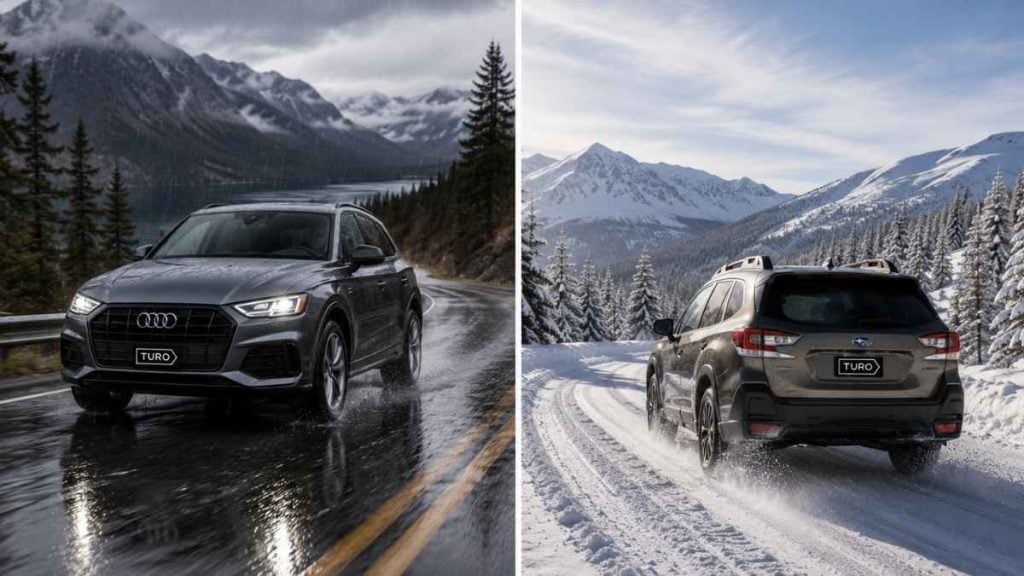
- You’re renting a car for a winter road trip on paved mountain roads: AWD-equipped crossovers and SUVs are well-suited for snowy mountain passes and winter highway driving.
When to choose 4WD
4WD is the right choice for drivers navigating extreme conditions and demanding driving scenarios, such as steep inclines, heavy-duty towing, or soft-sand surfaces.
4WD makes sense when:
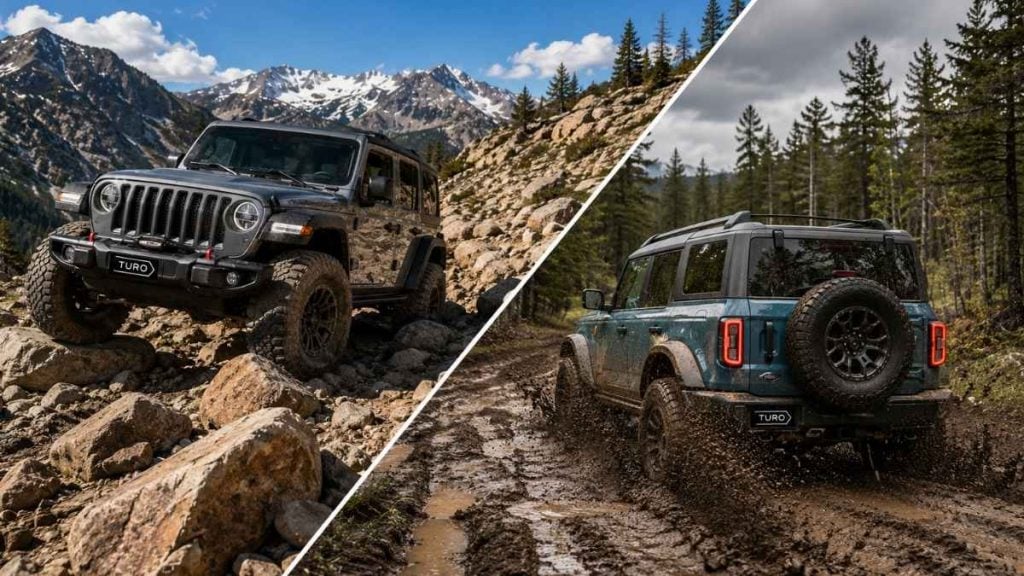
- You regularly drive on unpaved surfaces: Gravel forest roads, dirt tracks, and loose terrain (like sandy routes) benefit from 4WD’s superior grip in low-traction conditions.
- You’re driving through deep snow or mud: When conditions are severe enough that an AWD system struggles to manage traction automatically, 4WD’s extra torque provides more reliable grip.
- You need low-range gearing for very steep or technical terrain: 4WD Low is designed for situations that require maximum torque at very low speeds, such as navigating very steep grades.
- You’re towing or hauling in difficult conditions: 4WD’s mechanical traction advantage is particularly useful when towing a heavy load in wet, loose, or slippery conditions. Note that Turo’s policy prohibits towing or pushing anything, even if the vehicle is equipped with a hitch.
Tip from the author: Neither AWD nor 4WD overcomes the laws of physics. While they do help you get moving, they don’t improve braking on slippery surfaces. Always adjust your speed and following distance to match the road conditions, regardless of which system your vehicle has.
What about two-wheel drive?
On the flip side, two-wheel drive (2WD) means the vehicle powers only one axle: either the front wheels (FWD) or the rear wheels (RWD).
Typically, front-wheel drive is the common option for everyday passenger cars as it offers reasonable traction in light rain and snow. Rear-wheel drive is more common in trucks, sports cars, and performance vehicles as it offers excellent handling balance (but can be more challenging to navigate slippery surfaces).
If you’re sticking to everyday driving in mild climates, a 2WD car is a good choice, and often more fuel-efficient than AWD or 4WD cars, too.

AWD vs. 4WD by vehicle type
Different vehicle types use different systems. Here’s a quick guide to identifying what you’ll likely find under the hood.
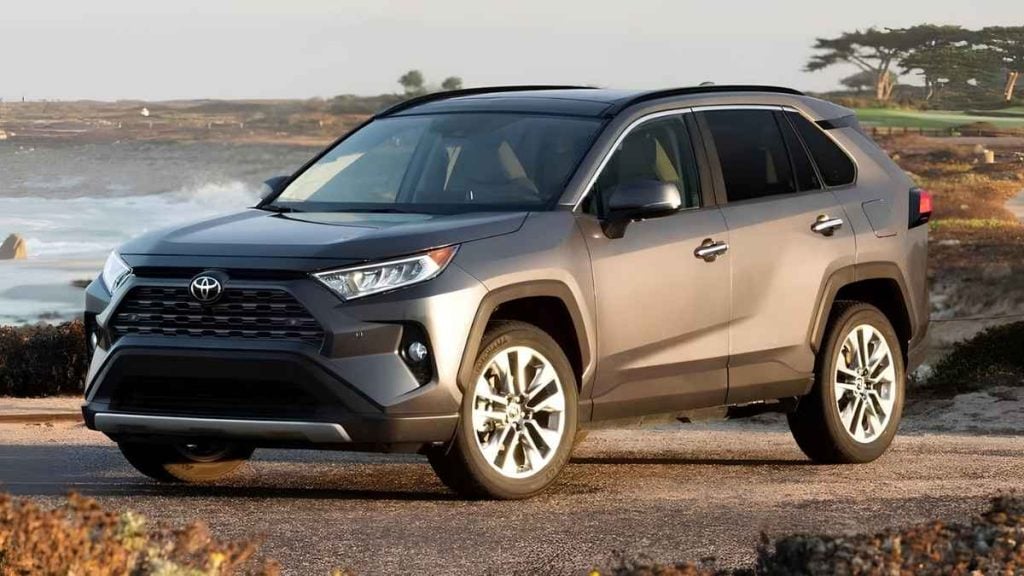
- Crossovers and SUVs (car-based): Most modern crossovers and unibody SUVs use AWD (think the Honda CR-V, Toyota RAV4, Subaru Outback, or Ford Edge). These vehicles are designed primarily for paved road use with all-weather capability.
- Trucks and body-on-frame SUVs: Traditional pickup trucks (like the F-150, Tacoma, or Silverado) and body-on-frame SUVs (Toyota 4Runner, Ford Bronco, and Jeep Wrangler) typically use part-time 4WD with a transfer case and high/low range.
- Luxury and performance cars: Many luxury sedans, wagons, and performance cars use AWD, including the Audi Quattro, Subaru WRX, and BMW xDrive. These are full-time AWD systems optimized for performance and handling on paved roads.
- Electric vehicles: Most AWD EVs use dual-motor systems (one motor per axle) rather than a mechanical center differential, delivering the instant torque advantages of electric motors to all four wheels simultaneously.
Frequently asked questions about AWD vs. 4WD
What is the difference between AWD and 4WD?
AWD uses differentials to automatically distribute power between front and rear axles and can be used on any road surface. Traditional 4WD mechanically locks the front and rear axles together for maximum traction in extreme low-grip conditions, but should not be used on dry pavement. AWD is designed for everyday driving, while 4WD is designed for more demanding off-pavement and extreme weather use.
Is AWD or 4WD better for snow?
AWD handles light to moderate snow well. It automatically distributes power as needed without driver input, making it a good choice for winter road driving and snowy mountain passes.
In deep snow or very severe winter conditions, 4WD provides more reliable traction. For most drivers dealing with everyday winter weather on paved roads, AWD is sufficient.
Can you use 4WD on regular roads?
4WD systems should not be used on dry pavement, as the locked axle creates drivetrain stress when cornering. On wet or slippery paved roads, brief use of 4H is generally acceptable. 4WD Low should only be used at very low speeds in extreme conditions. AWD, by contrast, can be used on any surface without concern.
Does AWD use more fuel than 2WD?
Yes. AWD adds weight and mechanical complexity, which reduces fuel economy compared to an equivalent 2WD vehicle. Part-time AWD systems (which operate in 2WD under normal conditions) are more fuel-efficient than full-time AWD.
Which is better for a road trip in winter?
AWD is generally the more practical choice for a winter road trip on paved roads; it provides excellent traction in rain, light snow, and slippery conditions without any driver management. If your route includes mountain passes, an AWD-equipped SUV or crossover is a very capable choice. 4WD is more relevant if you’re regularly driving on unpaved or severely snowed-in roads.
Plan the ultimate road trip with our complete guide to road tripping through the states.
Should I rent an AWD or 4WD car?
For most road trips and winter travel on paved roads, an AWD vehicle is the right choice. It handles the conditions most drivers encounter without requiring mode-switching or special management. If you’re planning to drive on unpaved campground roads, gravel forest routes, or in severe winter conditions, a 4WD truck or SUV may be more appropriate. Turo’s policy prohibits “off roading” or driving on undeveloped or unimproved roads
Find the right drive system for your next trip on Turo
Whether you need the seamless all-weather confidence of AWD for a winter mountain road trip or the tough capabilities of a 4WD truck for a serious adventure, choosing the right drivetrain makes a real difference in how your trip feels.
Explore cars available to rent across the US, and filter by AWD or 4WD systems to find the right car for your trip.
Share your car, earn extra cash
Cover your car payments or earn some extra cash by sharing your car whenever you’re not using it.
Get startedHit the road
Browse thousands of cars for every occasion and budget near you, or wherever you’re going.
Browse cars
Lucinda Starr
Lucinda Starr is a travel and automotive writer with 5+ years of firsthand experience road-tripping across Australia, New Zealand, and beyond. She writes road trip guides for Turo, drawing on her experience behind the wheel to share practical insights on long-distance drives, destinations, and vehicles. Her travels have taken her across Australia’s East Coast, Victoria’s Great Ocean Road, the Northern Rivers, Byron Bay, and both islands of New Zealand. One of her most memorable journeys was an 11-day, 2,600+ km route from Auckland to Punakaiki and Queenstown. Lucinda has a particular passion for classic, rugged 4WD vehicles and the freedom they bring to exploring new places.