
by Turo
posted on May 29, 2024
Starting later this summer, it will be easier for all Turo hosts to price competitively and maximize their earnings, thanks to dynamic pricing, a new and improved pricing algorithm that will replace Automatic Pricing.
Automatic Pricing, our current pricing algorithm, created back in 2016, offers hosts daily pricing recommendations for their vehicles. While we’ve made incremental improvements to Automatic Pricing over the years, we’ve heard your feedback that this tool still sometimes doesn’t accurately reflect your market dynamics.
Dynamic pricing, the brand-new model designed by our data scientists, will continually adjust your prices based on fresh market data and other factors.
Once dynamic pricing has launched, all hosts will see their prices updated to the dynamic pricing recommendations tailored to each vehicle. Rest assured, you’ll still be in control. While dynamic pricing will be the new default price, you’ll be able to change prices using the calendar in the “Trips” tab to fit your utilization goals.
We’ll give you plenty of advance notice before this change happens.

Current pricing experience

Dynamic pricing and price adjustments will be viewed and managed on the calendar
As part of this update, the vehicle calendar will be removed. To simplify your workflow, the calendar in the “Trips” tab will offer a centralized place to manage your entire portfolio, including viewing dynamic pricing and managing pricing, trips, and vehicle availability.
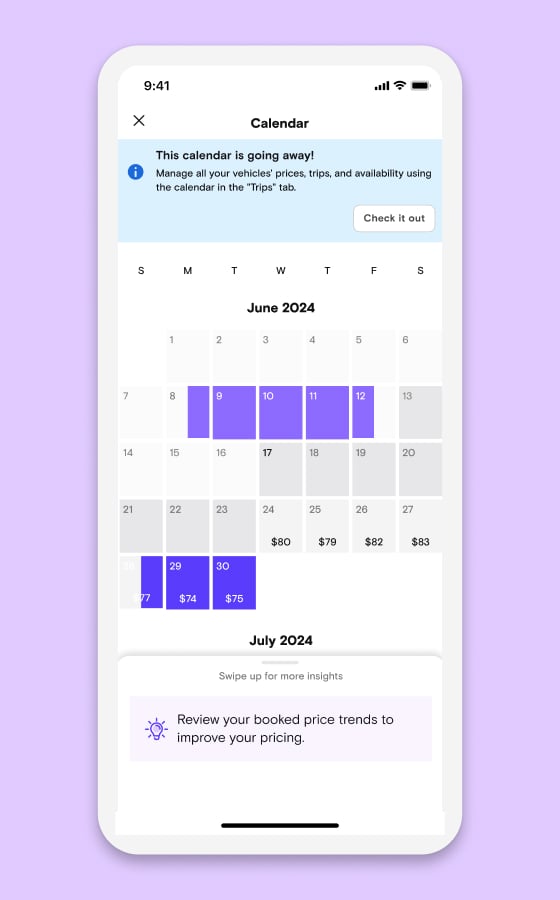
The vehicle calendar will be removed

Once these changes are implemented, you’ll view and manage prices in the calendar in the “Trips” tab
How dynamic pricing works
Dynamic pricing uses current market data to try and calculate the best price for your car on a given day, maximizing your earnings by finding the optimal price. This optimal price is based on both the vehicle’s price and the probability it will be booked. The goal is to find the sweet spot where the price is as high as possible while the vehicle is still likely to be booked.
Dynamic pricing is a new, sophisticated pricing algorithm that is updated daily based on the latest supply and demand data, to give the best possible pricing recommendations. Plus the model is retrained using historical data 10x more frequently than Automatic Pricing.
All of this means you get better pricing recommendations that are specifically tailored for your vehicle in your local market. This will help you earn more on a monthly basis by balancing price and utilization.
Dynamic pricing takes the following information into account:
- Your vehicle’s make, model, fair market value, etc.
- Past booked prices and utilization for your vehicle and similar vehicles
- Supply and demand forecasts for your local market, factoring in daily demand patterns and seasonal trends
- Other proprietary factors
You’re in control
You can always change prices set by dynamic pricing. If you think the price should be different based on your local market knowledge, or utilization goals, you can easily change it for a specific day or as many days as you want in the calendar in the “Trips” tab.
For example, if there’s a special event in your city that you think will increase demand but dynamic pricing hasn’t recommended higher prices, you can change your prices to what you think is more appropriate during the event.
This kind of fine-tuning, changing specific prices, is a little bit like Tesla’s self-driving technology. The car does most of the work for you, but you still need to keep your hands on the wheel.

Look ahead with the new “Future prices” chart
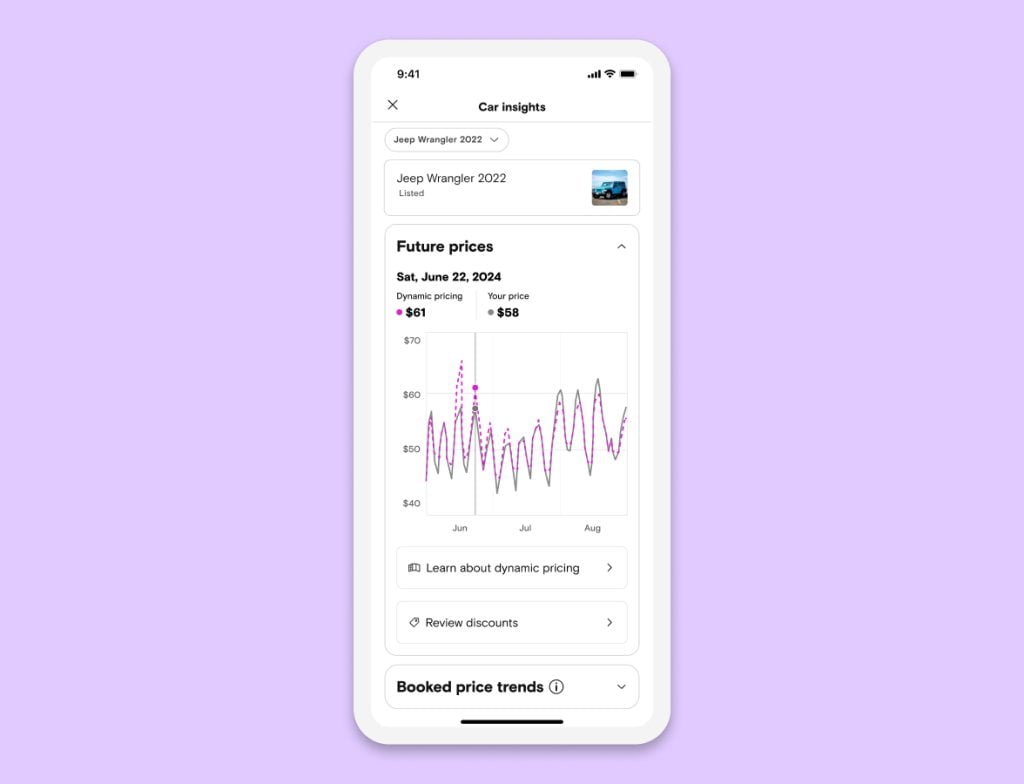
To provide you with a better overview of how dynamic pricing fluctuates over time, look out for the launch of the new “Future prices” chart, which will show the current dynamic pricing for the next 90 days. Prices are updated daily, and you’ll be able to see how dynamic pricing changes over time and how it compares to any custom prices you’ve set, offering useful pricing insights.
Why we’re replacing Automatic Pricing
The old Automatic Pricing tool has some limitations that we’re excited to have fixed with the new dynamic pricing algorithm. The old tool’s data was updated less frequently and was also more general which means the pricing recommendations haven’t always been as accurate for some hosts.
Additionally, how hosts were using the Automatic Pricing settings actually prevented the old tool from fully helping hosts maximize their earnings. Let’s go through each of these scenarios to understand more.
Hosts who underprice can miss out on earnings
Markets where a sizable number of hosts don’t use Automatic Pricing have sometimes suffered from widespread underpricing which has a negative impact on all hosts in that market. This race to the bottom is problematic since hosts in these markets are collectively leaving money on the table.
Dynamic pricing, on the other hand, addresses this problem since it requires hosts to be more thoughtful about when they adjust their prices, rather than opting out entirely like they’ve been able to with Automatic Pricing. Because dynamic pricing sets recommended prices as the default, it’ll help all hosts better maximize their earnings.
Hosts who overprice can miss out on bookings
When hosts don’t use Automatic Pricing and set their own prices, they can also tend to set prices too high, which leads to missing out on bookings and earning less on a monthly basis. This can also happen when hosts who use Automatic Pricing set higher price minimums than the tool’s recommended minimum.
In addition to addressing this problem by requiring hosts to be more thoughtful about when they adjust their prices, dynamic pricing also helps reduce this problem by removing the ability to set a minimum price. Together, these enhancements will help make sure that vehicles are priced to maximize earnings while hitting a sweet spot with utilization.
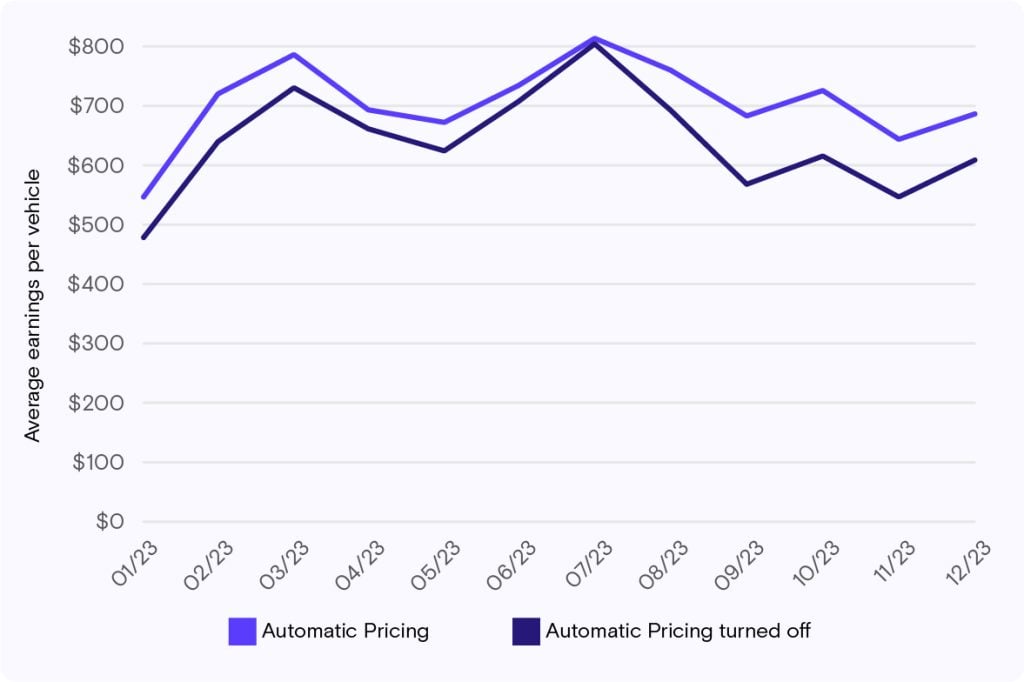
Average earnings per vehicle (USD):
Automatic Pricing vs. Automatic Pricing turned off
This chart shows that hosts (US + CA) who use Automatic Pricing earn more on a monthly basis than hosts who don’t use Automatic Pricing. When hosts set their prices manually, they tend to either overprice, resulting in fewer bookings and lower earnings, or else they underprice, resulting in more bookings but lower earnings.
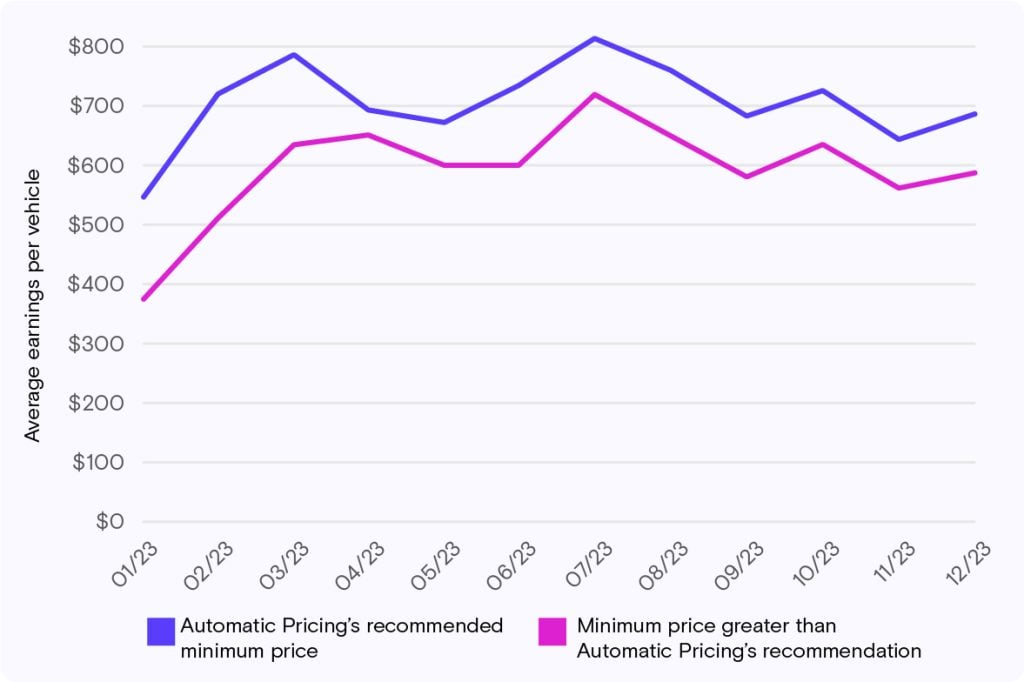
Average earnings per vehicle (USD):
Automatic Pricing vs. minimum price greater than Automatic Pricing
This chart shows that hosts (US + CA) who stick with Automatic Pricing’s recommended minimum price have earned more on a monthly basis than hosts who set a minimum price that’s higher than the recommendation.
Improving on Automatic Pricing
With all of this in mind, the team decided it was time to retire Automatic Pricing and replace it with the new dynamic pricing model which uses more accurate data to help hosts price competitively and maximize their earnings by charging a competitive market rate instead of under- or overcharging.
Default prices for all hosts will come from dynamic pricing. Hosts won’t be able to opt-out like they could with Automatic Pricing, but can thoughtfully change prices as needed in the calendar in the “Trips” tab, based on their market knowledge. Additionally, unlike with Automatic Pricing, there is no minimum or maximum price for dynamic pricing. This is because if hosts make their minimum price too high, they might miss out on bookings and earn less, as we explained above. Conversely, if hosts set their maximum price too low, they could be leaving money on the table.
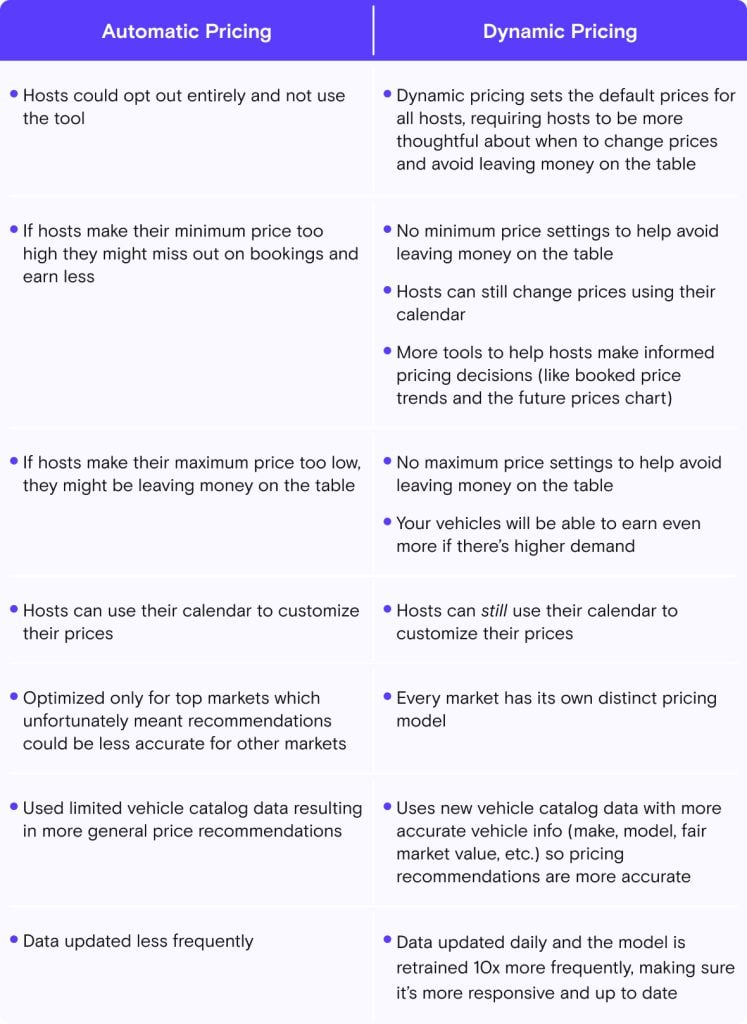
Automatic Pricing vs. dynamic pricing
Here’s a breakdown of the old Automatic Pricing pricing tool compared with the brand-new dynamic pricing:
How to access dynamic pricing
At launch, prices on your calendar in the “Trips” tab will reflect dynamic pricing. Please note to help keep your calendaring in one place, we’re removing the vehicle calendar as part of these changes.
Previously, for hosts with larger portfolios, the process of updating pricing and availability in the vehicle calendar for each individual vehicle could be tedious and time-consuming. Now that hosts are able to quickly update their prices and vehicle availability in the centralized calendar in the “Trips” tab, it’s easy to quickly manage as many vehicles as you want with a couple of clicks.
In addition to dynamic pricing, the calendar in the “Trips” tab is your go-to spot for pricing tools like monthly booked price trends and the future prices chart, as well as trip info for each vehicle.
Stay tuned
Look out for updates in the coming months to learn when you can start taking advantage of dynamic pricing and its more accurate and sophisticated pricing recommendations, as well as when the vehicle calendar will be discontinued. We’ll give you plenty of advance notice for these changes. In the meantime, make sure you’re familiar with using the calendar in the “Trips” tab to help get ready for this change so you can avoid disruptions to your business workflows.
Share your thoughts
We’d love to hear your feedback on how you think these changes might impact you and what we can do to better support you. Please fill out this short survey to share your thoughts on these changes.