posted on July 25, 2026
Zion National Park is a landscape of towering sandstone cliffs, twisting canyons, and a 10-mile canyon carved with cinematic precision. The Zion Canyon Scenic Drive is often the first name travelers hear, but how you experience it depends entirely on season, timing, and transport.
Getting around Zion blends bold backroad driving with an efficient, free shuttle system that threads through the canyon floor. Once you understand how the two work together, the park shifts from confusing logistics to fluid, flexible exploration.
In this guide, we’ll be covering:
- How driving works at Zion National Park
- The Zion Canyon Scenic Drive and shuttle system
- The Zion–Mt. Carmel Highway: Zion’s best drive
- The Kolob Canyons Road
- Top stops and hikes along each route
- Tips for visiting Zion by car
How driving works at Zion National Park
Zion runs on a dual-access system that can catch first-time visitors off guard. Before you get confused, let’s explain:
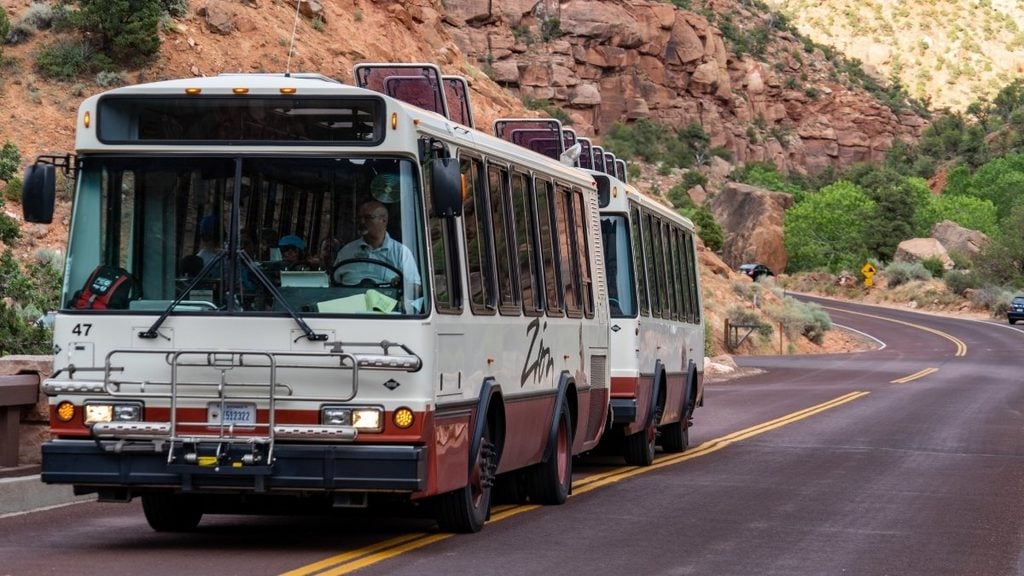
- The Zion Canyon Scenic Drive (the 7-mile route from Canyon Junction to the Temple of Sinawava) is closed to private vehicles roughly from March to November when the park’s free shuttle operates.
- During this period, access is limited to shuttle buses — unless you’re staying at Zion Lodge or visiting in the quieter winter season.
The Zion–Mt. Carmel Highway (SR-9) and the Kolob Canyons Road are a different story entirely:
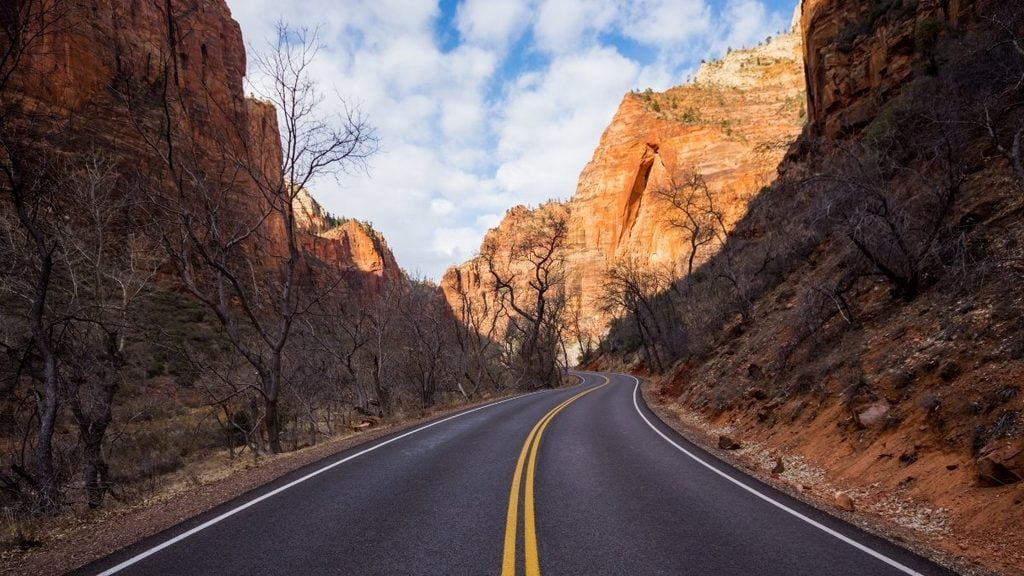
- This east–west route between the south and east entrances remains open year-round to private vehicles and delivers one of the most dramatic driving experiences in the Southwest.
- The Kolob Canyons Road in the park’s northwest section also stays open to private vehicles year-round, offering a quieter, less-traveled slice of Zion’s incredible scenery.
Before visiting, always check current conditions at nps.gov/zion, especially for vehicle restrictions through the Zion–Mt. Carmel Tunnel, which may change depending on the season or vehicle class.
Tip from the author: Don’t underestimate the shuttle system. It’s smooth, simple, and surprisingly scenic — often offering better canyon views than driving ever could.
The Zion Canyon Scenic Drive: Shuttle stops and what to see
During shuttle season (roughly March to late November), the Zion Canyon Scenic Drive becomes a fully shuttle-operated corridor with nine stops linking trailheads, viewpoints, and riverside access.
Stop 1: Visitor Center
Start here for maps, updates, restrooms, and trail conditions. It’s the essential launch point before any canyon exploration (the Zion Human History Museum is also a short walk from here).
Stop 2: Canyon Junction
Where SR-9 meets the canyon road, the landscape begins its dramatic rise into sheer sandstone walls. For the planners in the group, this is agood reference point for understanding the park’s layout.
Stop 3: Zion Human History Museum
A compact but insightful stop tracing Indigenous heritage, settler history, and park formation. Covered picnic tables and restrooms are available for a quick pit-stop.
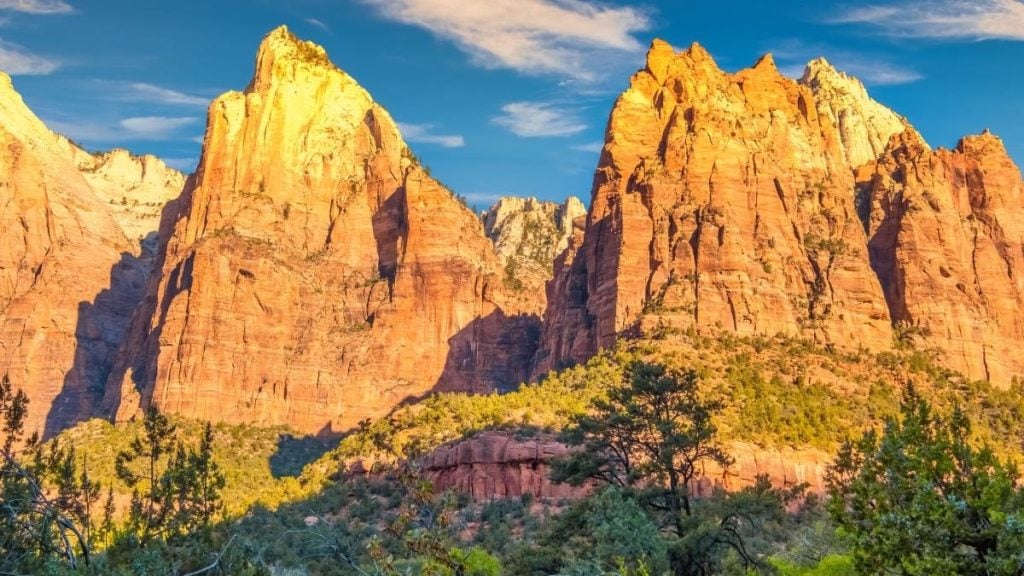
Stop 4: Court of the Patriarchs
A short walk reveals three towering sandstone monoliths — Abraham, Isaac, and Jacob — rising with striking symmetry. Get your camera ready!
Stop 5: Zion Lodge
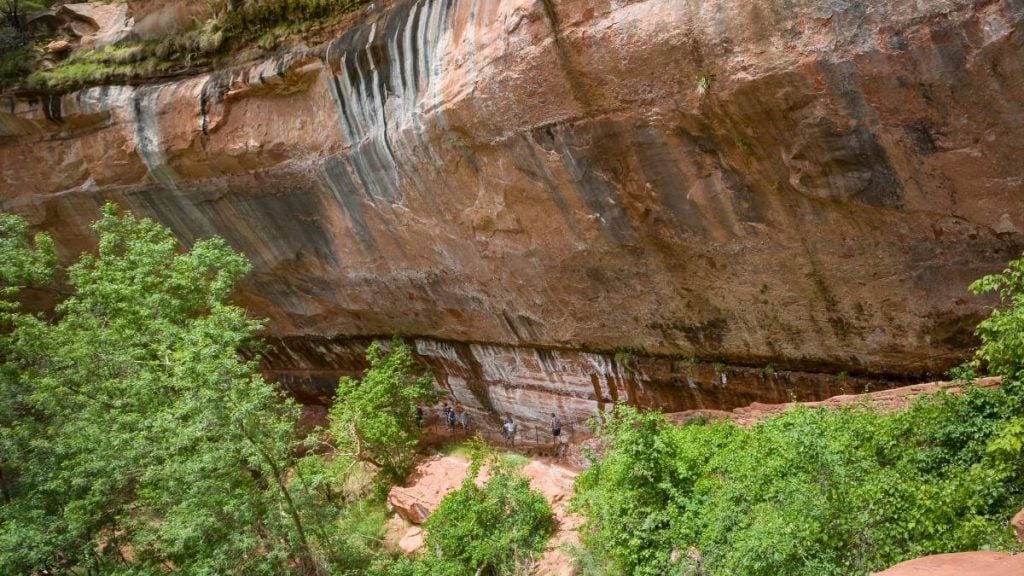
The only in-park accommodation and a central hub for dining, restrooms, and trail access like the Emerald Pools Trail.
Tip from the author: If you can get a reservation at Zion Lodge, it’s well worth it — and it’s one of the few ways to drive the Zion Canyon Scenic Drive in your own vehicle during shuttle season.
Stop 6: The Grotto
A shaded riverside picnic stop and the launch point for the iconic Angels Landing trail (permit required via recreation.gov).
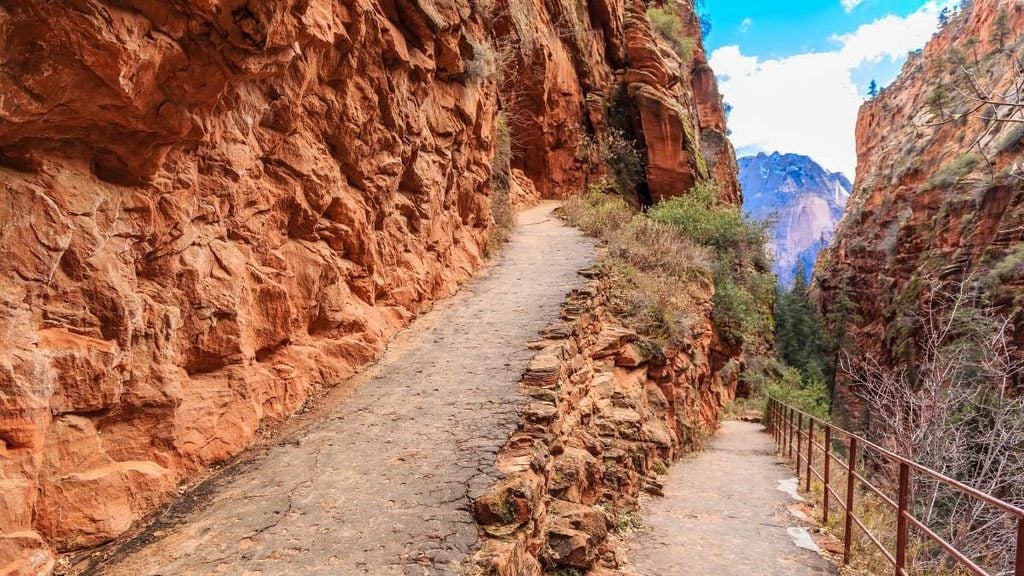
Stop 7: Weeping Rock
A short paved trail leads to dripping stone alcoves where water seeps through cliff walls, creating hanging gardens that feel like a page from a fairy tale.
Stop 8: Big Bend
A wide river curve framed by towering canyon walls — a prime photography stop with occasional bighorn sheep sightings!
Stop 9: Temple of Sinawava and the Riverside Walk
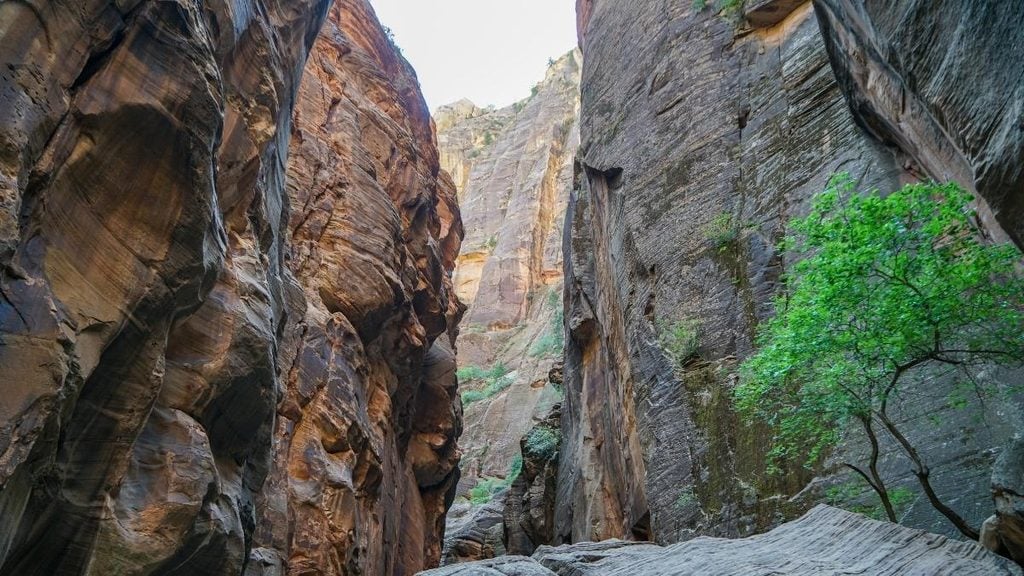
The final stop and gateway to the Zion Narrows. The Riverside Walk offers an easy, stunning paved trail along the Virgin River before the canyon tightens dramatically.
The Zion–Mt. Carmel Highway: Zion’s best scenic drive
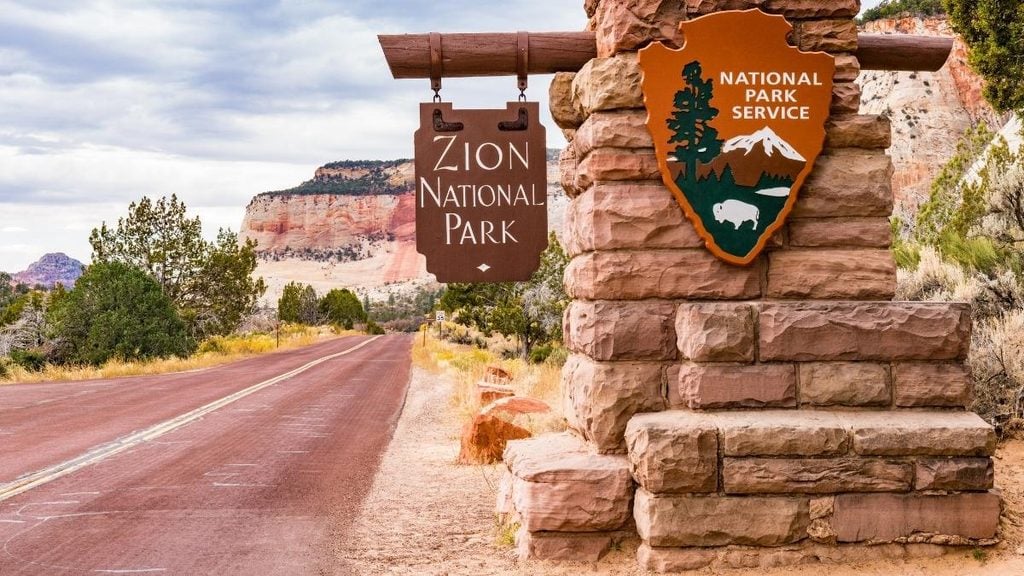
While the Zion Canyon Scenic Drive runs on a seasonal shuttle system, the Zion Mount Carmel Highway (SR-9) stays open to private vehicles year-round inside Zion National Park. It’s a sweeping, switchback-stacked stretch of road that serves up some of the park’s most cinematic scenery. This is Zion at its most accessible.
Route overview: This 10-mile route links the south entrance near Springdale with the east entrance, climbing through layered sandstone, winding switchbacks, and the historic Zion Mount Carmel Tunnel.
The switchbacks
Just past Canyon Junction, the road starts climbing steeply in a series of sharp turns. As you go up, each bend gives you a wider view of the canyon below. There are several spots where you can pull over and stop safely to take it all in. These viewpoints look out over the huge canyon floor and are some of the best roadside views in Zion National Park.
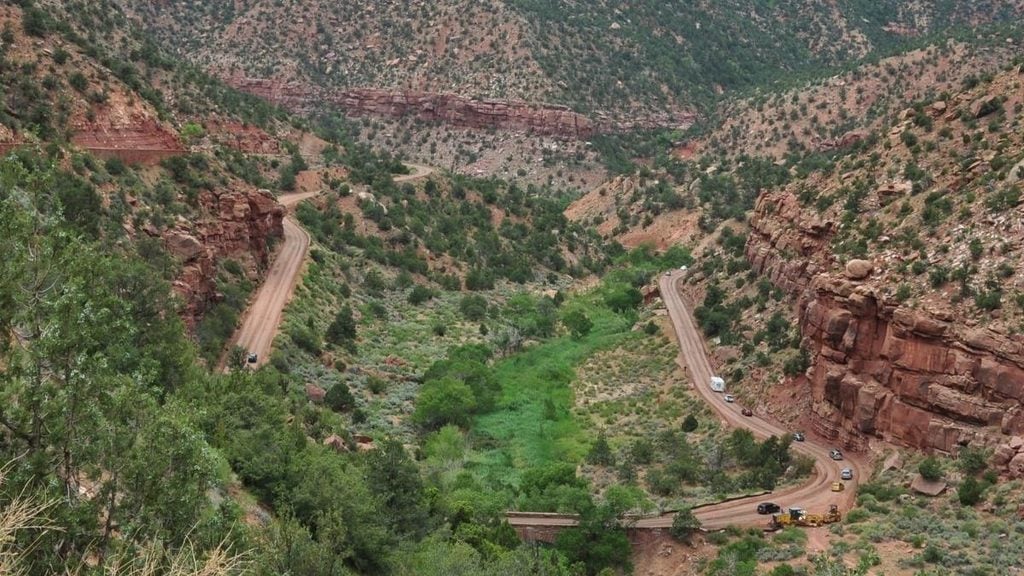
Tip from the author: Pull over at one of the switchback viewpoints on the way up — looking back down into the canyon from above gives a completely different (and awe-inspiring) perspective on the scale of Zion.
The Zion–Mt. Carmel Tunnel
Completed in 1930, the Zion–Mt. Carmel Tunnel is a 1.1-mile engineering landmark carved directly through towering Navajo sandstone. Its iconic windows frame sweeping views of Zion Canyon, making the tunnel one of the park’s most memorable features.
- Note: Oversized vehicles—especially large RVs and certain trucks—require an escort and may be subject to fees to pass through. Always check current requirements before travel via nps.gov/zion.
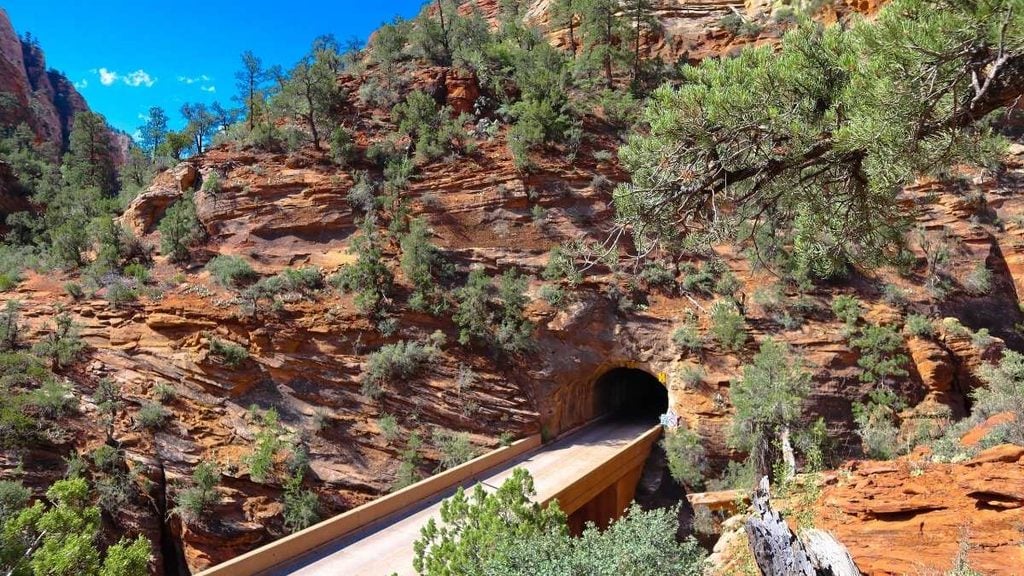
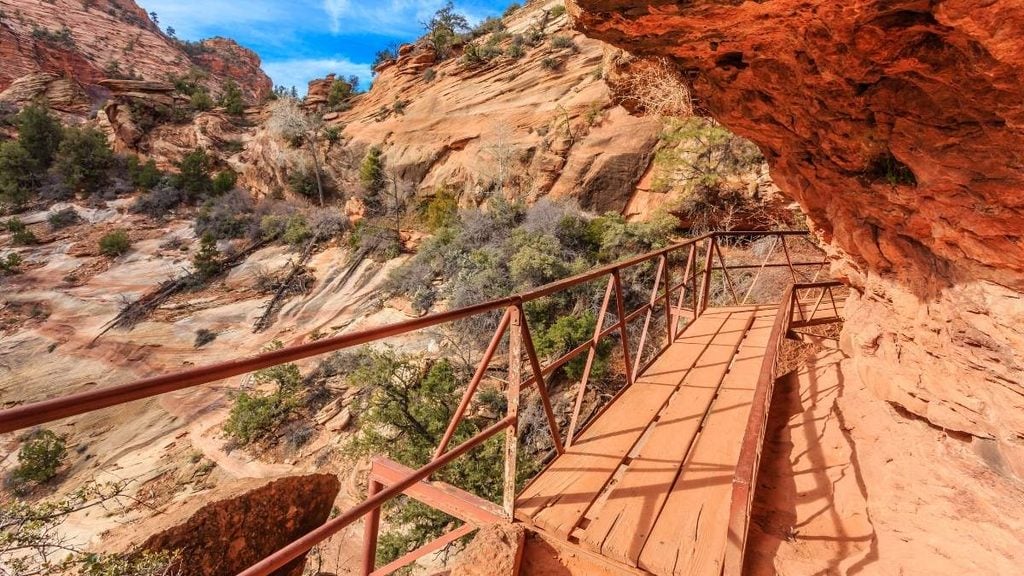
Canyon Overlook Trail
The trailhead sits just east of the tunnel exit, offering quick access to one of the park’s most rewarding short hikes. This 1-mile round-trip route climbs steadily to a spectacular overlook perched high above the canyon floor. It’s a compact climb that opens up to sun-soaked views over sandstone ridges, switchback roads, and the tunnel window. Parking is limited, so an early arrival is recommended.
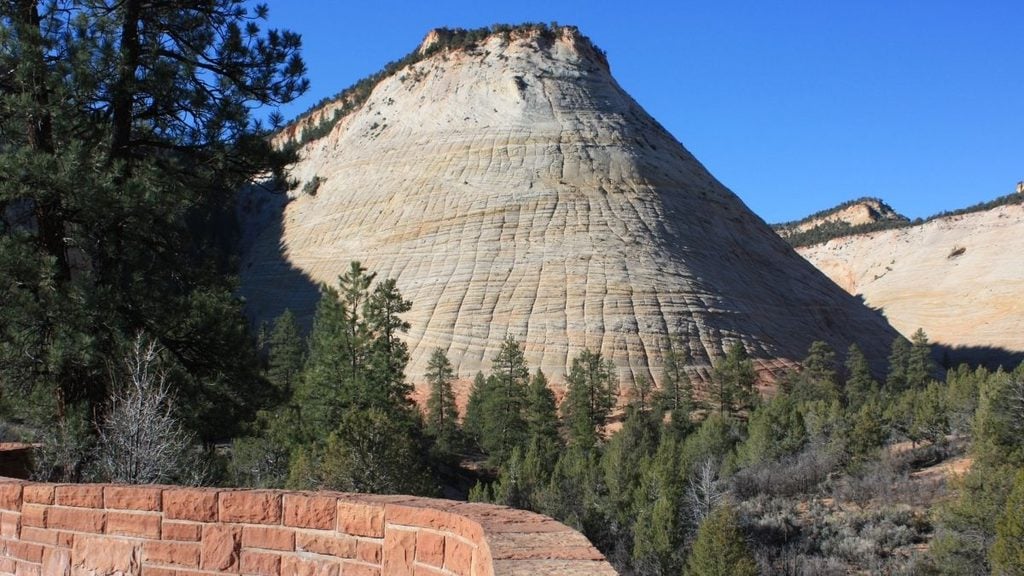
Checkerboard Mesa
Near the East Entrance of Zion National Park, Checkerboard Mesa has a distinctive crisscross pattern (formed by intersecting fractures in Navajo sandstone) which has been slowly sculpted by weather and time. A roadside pullout offers a clear view, while a short trail allows for closer, more detailed observation.
The Kolob Canyons Road
The Kolob Canyons Road is a 5-mile scenic drive that ends at the Kolob Canyons Viewpoint, overlooking a series of dramatic finger canyons. Tucked away in the park’s northwest corner, the Kolob Canyons section offers a quieter contrast to Zion Canyon’s energy. It’s less crowded, more contemplative, and ideal for travelers seeking space and stillness.
Drive time from the main Zion entrance is roughly 45 minutes, making it an easy half-day detour.
Tips for visiting Zion by car
Driving Zion gives you freedom, but it also comes with a few important logistics and safety rules worth knowing before you hit the road.
Arrive early: Zion’s parking fills up fast, often by 8 am in peak season. Arrive before 7 am to park at the visitor center, or use the Springdale town shuttle from parking in the town.
Use the town shuttle: If the visitor center lot is full, park anywhere in Springdale and take the free town shuttle to the park entrance, which connects to the Zion Canyon Line.
Book Angels Landing permits in advance: Angels Landing requires a permit through a lottery system at recreation.gov. Without one, you cannot access the famous upper section of the trail. Check current requirements before your visit.
Drive the Mt. Carmel Highway in both directions if you can: The views change significantly depending on which way you’re traveling — the switchback descent from east to west is particularly dramatic.
Check conditions before the Narrows: The Virgin River’s water level varies significantly — flash flooding is possible. Always check conditions at the visitor center before entering the Narrows.
Rent the right vehicle: The Mt. Carmel Highway is paved throughout, but tunnel restrictions apply to oversized vehicles. A standard passenger car or SUV handles the drive comfortably. Browse Turo for vehicles available nearby, such as from Las Vegas or Utah.
Frequently asked questions about driving Zion National Park
Can you drive the Zion Canyon Scenic Drive in your own car?
You can only drive the Zion Canyon Scenic Drive during winter (roughly December to February) or if staying at Zion Lodge. Outside that period, the road is shuttle-only, operated by free park buses.
Is the Zion shuttle free?
Yes, the Zion Canyon shuttle and the Springdale town shuttle are both free to ride. No reservations are required; shuttles operate on a first-come, first-served basis. Frequency varies by season, but in peak summer months, the shuttles arrive every 5–10 minutes.
When is the best time to visit Zion National Park?
The best time for visit Zion is in the spring (March–May) and fall (September–November). These times offer the most balanced conditions. Summer is crowded and hot, while winter is quieter with partial road access.
How far is Zion from Las Vegas?
Zion is about 160 miles from Las Vegas — roughly a 2.5-hour drive, making it one of the most common gateway routes into the park.
Can I drive through the Zion–Mt. Carmel Tunnel in any vehicle?
Standard vehicles can pass through the Zion–Mt. Carmel Tunnel freely. Larger vehicles may face restrictions, escort requirements, or fees, and rules may change seasonally or in 2026. Always check nps.gov/zion before travel.
Ready to explore Zion?
Whether you’re riding the free park shuttle through the canyon floor or tracing switchbacks along the Zion–Mt. Carmel Highway, Zion National Park delivers a layered, landscape-driven experience that rewards both planning and spontaneity. For flexibility on the road, browse Turo for car rental options in Las Vegas, St. George, or Salt Lake City — each offering convenient access to Zion’s entrances and surrounding desert routes.

Share your car, earn extra cash
Cover your car payments or earn some extra cash by sharing your car whenever you’re not using it.
Get startedHit the road
Browse thousands of cars for every occasion and budget near you, or wherever you’re going.
Browse cars
Sian Henderson
Sian Henderson is both a cosied-up travel content writer and an avid outdoor traveller. She’s road-tripped around New Zealand, navigated the bustling streets of Vietnam, and sunbaked on the shores of Hawaii and beyond. With a love of getting behind the wheel and taking the scenic route, she brings a firsthand traveller’s perspective to road-trip content. For Turo, Sian has written travel blogs and destination guides spanning road trips, city escapes and destinations across Australia, the US, UK and Canada. She’s also worked across hundreds of pieces of Turo content, giving her a keen eye for what makes a great trip! From finding the right car for the journey to uncovering the best places to stop, snack, and take in the view, Sian has many great tips to keep you on track.