
posted on August 5, 2026
Southern Utah is home to five of the most spectacular national parks in the country (collectively known as the Mighty Five). This stretch of red rock desert feels otherworldly, shifting from deep canyons to high alpine forests and even freestanding sandstone arches.
This Utah road trip itinerary takes you through all five national parks: Zion National Park, Bryce Canyon National Park, Capitol Reef National Park, Arches National Park, and Canyonlands National Park. Along the way, you’ll encounter scenic historic tunnels, national forests, hiking trails leading to waterfalls, and giant canyons.
A road trip connecting all five is one of the great American drives, and this guide is built to help you plan it properly.
In this guide, we’ll be covering:
- Utah national parks road trip: An overview
- Starting point: Salt Lake City or Las Vegas?
- The 7-day Mighty Five itinerary
- What to know about each park
- Tips for the road
- Frequently asked questions
Utah national parks road trip: An overview
Ready to experience one-of-a-kind landscapes? Here’s everything you need to know about the Mighty Five national parks road trip:
- Total driving distance (full loop): ~1,100 miles
- Suggested trip length: 7–10 days (7 days is tight but doable; 10 days is more relaxed)
- Starting points: Salt Lake City (SLC) or Las Vegas (LAS)
- Best time to visit: Spring (March–May) and fall (September–November); summer is hot and crowded while winter conditions close some facilities
- America the Beautiful Pass: Strongly recommended; covers entrance fees at all five parks (~$80/year)
- Cell service: Limited in many areas; download offline maps and park maps before you leave
Starting point: Is Salt Lake City or Las Vegas a better place to begin?
Salt Lake City is the better starting point if you want to begin with the eastern parks (Arches and Canyonlands) before working west toward Zion, while Las Vegas suits travelers who’d rather start with Zion and finish in the east. Either way, a one-way route (flying into one city and out of the other) is the most efficient option, since it avoids backtracking and lets you drive the parks in sequence.
| Starting Point | Salt Lake City | Las Vegas |
|---|---|---|
| Drive time to nearest park | ~3.5 hours to Moab (Arches/Canyonlands) | ~2.5 hours to Zion |
| Best for | Starting with the eastern parks | Starting with Zion and working east |
| Ideal for | Domestic travelers, round-trip drivers | International travelers flying in |
| Route direction | East to west (Arches → Zion) | West to east (Zion → Arches) |
Tip from the author: The most efficient approach is a one-way route. For example, fly into Salt Lake City, drive east to west (Arches → Canyonlands → Capitol Reef → Bryce Canyon → Zion), and fly home from Las Vegas. Or do it in reverse. This eliminates hours of backtracking and lets you experience the parks in a natural sequence.
The 7-day Mighty Five itinerary
This 7-day Mighty Five itinerary runs east to west, starting in Moab and ending at Zion. It’s the most popular direction for travelers flying into Salt Lake City and out of Las Vegas. Reverse it if your flights work the other way.
Days 1 to 2: Moab (Arches National Park and Canyonlands National Park)
- Drive time from SLC to Moab: ~3.5 hours
- Don’t miss at Arches: Delicate Arch (hike), Windows section, Landscape Arch (easy walk)
- Don’t miss at Canyonlands: Mesa Arch at sunrise, Grand View Point Overlook, Dead Horse Point State Park
- Timed entry note: Arches requires timed entry reservations from April 1 through October 31. Book well in advance as these sell out. Entry is free before 7 am and after 5 pm during reservation season.
After picking up your rental car in Salt Lake City, hit the road to your first stop: Moab (roughly a 3.5-hour drive), the base for both eastern parks.
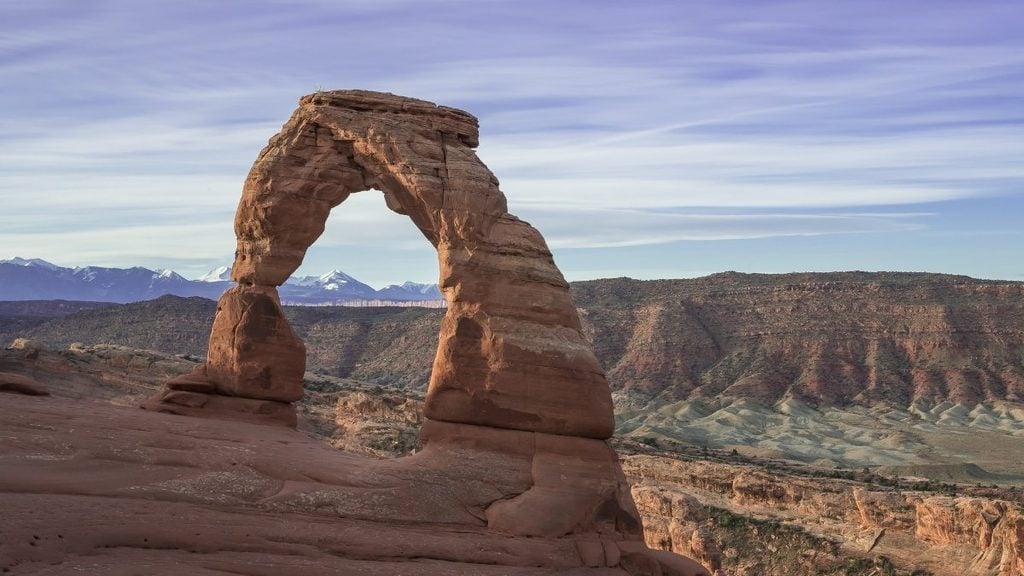
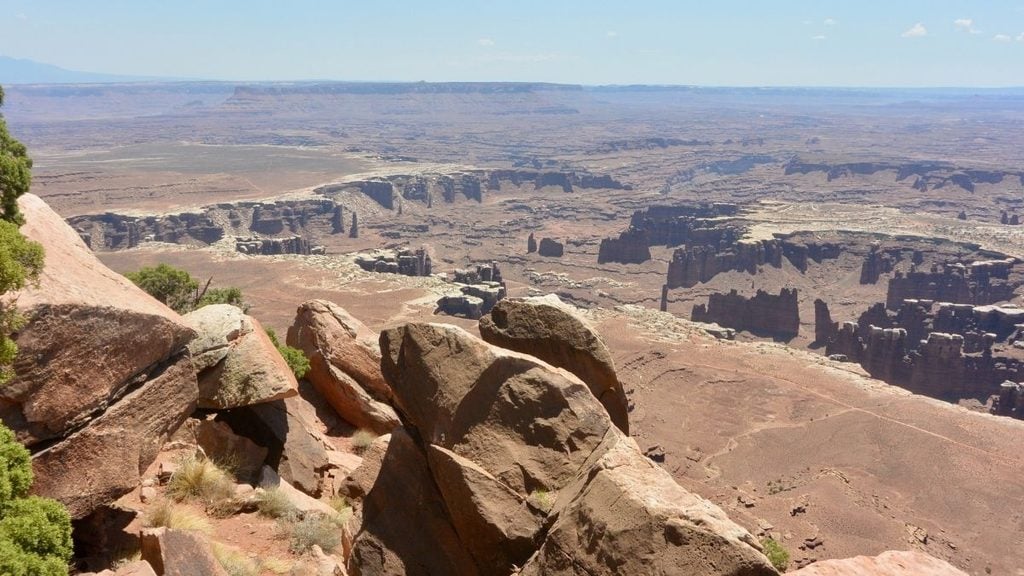
Arches National Park (just 5 miles from downtown Moab) and Canyonlands National Park (30 minutes from Moab) together offer some of the most visually dramatic landscapes in North America. At Arches, don’t miss the 36-mile paved scenic drive past Balanced Rock, the Windows section (a series of photogenic arches), and the iconic Delicate Arch trail (this 3-mile round-trip hike is the most photographed spot in Utah).
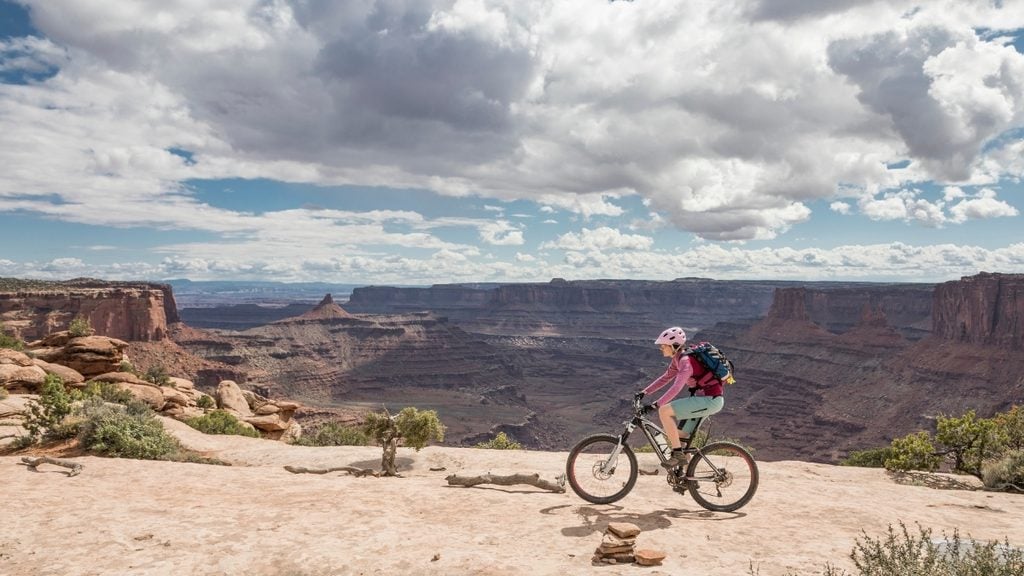
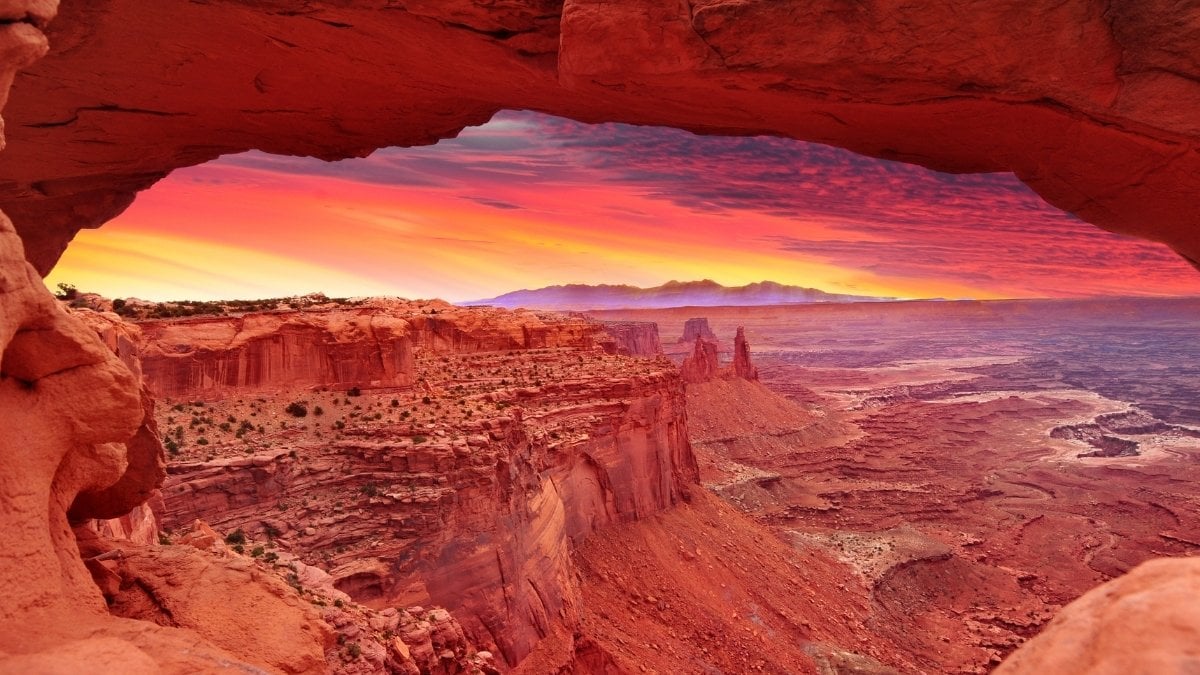
At Canyonlands, be sure to visit the Island in the Sky district (head to the Mesa Arch at sunrise for an extraordinary sight or the Grand View Point overlook for some of the best panoramas in the state). If you have some time to spare on day two, consider a trip to Dead Horse Point State Park; it’s just a few minutes from the Island in the Sky entrance at Canyonlands National Park and is worth a visit.
Day 3: Capitol Reef National Park
- Drive time from Moab: ~2.5 hours
- Don’t miss: Capitol Reef Scenic Drive, Hickman Bridge Trail, Fruita orchard
- Base town: Torrey, Utah
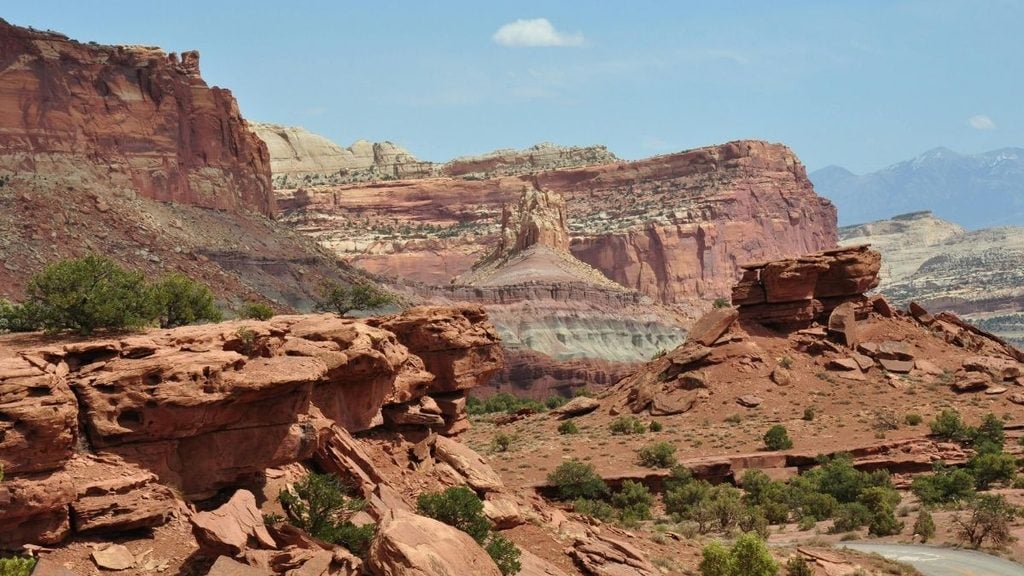
Capitol Reef National Park is the most underrated of the Mighty Five, but we believe it deserves a full day of exploration. Head to the Waterpocket Fold for an incredible 100-mile wrinkle in the earth’s crust; it’s a landscape unlike anything else in Utah.
Other highlights include the 25-mile Capitol Reef Scenic Drive (it’s free, and no reservations are required), the 1.7-mile round trip along the Hickman Bridge Trail, and Grand Wash (offering a short walk into a dramatic canyon).
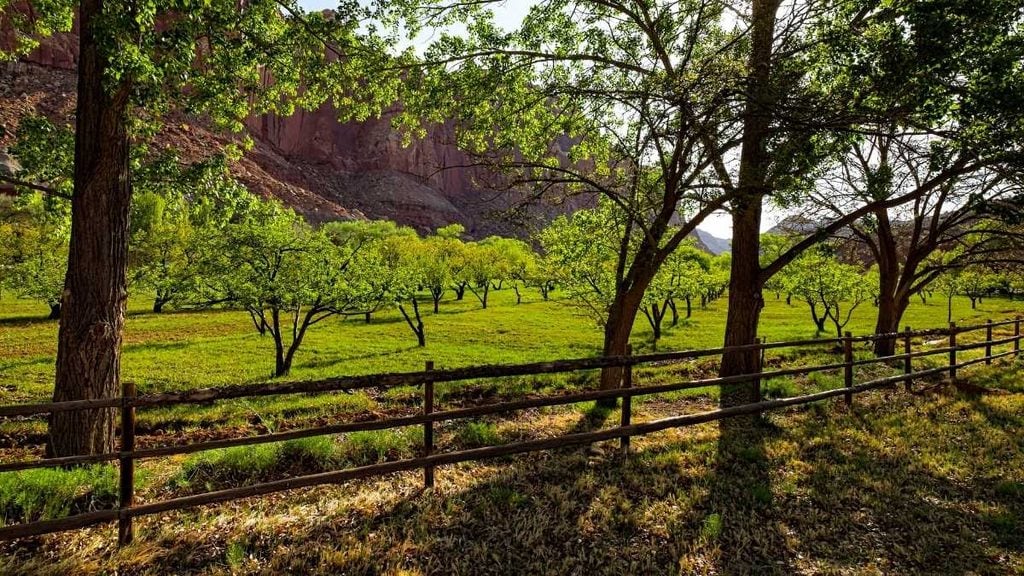
The Fruita Historic District and orchard is a must-see: you can pick your own fruit, from cherries in June to peaches in August and even apples in September. Looking for a spot to stay? The tiny town of Torrey (just west of the park) offers good accommodation options and restaurants, ideal for an overnight stop.
Day 4: Bryce Canyon National Park
- Drive time from Torrey/Capitol Reef: ~1.5 hours
- Don’t miss: Sunset Point at golden hour, Queen’s Garden Trail, Rainbow Point
- Base town: Bryce Canyon City (limited options; book early) or Panguitch, 25 minutes away
Have you spotted those tall, thin spires and natural rock columns emerging from the ground? They’re known as hoodoos, and Bryce Canyon National Park has the largest concentration of these rock formations anywhere on earth.
Here, you’ll tackle the rim drive, offering 18 miles of viewpoints that each offer a distinct view of your surroundings. The key overlooks you need to visit include Sunrise Point, Sunset Point, Inspiration Point, and Bryce Point. Plus, it’s worth making time for a hike. Queen’s Garden Trail is a short-but-sweet 2.9-mile round trip, while the Navajo Loop Trail (1.3 miles) takes you through the famous Wall Street canyon.
Other highlights include Rainbow Point, located at the southern end of the rim drive, which reaches 9,115 feet and offers incredible sweeping views into Arizona on a clear day. Plus, Bryce Canyon National Park is an outstanding place for stargazing; the park is even a designated Dark Sky sanctuary.
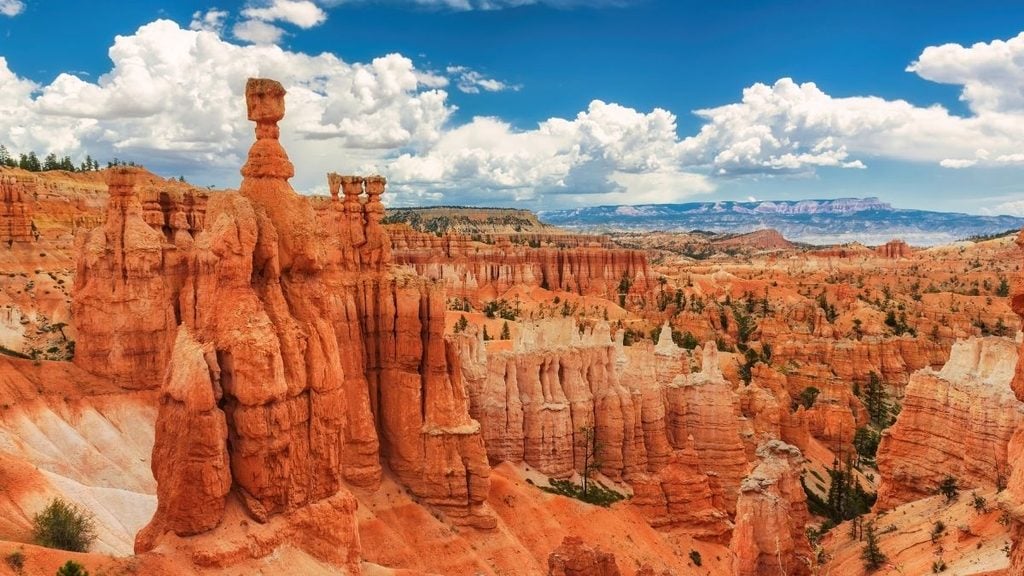
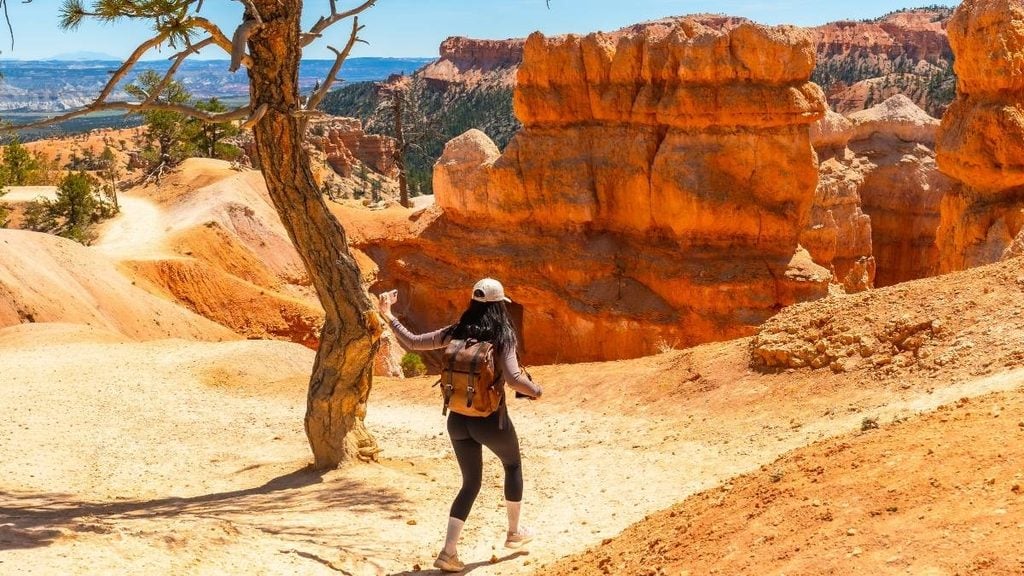
Tip from the author: Bryce Canyon’s rim overlooks are stunning at sunrise; the low light turns the hoodoos from orange to deep red to gold over about 20 minutes. Set an alarm, bring plenty of layers (even in summer the rim sits above 8,000 feet), and get there early.
Days 5 to 7: Zion National Park
- Drive time from Bryce Canyon: ~1.5 hours
- Don’t miss: Angels Landing (permit required), Zion Narrows, Canyon Overlook Trail, Zion–Mt. Carmel Highway
- Base town: Springdale, Utah; it’s just outside the south entrance and has plenty of restaurant and accommodation options
In our opinion, the last two full days should be dedicated to Zion National Park. It’s Utah’s most visited national park and widely considered the most memorable.
Here’s a snapshot of the top things to see and do in Zion National Park:
- The Zion Canyon Scenic Drive: The heart of the park, running 6 miles along the canyon floor past Zion’s most famous formations, including the Great White Throne and the Court of the Patriarchs. Closed to private vehicles from roughly March through November; visitors ride the free, frequent park shuttle instead. Outside those months, you can drive it yourself.
- Angels Landing: Zion’s signature hike: a steep, switchback climb (including the famous 21 “Walter’s Wiggles” switchbacks) up a narrow sandstone spine to a 1,488-foot summit, with chains bolted into the rock for the exposed final half-mile. Not recommended for anyone uncomfortable with heights; plan a 3 to 5-hour round trip.
- The Riverside Walk and Zion Narrows: The Riverside Walk is an easy, paved 2.2-mile round-trip path along the Virgin River to the mouth of the Narrows (accessible to strollers and wheelchairs). From there, the Narrows continues as a hike through the river itself, with canyon walls rising hundreds of feet on either side; this section requires water shoes and can be closed during flash flood risk.
- The Canyon Overlook Trail: A shorter, moderate 1-mile round-trip hike on Zion’s east side, reached via the Zion–Mt. Carmel Tunnel. Sandstone steps lead to a cliff-edge viewpoint over the main canyon and the Towers of the Virgin (it’s worth the effort, trust us!). Parking at the trailhead is limited, so early mornings are best.
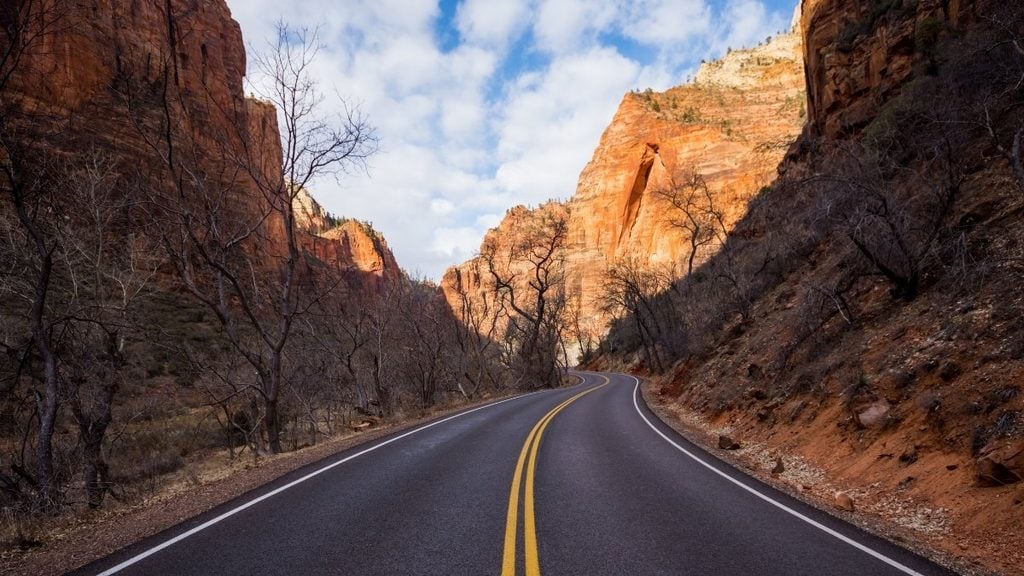
- The Zion–Mt. Carmel Highway: A scenic drive on the park’s east side that stays open to private vehicles year-round (unlike the main canyon road). It winds through a mile-long tunnel and switchbacks down through slickrock terrain, with pullouts for photos along the way.

What to know about each park: Quick reference
Dive into our handy guide to what to expect from each national park on the Mighty Five road trip.
| Park | Entrance fee | Timed entry / permit needed? | Shuttle |
|---|---|---|---|
| Arches | $30/vehicle (7-day pass) | Seasonally | No shuttle |
| Canyonlands (Island in the Sky) | $30/vehicle (7-day pass) | No | No shuttle |
| Capitol Reef | $20/vehicle (7-day pass) | No | No shuttle |
| Bryce Canyon | $35/vehicle (7-day pass) | No | Free seasonal shuttle |
| Zion | $35/vehicle (7-day pass) | No for general entry; Angels Landing requires a year-round lottery permit | Yes; Zion Canyon Scenic Drive closed to private vehicles ~March–November; free shuttle required |
Entrance fees and details valid as of July 2026. Consider purchasing the America the Beautiful annual pass ($80 for US citizens and residents; $250 for non-US residents), which covers all entrance fees and is almost always worth it for a five-park trip.
Tips for the Mighty Five road trip
Utah’s national parks are best experienced over a 7-10-day road trip. The route above covers at least 1,000 miles, meaning it’s important to be prepared for anything. Here are a few handy tips to help you prepare for the drive:
- Fuel up in town: Don’t assume you’ll find gas nearby, as gas is not available inside any of the five national parks. Moab, Torrey, Bryce Canyon City, and Springdale are your fuel stops, so plan accordingly. Some stretches between parks have limited services for 50+ miles.
- Download offline maps before you leave cell coverage: Cell service disappears in many areas between and within the parks. Download your route on Google Maps or a dedicated offline app before leaving the last town with reliable signal.
- Book accommodations early: The Mighty Five corridor has limited lodging, and it books out months ahead in peak season. Moab and Springdale in particular (the gateway cities to the most popular parks) fill completely on spring and fall weekends.
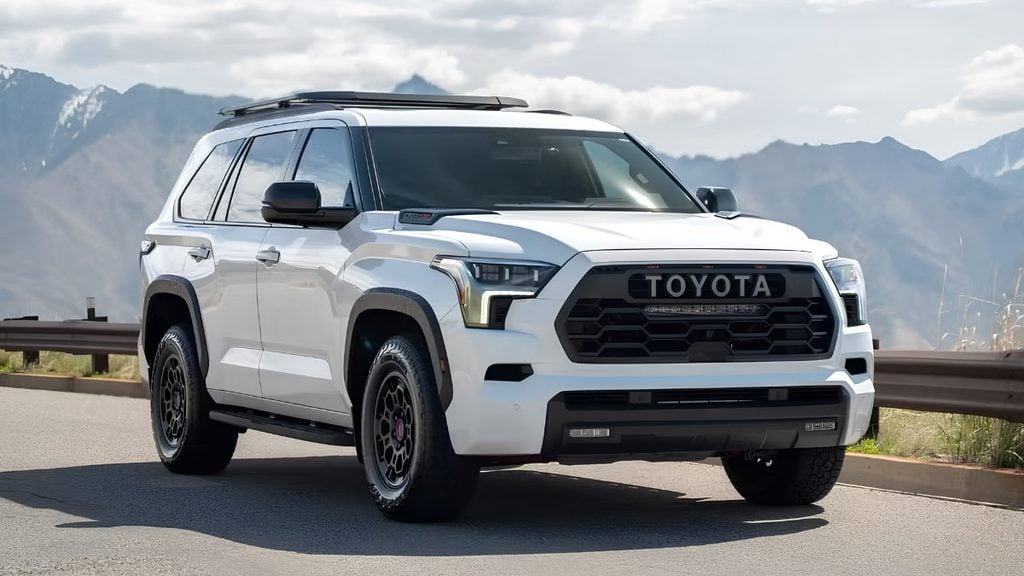
- Choose the right vehicle: All of the paved scenic drives and main hiking trailheads are accessible in a standard passenger car. A comfortable, fuel-efficient sedan or SUV is ideal for the distances involved. Search for the perfect road trip vehicle available in Salt Lake City or Las Vegas.
- Carry more water than you think you need: Desert hiking is more demanding than it looks on a map. One liter per person per hour of hiking is a reasonable minimum, and many trailheads don’t have water. Fill up at visitor centers before hitting the trail.
- Visit the most popular spots early or late: Delicate Arch at sunrise and sunset, Mesa Arch at dawn, Bryce Point at dusk; the light is better, and the parking lots are emptier. Build early starts into your schedule and avoid the peak heat in the summer.
Frequently asked questions about the Utah national parks road trip
How many days do you need for the Utah national parks road trip?
Seven days is the minimum road trip length to visit all five Utah national parks without feeling rushed. Expect at least one day per park plus driving time between them. Ten days is more comfortable and allows time for longer hikes and unexpected discoveries. If you only have five or six days, focus on three parks rather than trying to sprint through all five.
What is the best time of year for a Utah national parks road trip?
Spring (March to May) and fall (September to November) are the sweet spots for a Utah national parks road trip; temperatures are comfortable for hiking, the parks are fully operational, and crowds are slightly lower than peak summer. Summer (June to August) is the busiest and hottest period; temperatures in Moab and Zion regularly exceed 100°F, making midday hiking difficult. Winter brings dramatic snow on the hoodoos at Bryce Canyon and some facilities and trails close.
Do you need a 4WD vehicle for the Utah national parks road trip?
No, you don’t need a 4WD vehicle for the Mighty Five road trip. All five parks’ main paved scenic drives, trailheads, and visitor centers are fully accessible in a standard passenger car. A reliable car or SUV handles everything most visitors need. Some routes within the parks require high-clearance or 4WD vehicles, but these are beyond the scope of a standard national parks road trip.
Can you rent a car in Salt Lake City for a Utah national parks road trip?
Yes. Salt Lake City International Airport (SLC) is the most common starting point for a Utah national parks road trip heading east to Moab. Browse Turo for a wide range of vehicles available near SLC, with flexible pick-up options.
Start your Utah national parks road trip with Turo
The Mighty Five road trip is one of the great American driving adventures. The landscapes are unlike anywhere else on earth, and having a car means you can stop and take an impromptu detour whenever you feel like.
Browse Turo for cars to rent in Salt Lake City or Las Vegas, with flexible pick-up options and a wide range of vehicles available. Book early for spring and fall travel; Utah’s most popular seasons fill up fast.

Share your car, earn extra cash
Cover your car payments or earn some extra cash by sharing your car whenever you’re not using it.
Get startedHit the road
Browse thousands of cars for every occasion and budget near you, or wherever you’re going.
Browse cars
Lucinda Starr
Lucinda Starr is a travel and automotive writer with 5+ years of firsthand experience road-tripping across Australia, New Zealand, and beyond. She writes road trip guides for Turo, drawing on her experience behind the wheel to share practical insights on long-distance drives, destinations, and vehicles. Her travels have taken her across Australia’s East Coast, Victoria’s Great Ocean Road, the Northern Rivers, Byron Bay, and both islands of New Zealand. One of her most memorable journeys was an 11-day, 2,600+ km route from Auckland to Punakaiki and Queenstown. Lucinda has a particular passion for classic, rugged 4WD vehicles and the freedom they bring to exploring new places.