posted on July 6, 2026
A reliable road trip packing list is what separates smooth cruising from stressful scrambling once you’re miles into the journey. The right preparation means fewer roadside regrets and more room for spontaneous detours, scenic stops, and snack-fueled sing-alongs.
When everything is thoughtfully packed before wheels start rolling, the whole trip feels lighter. This guide covers everything from safety essentials to snack plans, plus comfort and family-friendly ideas so full carloads, couples, and solo travelers can get on the road with ease.
In this guide, we’ll be covering:
- Car safety and emergency essentials
- Navigation and tech
- Travel documents and reservations
- Clothing and comfort
- Food and drinks
- Entertainment and activities
- For families traveling with kids
- Road trip packing tips
Car safety and emergency road trip essentials
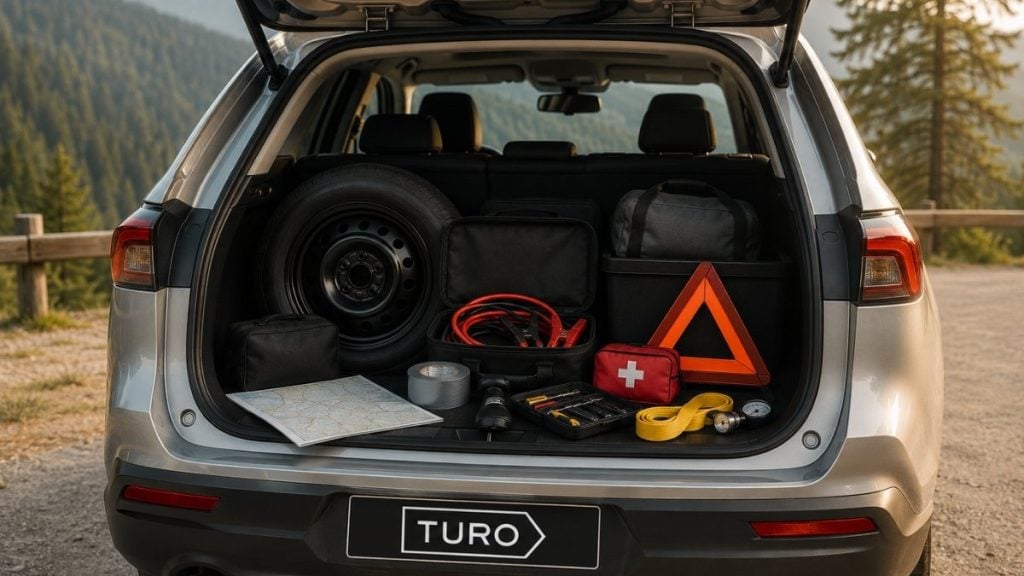
These are the items that live in your trunk regardless of trip length — the ones you hope you never need, but will be very glad to have if things go sideways.
- Spare tire (and the tools to change it): Essential backup when punctures pop up unexpectedly, helping you get back on the road without waiting for roadside assistance.
- Jumper cables: Useful for restarting a dead battery, especially in cold weather or after long stops where lights may have been left on.
- Roadside emergency kit (reflective triangles or flares, high-visibility vest): Increases visibility and safety if you’re pulled over or stranded on the roadside.
- Duct tape: A versatile, quick-fix tool for temporary repairs on everything from loose trim to minor leaks.
- First aid kit (bandages, antiseptic wipes, pain relief, any prescription medications): Helps you handle minor injuries or unexpected health needs until proper care is available.
- Flashlight and spare batteries: Critical for nighttime breakdowns or inspections in low-light conditions.
- Basic tool kit (screwdrivers, pliers, adjustable wrench): Covers small mechanical fixes and adjustments that can save a trip from derailing.
- Tow rope or tow strap: Allows your vehicle to be pulled to safety if it becomes stuck or disabled in remote areas.
- Tire pressure gauge: Helps maintain correct tire pressure for safety, fuel efficiency, and smoother handling.
- Paper road map or atlas: Good backup if GPS or cell service fails; particularly useful in remote areas or national parks.
Tip from the author: Before any long road trip, run through the basics: check your tire pressure and tread, top off fluids, confirm your spare is in good condition, and make sure your registration and any roadside assistance memberships are up to date.
Navigation tools and tech
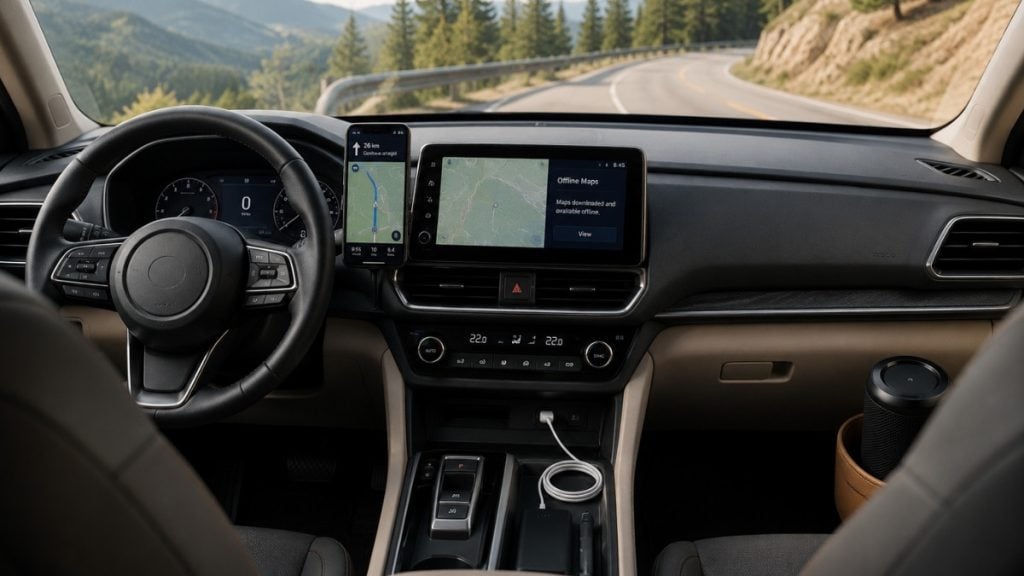
Modern road trips run on devices. Here’s what to pack to stay connected and powered up on the road.
- Phone mount: For safer navigation if you don’t have built-in navigation
- Car charger and USB-C/Lightning cables: To keep the entertainment/maps running
- Portable power bank: You never know when you might need this
- Offline maps downloaded: Download Google Maps for your route before you leave, as cell service is unreliable in rural areas and many national parks
- Bluetooth speaker: For when you’re parked or at a campsite
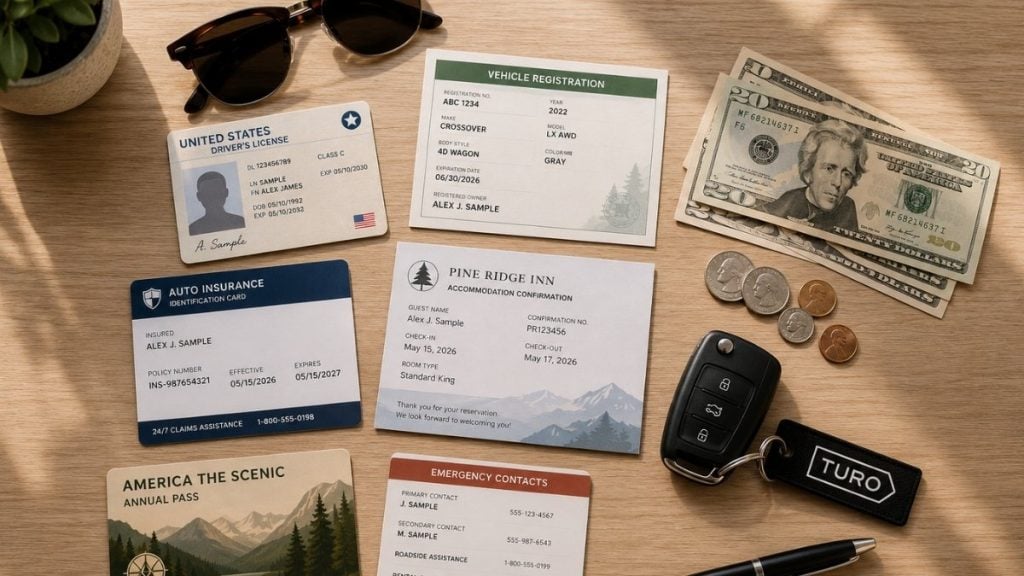
Travel documents and reservations
It’s worth keeping these within easy reach, rather than buried in a bag in the trunk.
- Driver’s license
- Vehicle registration
- Proof of insurance
- Any rental car paperwork
- Hotel or accommodation confirmations
- Printed emergency contacts (just in case!)
- Small amount of cash (ATMs can be scarce in remote areas)
- National Parks pass (America the Beautiful, if applicable)
Clothing and comfort items
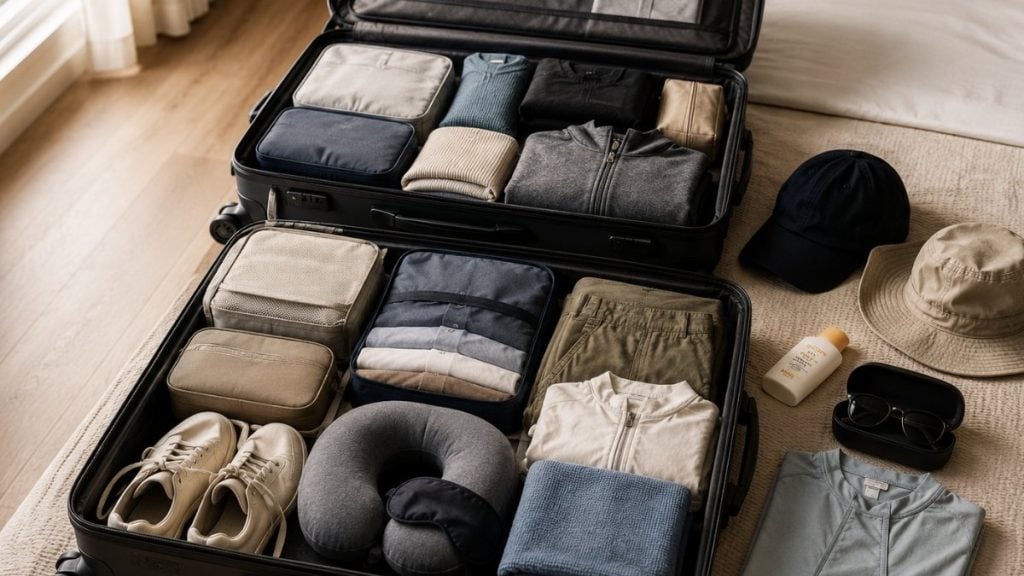
Pack for your destination, but also for the long, lived-in hours inside the car.
- Layers for the car: Keeps you comfortable when air conditioning fluctuates or temperatures drop unexpectedly.
- Comfortable driving shoes: Improves control and reduces fatigue during long driving stretches.
- Weather-appropriate clothing for your destination: Ensures you’re ready for conditions once you arrive.
- Sunglasses: Reduce glare and eye strain during bright driving conditions.
- Sun protection (sunscreen, hat, UV-protective clothing): Protects you during outdoor stops and sightseeing breaks.
- Neck pillow and eye mask: Supports rest and recovery for passengers on long or overnight drives.
- Small travel towel: Handy for spills, beach stops, or unexpected weather changes.
- Change of clothes in an accessible bag: Keeps essentials within reach without needing to unpack everything at stops.
Food and drinks
The right snacks turn long stretches of road into enjoyable, energy-fueled cruising.
Drinks:
- Reusable water bottles (one per person): Keep everyone hydrated and reduce unnecessary plastic waste during the trip.
- Insulated cooler or soft cooler bag: Keeps drinks cold and perishable snacks fresh for longer journeys.
- Coffee in a travel mug: Provides a steady caffeine companion for early starts or long driving days.
Snacks:
- Easy no-mess options (nuts, dried fruit, granola bars, crackers): Provide quick energy without creating crumbs or mess in the car.
- Fresh fruit and vegetables (apples, carrots, grapes): Offer refreshing, healthy options that are easy to eat on the move.
- Protein-rich options (jerky, hard-boiled eggs, cheese): Help maintain energy levels between meals.
- Treats for the road (chocolate, chips, etc.): Add a sense of fun and indulgence to long stretches of driving.
Meals:
- Packed lunch for Day 1: Saves time and money early in the trip, especially during early departures.
- Reusable utensils and a small cutting board: Makes roadside meals more practical and less wasteful.
- Wet wipes and hand sanitizer: Keep hands clean when proper washing facilities aren’t available.
- Small trash bag: Keeps the car tidy and prevents clutter from building up.
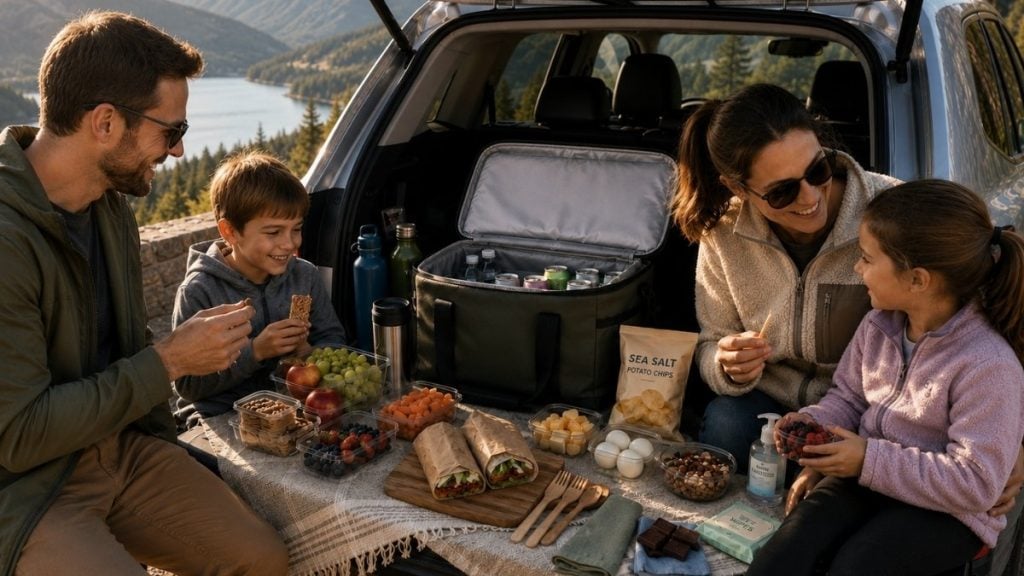
Tip from the author: Pre-portion snacks into smaller bags before you leave — it makes them easier to grab and for families, it helps keep little ones from getting hungry and restless.
Entertainment and activities
A good road trip blends music, conversation, and moments of quiet escape.
- Curated road trip playlist: Sets the tone for the journey.
- Downloaded podcasts and audiobooks: Provide entertainment without relying on mobile data.
- Road trip games: Keep passengers engaged and add playful breaks in long drives.
- Physical books or e-reader: Offers a screen-free or low-distraction entertainment option.
- Journal or travel notebook: Captures memories, moments, and unexpected discoveries along the way.
- Camera or extra phone storage: Ensures you can document the journey without running out of space.
For families traveling with kids
These family road trip essentials can transform long drives from chaotic to calm.
- Individual snack bags for each child: Reduces arguments and keeps hunger at bay with personalized portions.
- Kids’ headphones and downloaded shows or movies: Keeps entertainment contained and cabin noise down.
- Small activity kit (coloring books, sticker books, card games): Provides screen-free engagement during quieter moments.
- Travel-sized games (Uno, magnetic chess, travel bingo): Encourage shared play and break up travel time.
- Extra change of clothes per child: Helps manage spills, accidents, and unexpected messes.
- Baby wipes: Useful far beyond toddler years for quick clean-ups on the go.
- Travel pillow and comfort item: Provides familiarity and comfort during long stretches in the car.
- Motion sickness medication: Helps prevent discomfort when taken before travel begins.
- Small reward bag: Keeps motivation high with surprise treats revealed at milestones.
Tip from the author: A “boredom bag” filled with small new activities — that are unwrapped one at a time throughout the drive — is one of the most effective tricks for long drives with younger kids. Dollar store supplies work perfectly.
Before you leave: Car checks
A quick pre-departure check helps prevent avoidable interruptions later.
- Tire pressure and tread depth: Ensures safe handling and reduces the risk of blowouts.
- Oil level and other fluids (coolant, brake, washer): Keep the vehicle running smoothly over long distances.
- Windshield and mirrors: Maintain clear visibility for safe driving.
- Lights (headlights, brake lights, indicators): Ensure you’re visible and can signal clearly on the road.
- Fuel: Filling up the night before avoids delays on early departure mornings.
- Confirm spare tire is in good condition: Ensures your backup is actually usable if needed.
Road trip packing tips
Lastly, a few quick tips to help you pack with intention and structure for a smoother ride.
Pack the trunk strategically: Put items you’ll need during the drive — snacks, chargers, kids’ activity bags — within easy reach. Luggage that won’t be touched until you arrive can go at the back or the bottom.
Keep a small “car bag” accessible: A small tote or daypack in the back seat with essentials (wipes, snacks, phone charger, sunglasses, first aid) saves repeated trunk access at every stop.
Don’t overpack clothes: Most trips need fewer clothing changes than people expect — especially if you have access to laundry. Overpacked luggage means less cargo space and a heavier car.
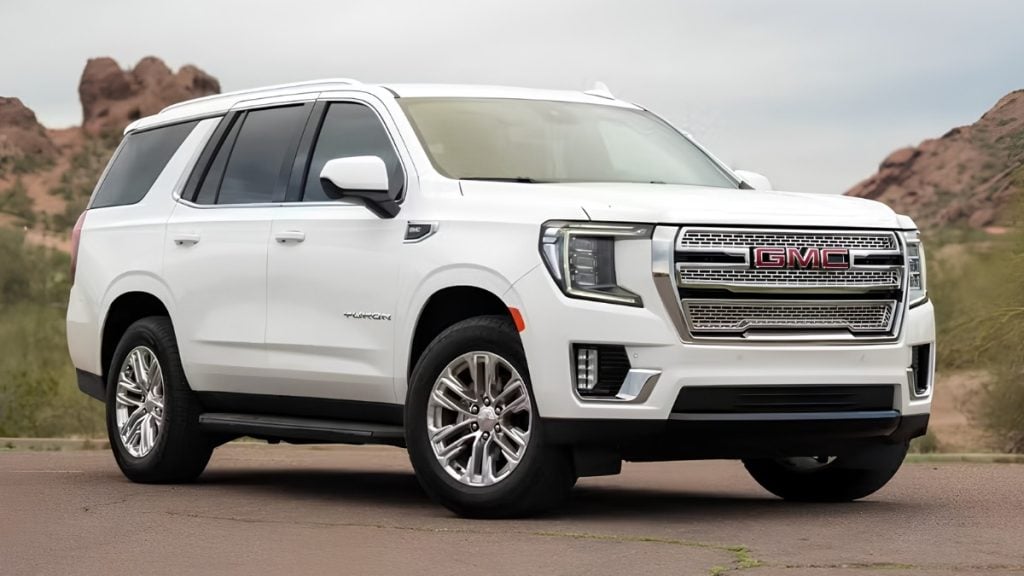
Choose the right vehicle for your load: If you need extra cargo space for family trips, camping gear, or extended travel, explore Turo for SUVs, wagons, and road-trip-ready cars.
Make a list before you pack: Plan your packing list so nothing essential gets left behind, especially small but critical items like charging cables, contacts or medications.
Frequently asked questions about road trip packing
What should I pack for a road trip?
A complete road trip packing list includes safety essentials, navigation tools, travel documents, food, comfort items, and entertainment. What you bring depends on trip length, but these core categories ensure you’re prepared for most situations.
What food should I bring on a road trip?
Focus on easy, non-messy snacks like nuts, fruit, granola bars, and jerky for a road trip. A cooler helps extend options with fresh items. Packing a first-day meal also reduces unnecessary stops early in the trip.
What car checks should I do before a road trip?
Before a road trip, check tires, fluids, lights, fuel, and ensure your spare tire is usable. If using a rental, document the car’s condition before departure for peace of mind.
How do I pack a car efficiently for a road trip?
Before you get packing, get familiar with your road trip checklist so you know what to expect. Then, put frequently needed items within reach, snacks, chargers, and kids’ bags in the back seat or a front-of-trunk bag. Heavy luggage and items you won’t need until arrival go at the back. Keep a small bag accessible for everything you’ll use during the drive itself.
Now all that’s left is to find the car
A well-packed car sets the tone for a smoother, more satisfying journey — but the right vehicle brings it all together. Preparation handles the pressure, while the open road delivers the adventure.
When you’re ready, explore Turo for flexible vehicle options that match your travel style. From spacious SUVs to compact cruisers, you’ll find a vehicle that turns your road trip packing list into a real-world getaway.
Share your car, earn extra cash
Cover your car payments or earn some extra cash by sharing your car whenever you’re not using it.
Get startedHit the road
Browse thousands of cars for every occasion and budget near you, or wherever you’re going.
Browse cars
Maddison Stewart
Maddy Stewart is a Sydney-based writer originally from Aotearoa, New Zealand, with a love for road trips and discovering places off the beaten track. Having driven the length of New Zealand many times, her favourite journeys are through the bottom of the South Island - especially Central Otago, which she considers a dream. She’s also explored parts of Australia by car and is currently looking forward to discovering Europe’s best vintage shops, seaside towns, and hidden gems on her next adventure.