posted on 1 August 2026
Ready to traverse the rugged mountains of the Scottish Highlands? Edinburgh to the Isle of Skye is one of the great road trips in Britain, covering around 250 miles of winding roads to reach Scotland’s northwest coast.
This epic Scottish adventure sees you swap the historic capital, Edinburgh, for the ethereal beauty of ancient castles and glittering lochs as you head to one of Europe’s most beautiful islands. With your own car, navigating these stunning landscapes is easy, and you can take this scenic drive at your own pace.
In this guide, we’ll be covering:
- Edinburgh to Isle of Skye: Overview
- The two best routes to Skye
- Day-by-day itinerary (5 days)
- Practical tips for driving to Skye
- Frequently asked questions
Edinburgh to Isle of Skye: Overview
Here’s what to expect when heading from Edinburgh to the Isle of Skye, one of the most iconic scenic drives in the world.
- Direct drive time (Edinburgh to Portree, Skye): Approximately 5–6 hours without stops
- Recommended trip length: 5 to 7 days (minimum 3 days for a condensed version)
- Distance: ~235 miles via the western route; ~267 miles via Loch Ness
- Best time to go: May to September (peak season is July and August; while the region is quieter in May, June, and September)
- Car pick-up: Pick up your rental car in Edinburgh city centre or at Edinburgh Airport
- Road note: Many roads on Skye and in the Highlands are single-track with passing places. Slow down, be patient, and always pull into passing places to allow oncoming vehicles through. Plus, avoid driving at night where possible, as street lighting is limited on many roads.

The two best routes from Edinburgh to Skye
There are two main routes from Edinburgh to the Isle of Skye, each with its own highlights. If you have the time to spare, driving one way and returning the other gives you the best of both.
Route 1: The western route via Glencoe and Fort William (recommended)
The western route is the most dramatic and popular route to reach the Isle of Skye from Edinburgh. This journey heads northwest from Edinburgh via Stirling, Callander, and Loch Lomond before turning north through the jaw-dropping Glencoe valley and on to Fort William.
From Fort William, the road follows the coast northwest past the Glenfinnan Viaduct (one of the most recognisable pieces of railway engineering in Britain, made famous by Harry Potter) and through Glen Shiel, where the Five Sisters of Kintail mountain ridge rises dramatically on either side. The final leg passes Eilean Donan Castle before crossing the Skye Bridge at Kyle of Lochalsh.

- Total distance: ~235 miles
- Drive time without stops: ~5–6 hours
- Key stops: Stirling, Loch Lomond, Glencoe, Fort William, Glenfinnan Viaduct, Eilean Donan Castle, Skye Bridge
- Best for: First-timers; maximum Highland scenery
Route 2: The northern route via Loch Ness and Inverness
The northern route is the longer option. Following this itinerary, you will head north to Perth and Inverness before turning west past Loch Ness, through the Great Glen, and down to Kyle of Lochalsh. This route passes the famous Urquhart Castle on the shores of Loch Ness and offers a different flavour of the Highlands, broader, more open moorland rather than the concentrated drama of Glencoe. It’s a good option for those who want to combine Skye with a stop in Inverness.
- Total distance: ~267 miles
- Drive time without stops: ~5.5–6.5 hours
- Key stops: Perth, Pitlochry, Inverness, Loch Ness, Urquhart Castle, Eilean Donan Castle, Skye Bridge
- Best for: Those combining with Inverness; Loch Ness fans

Tip from the author: If you have 5 or more days, drive out via the western route (Glencoe) and return via the northern route (Loch Ness), or vice versa. You’ll see dramatically different landscapes and avoid retracing your steps.
5-day Edinburgh to Isle of Skye itinerary
Day 1: Edinburgh
Before you head out into nature, it’s worth dedicating a full day to exploring Scotland’s historic capital, Edinburgh.
Expect the perfect blend of medieval charm and rugged volcanic landscapes, best explored on foot (fun fact: Edinburgh is considered one of the best walking cities in the world, with most attractions an easy 10- to 15-minute stroll from one another).
Don’t miss a visit to the Royal Mile between Edinburgh Castle and the Palace of Holyroodhouse or the narrow alleyways throughout Edinburgh’s Old Town. For epic city views, hike up Arthur’s Seat (it’s a 45-minute moderate hike up an ancient volcano) or stroll to Calton Hill to see the sun set over Old Town.
- Don’t miss: A visit to Dean Village; it’s a picturesque historic mining village tucked away just a short walk from the New Town.
- Where to stay: For sights and old-world charm, staying in Old Town is a must. For a more luxurious experience (think: shopping and dining on your doorstep), New Town is a better option.


Day 2: Edinburgh to Glencoe via Loch Lomond
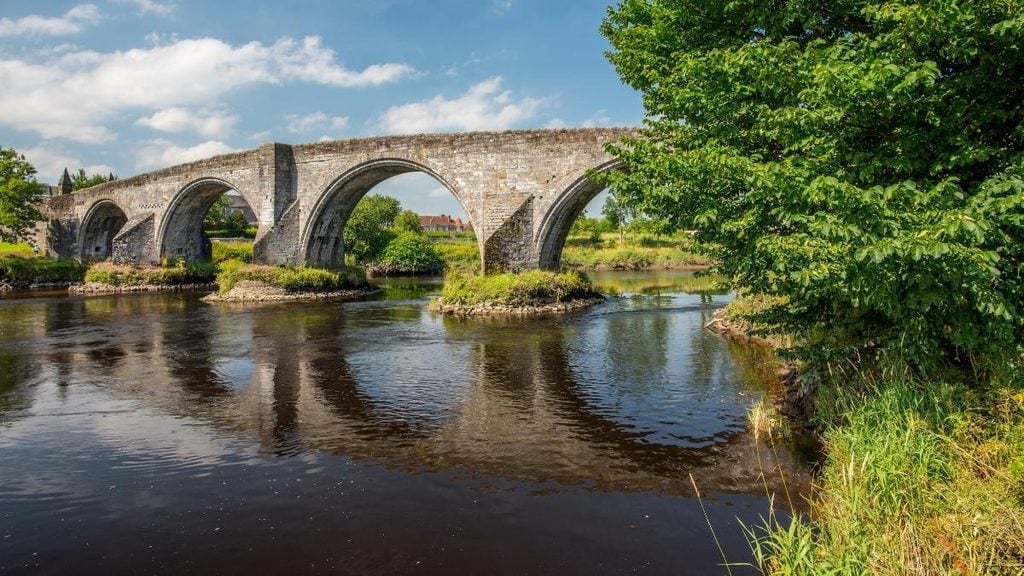
Pick up your rental car in Edinburgh and head northwest. Your first stop is Stirling (roughly 45 minutes from the capital), where you’ll find Stirling Castle overlooking the site of the Battle of Stirling Bridge.
Continue north along the A84 through Callander (the gateway to the Trossachs, a lush, mountainous region in central Scotland) and into Loch Lomond & The Trossachs National Park. The A82 north along the western shore of Loch Lomond is one of Scotland’s great drives, with the loch stretching south and the mountains closing in.
By the afternoon, you’ll reach Glencoe, one of the most dramatic valley landscapes in Britain. Film buffs might recognise this area from the James Bond film, Skyfall. Soak in views of The Three Sisters, challenge yourself to The Lost Valley hike (it’s a tough 3-hour round trip), or visit The Clachaig Inn (a cosy highland pub known for roaring fires, local ales, and hearty meals).
- Drive time Edinburgh to Glencoe: ~2.5 hours without stops
- Don’t miss: A drive along Glen Etive Road; it branches off the main highway and offers a single-track road that winds through the remote valley (made famous by the Bond film, Skyfall).
- Where to stay: Glencoe Village offers easy access to hiking trails, or the neighbouring village of Ballachulish offers stunning landscape views.

Tip from the author: Pull over at the Glencoe Lochan car park and walk the short trail around the lochan; the reflections of the mountains in the still water on a clear morning are extraordinary, and the walk is easy enough for all fitness levels.
Day 3: Fort William, Glenfinnan Viaduct, and Eilean Donan Castle
The next morning, head north from Glencoe to Fort William (a short 30-minute drive). It’s Scotland’s self-proclaimed outdoor capital, sitting beneath Ben Nevis (Britain’s highest mountain).
From Fort William, continue northwest on the A830 (the “Road to the Isles”) to the Glenfinnan Viaduct. The viaduct itself is best seen from the hillside viewpoint above; it’s a short but rewarding climb. The Glenfinnan Visitor Centre (National Trust for Scotland) is a great spot to visit to get even more context about the region.
Continue northwest through Arisaig, with some of the finest white-sand beaches in Scotland, and around the coast to connect with the A87, which leads east to the iconic Eilean Donan Castle. Perched on a small tidal island at the meeting of three lochs, Eilean Donan is one of the most photographed castles in Scotland. End the day in Dornie or Kyle of Lochalsh, and get ready to cross to Skye in the morning.
- Drive time Fort William to Eilean Donan: ~2 hours via the coastal road
- Don’t miss: You can’t visit Fort William and not take a ride on the iconic Jacobite Steam Train (it’s often called the Hogwarts Express).
- Where to stay: For easy access to Skye, stay in Dornie (The Dornie Hotel or Tigh Tasgaidh, a beloved B&B) or Kyle of Lochalsh (The Skye Bridge Hotel or The Farm House B&B are highly rated options).


Tip from the author: The Glenfinnan Viaduct viewpoint is about a 20-minute walk uphill from the car park; it’s well worth it for the elevated perspective. Check the Jacobite Steam Train timetable before you go; catching the train crossing the viaduct is a memorable sight.
Day 4: Cross to Skye – Portree and the Trotternish Peninsula
Cross from the Scottish mainland to the Isle of Skye via the Skye Bridge (toll-free since 2004) and head straight for Portree, Skye’s largest town. It’s a natural spot to base yourself, with a picturesque harbour lined with colourful buildings.
Spend the afternoon exploring the Trotternish Peninsula (the long finger of land stretching north from Portree, containing some of the island’s most extraordinary landscapes).
Here, you won’t want to miss the Old Man of Storr (an iconic rock pinnacle that’s a 45-minute walk to the base from the car park), Kilt Rock and Mealt Falls (for dramatic sea cliff with a cascade plunging into the Sound of Raasay), the Quiraing (a landscape of bizarre rock formations caused by an ancient landslide) and Fairy Glen (a small, otherworldly landscape of conical hills near Uig).
- Drive time Edinburgh to Portree: ~5.5 hours total
- Don’t miss: The circular walk at the Quiraing; it takes around 2 to 3 hours, and the road through it is spectacular.
- Where to stay: Portree has the widest range of accommodation options. Go luxe with a stay at Cuillin Hills Hotel, visit the boutique Marmalade Hotel, or try the budget-friendly Portree Independent Hostel.


Tip from the author: The Quiraing road is one of the most dramatic drives on the entire island. Even if you don’t have time for the walk, driving the single-track road through the formations takes about 20 minutes and is genuinely extraordinary. Go early to avoid the worst of the crowds.
Day 5: Fairy Pools, Neist Point, and Dunvegan Castle
Ready for a day of stunning scenery and epic castles? Spend the second day on Skye covering the western side of the island.
The Fairy Pools near Glen Brittle are a series of clear turquoise pools and waterfalls in the shadow of the Cuillin Mountains. The walk from the car park takes about 45 minutes return, or you can continue into the Cuillin Mountains for a longer hike.
Continue west to Neist Point Lighthouse (the westernmost point of Skye), which is reached via a dramatic clifftop walk (about 45 minutes return) with views out to the breathtaking landscapes of the Outer Hebrides on clear days.
Dunvegan Castle, the oldest continuously inhabited castle in Scotland and seat of the Clan MacLeod, is worth an hour in the afternoon. Plus, consider a visit to the Talisker Distillery (Skye’s oldest working whisky distillery) if time allows.
- Don’t miss: The Upper Pools at Glen Brittle are the most secluded and offer unobstructed views of the Cuillin ridge.
- Where to stay: Stick to the Portree or Dunvegan area for plenty of accommodation options.


Tip from the author: The Fairy Pools get very busy in peak season with visitors looking to swim or capture the natural beauty; arrive before 9am to get a car park space and to experience the pools without the crowds. The water is crystal clear and strikingly turquoise even on overcast days.
Practical tips for driving Edinburgh to Skye
Ready to start the Edinburgh to Isle of Skye road trip? Here are a few tips to keep in mind before starting this world-famous road trip route.
- Allow far more time than Google Maps suggests: The A-road drive times on Google Maps don’t account for single-track roads, passing places, sheep on the road, or the fact that you’ll want to stop at many viewpoints. Build at least 30–50% extra time into any driving day in the Highlands.
- Book accommodation well in advance: Skye has limited accommodation, and it books out months ahead in summer. Don’t leave this until a few weeks before; even May and June can be very tight. Portree has the most options; smaller charming villages fill up fastest.
- Download offline maps before you go: Mobile signal disappears completely in many parts of the Highlands and on Skye. Download your route on Google Maps or Maps.me before leaving areas with signal.
- Hire the right car: A small SUV or hatchback handles Skye’s single-track roads well. Avoid anything very long or wide. Pick up your car in Edinburgh with flexible options through Turo.
- Fill up before leaving main towns:Petrol stations are few and far between in the Highlands. Fill up in Fort William or Kyle of Lochalsh before heading further into the remote roads. Note that fuel is also more expensive in rural areas.
- Pack for all four seasons in one day: Scotland’s weather is famously unpredictable. Pack waterproofs, layers, and good walking shoes regardless of the forecast; conditions can change rapidly, especially on the higher ground.
Looking for other road trips to try? Discover 11 of the best scenic drives in Scotland or embark on the ultimate Scottish Highlands road trip.
Frequently asked questions about Edinburgh to the Isle of Skye
How long does it take to drive from Edinburgh to the Isle of Skye?
The direct drive from Edinburgh to Portree (Skye’s main town) takes approximately 5–6 hours without stops via the western route through Glencoe. Most visitors spread the journey over 2–3 days to allow for time to stop and explore the Highland scenery, castles, and villages along the way. The drive is as much the experience as the destination itself.
What is the best route from Edinburgh to the Isle of Skye?
The western route via Loch Lomond, Glencoe, Fort William, and Eilean Donan Castle is the most scenically dramatic and is recommended for first-time visitors. The northern route via Loch Ness and Inverness offers a different Highland experience and is a good option for those who want to combine Skye with Inverness. Doing a loop (one route there, the other back) is the best approach for those with 5 or more days.
Do you need a car to get from Edinburgh to the Isle of Skye?
A car is by far the most flexible option and gives you access to the best parts of the route and the island itself. Other transport options exist (Scottish Citylink local buses run from Edinburgh to Skye via Glasgow and Fort William, and the direct train from Inverness to Kyle of Lochalsh connects to Skye) but timings are limited and won’t let you reach the island’s most remote viewpoints.
Most visitors strongly recommend hiring a car instead of relying on public transport for shorter journey times, more control of your itinerary, and the ability to adjust your plans with ease.
When is the best time to drive from Edinburgh to the Isle of Skye?
May, June, and September offer the best balance of manageable weather, lower crowds, and longer daylight hours for driving from Edinburgh to the Isle of Skye. July and August are peak season; Skye in particular gets very busy, car parks fill early, and accommodation books out far in advance. Winter driving is possible but brings short daylight hours, potential road closures, and limited opening hours at attractions.
How many days should I spend on the Isle of Skye?
Three days is ideal for a first visit to the Isle of Skye. Two full days allow enough time to explore the Trotternish Peninsula, the Fairy Pools, and Neist Point, while three days provide a more relaxed pace and time for quieter parts of the island. A week is easily filled with walking, scenic drives, and longer stays in different areas.
Plan your Scottish Highland road trip with Turo
The drive from Edinburgh to the Isle of Skye is one of those journeys that stays with you. It’s hard to forget the scale of Glencoe, the moment Eilean Donan Castle appears around the bend in the road, or the first view of the Cuillins from across the water.
Browse Turo for car hire in Edinburgh, with flexible pick-up options and a wide range of vehicles for your drive. Book ahead for summer travel, as road tripping to Skye is a popular choice for locals and visitors alike.


Take control of your financial future and start building your car sharing business on Turo!
Get started
Browse thousands of cars for every occasion and budget near you, or wherever you’re going.
Browse cars
Lucinda Starr
Lucinda Starr is a travel and automotive writer with 5+ years of firsthand experience road-tripping across Australia, New Zealand, and beyond. She writes road trip guides for Turo, drawing on her experience behind the wheel to share practical insights on long-distance drives, destinations, and vehicles. Her travels have taken her across Australia’s East Coast, Victoria’s Great Ocean Road, the Northern Rivers, Byron Bay, and both islands of New Zealand. One of her most memorable journeys was an 11-day, 2,600+ km route from Auckland to Punakaiki and Queenstown. Lucinda has a particular passion for classic, rugged 4WD vehicles and the freedom they bring to exploring new places.