by Anna Hann
posted on 14 August 2025
The Anglesey road trip circles the island at the northwestern tip of Wales, offering a compact yet richly layered journey. Linked to the mainland by the Menai and Britannia bridges, Anglesey (Ynys Môn in Welsh) is a place of ancient landscapes, quiet beaches, windswept cliffs, and communities steeped in language, legend, and maritime history.
This famous North Wales journey traces a wide arc around the whole island’s 125-mile coastline, connecting prehistoric tombs, lighthouses, sandy bays, medieval castles, and harbours. Along the way, the road trip passes through the Wales Coast Path, the island’s designated Area of Outstanding Natural Beauty, and several lesser-known spots where time seems to stand still.
Unlike faster-paced road trips through Wales’ mountains or national parks, an Anglesey road trip offers a chance to slow down and experience Welsh culture and landscapes: exploring a 4,000-year-old burial chamber, standing at the edge of the cliffs near South Stack, or tasting mussels harvested from the Menai Strait. Each stop adds depth to the journey, revealing the island’s history, character, and quiet beauty.

Anglesey road trip itinerary
This four-day Anglesey road trip begins and ends near the Menai Strait, following a gentle circuit through ancient landscapes, rugged coastlines, and quiet rural villages. Along the way, dramatic cliffs, prehistoric sites, hidden beaches, and wind-whipped lighthouses unfold one by one. In just four days, the journey weaves together history and natural beauty, and offers a pace slow enough to let the island reveal itself.
Day 1: Menai Bridge to Beaumaris and Penmon Point
Distance: Approximately 45 miles
Driving time: Around 2½ hours (without stops)
Cross the Menai Strait
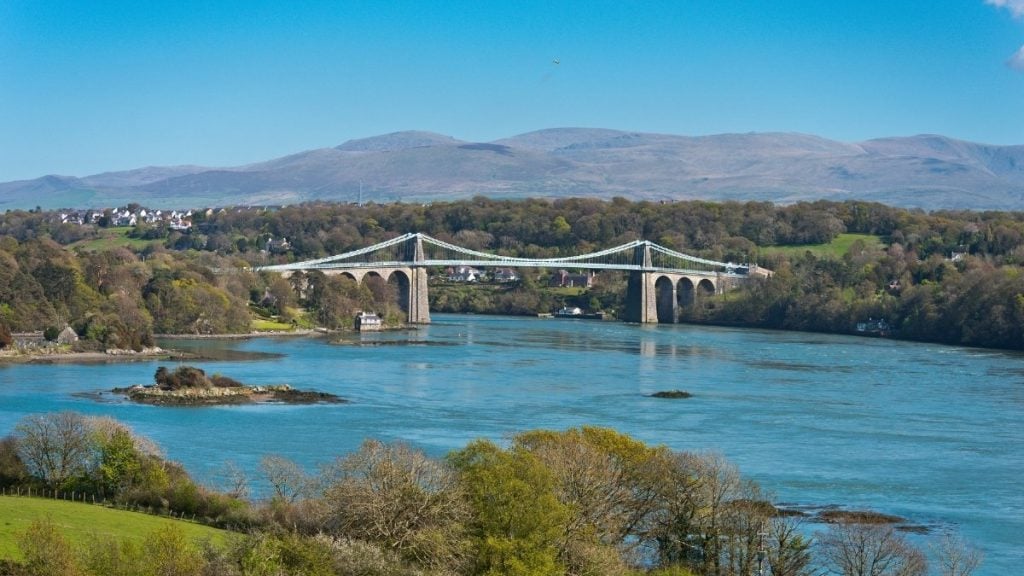
Start your Anglesey road trip by crossing the Menai Suspension Bridge, designed by Thomas Telford in 1826 as the world’s first major suspension bridge, which connects mainland Wales to the island. Wander along the Belgian Promenade for views across the swirling Menai Strait, or stop for coffee in Menai Bridge before heading northeast.
Explore the castle walls in Beaumaris
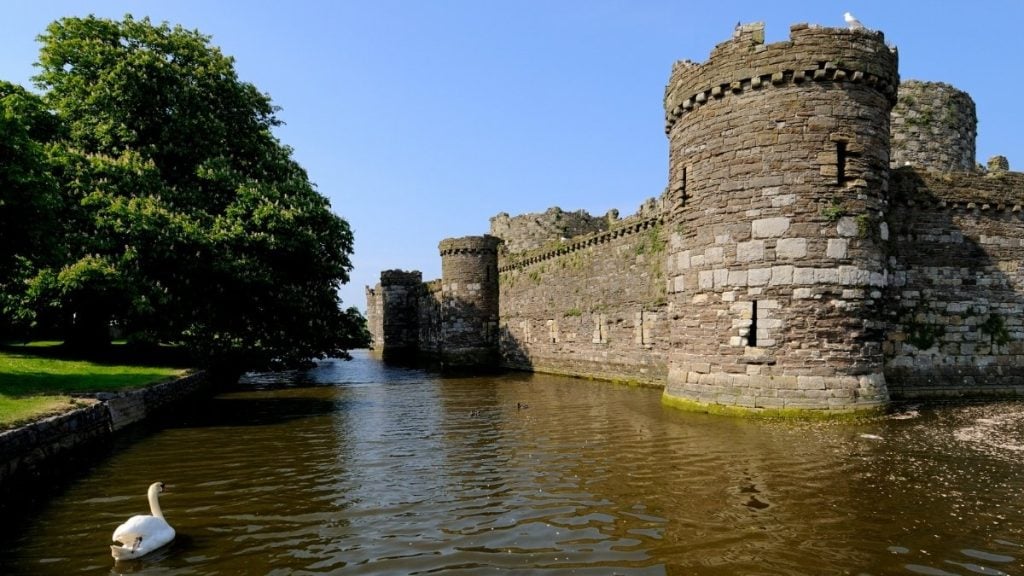
Your first major stop on your Anglesey road trip is Beaumaris Castle, one of Edward I’s most impressive but unfinished fortresses and a designated UNESCO World Heritage Site. Despite its incomplete status, the castle’s concentric symmetry and water-filled moat are striking. Afterwards, stroll through the colourful Georgian town centre for independent galleries, bookshops, and waterfront cafés.
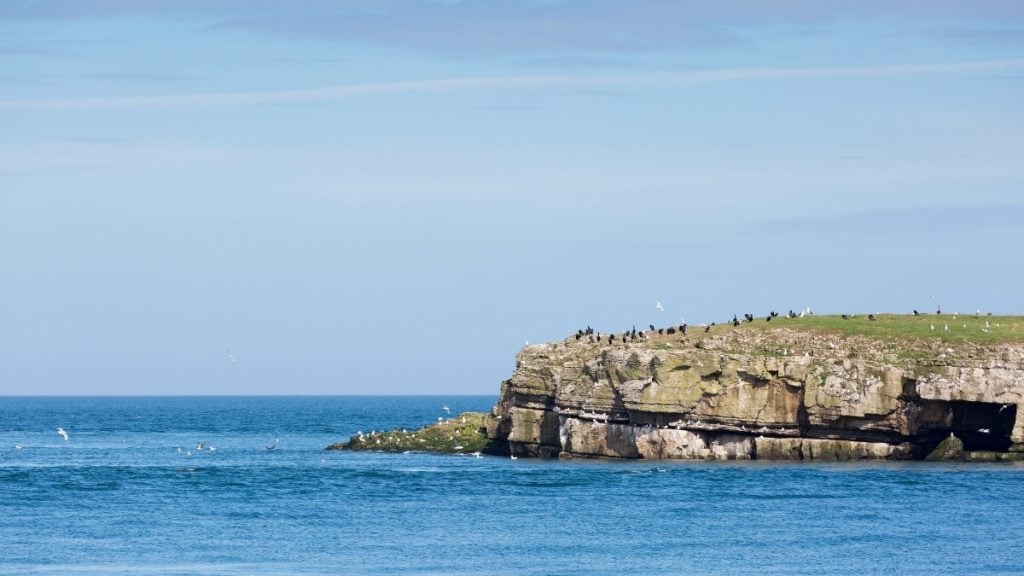
Spot seabirds near Puffin Island
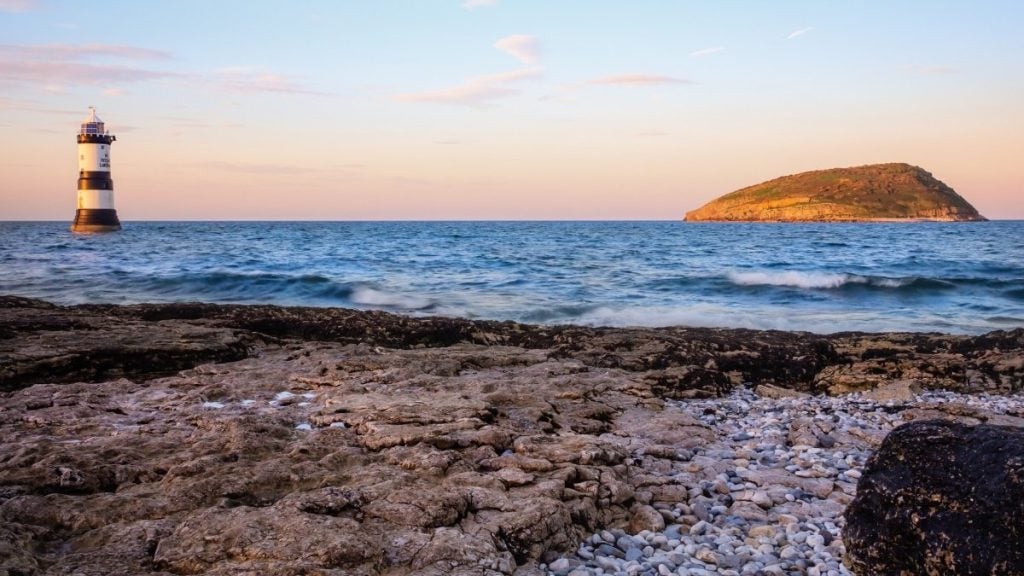
Continue east to Penmon Point, where a small lighthouse marks the island’s eastern tip. From here, you can see Puffin Island, a small offshore sanctuary. Between April and July, puffins can occasionally be seen among the guillemots, razorbills, and cormorants. Boat tours from Beaumaris often circle the island, offering views of its birdlife and Atlantic grey seals. It’s worth knowing that the final stretch to Penmon is a private toll road, so you’ll need to pay for access.
Stop for sunset at Church Bay
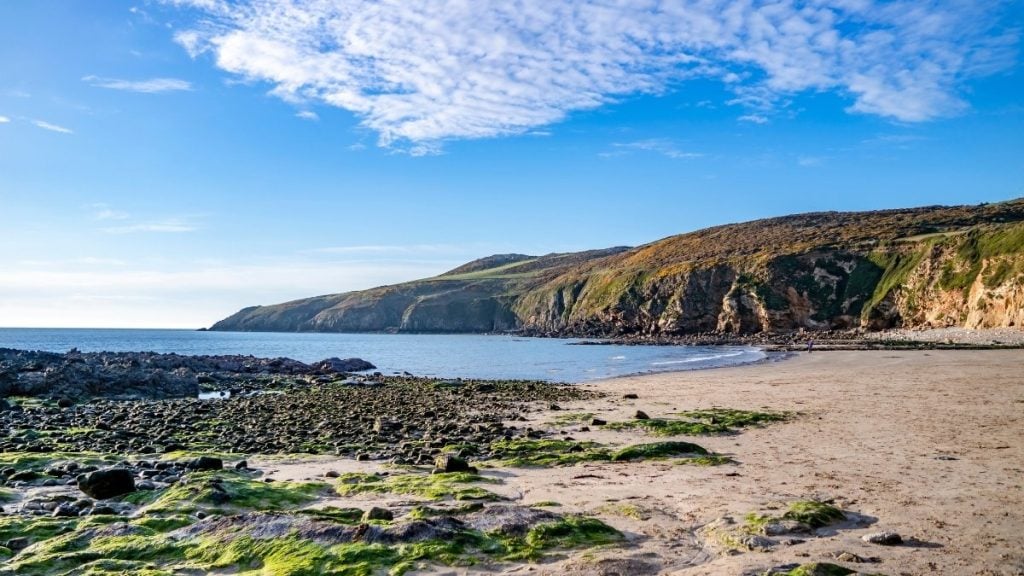
End the first part of your Anglesey road trip at Church Bay, where a steep lane leads to a quiet beach with rock pools and lovely views. If you have time before it closes, visit the small Swtan Heritage Museum, a restored 17th-century cottage. The sunsets here are among the island’s finest, often glowing pink and orange across the Irish Sea.
Stay close to Church Bay, booking two nights, as you’ll return here after the second day of the road trip.
Day 2: Beaumaris to Church Bay
Distance: Approximately 50 miles
Driving time: Around 2½ hours (without stops)
Discover prehistoric Anglesey at Llynnon Mill
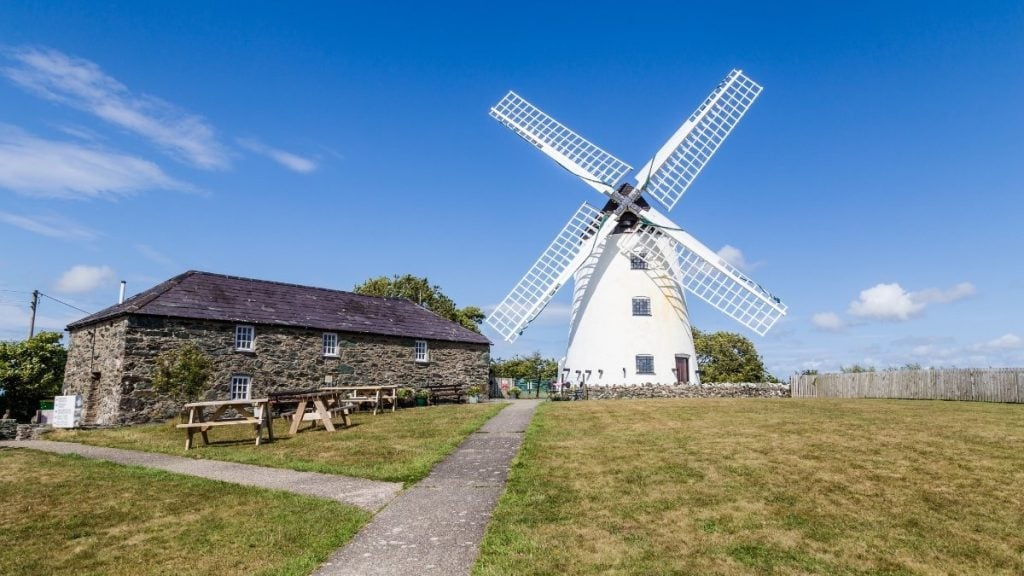
Begin your morning inland at Llynnon Mill, the only working windmill in Wales. Alongside it are reconstructed Iron Age roundhouses offering insight into early life on the island. The rural setting makes this a peaceful place for a picnic, with occasional opportunities to buy stoneground flour or bread made on-site.
Visit the beaches and bunkers at Rhosneigr
Head west to Rhosneigr for a walk along Traeth Crigyll or Traeth Llydan. These long, sandy beaches are popular with dog walkers and kite surfers, who take advantage of the strong coastal winds. RAF Valley, still an active training base, leaves behind wartime structures visible from the dunes.
Catch coastal views at Trearddur Bay
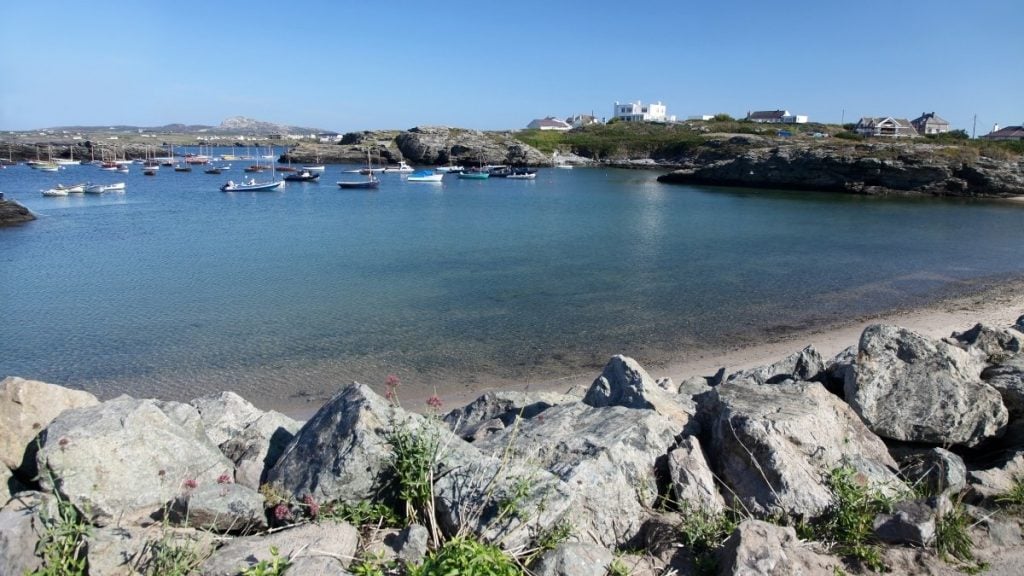
Continue to Trearddur Bay on Holy Island, where beachside cafés and clear water make this a good spot for lunch. The bay is known for its water sports, rock pools, and relaxed atmosphere.
Walk the cliffs at South Stack Lighthouse
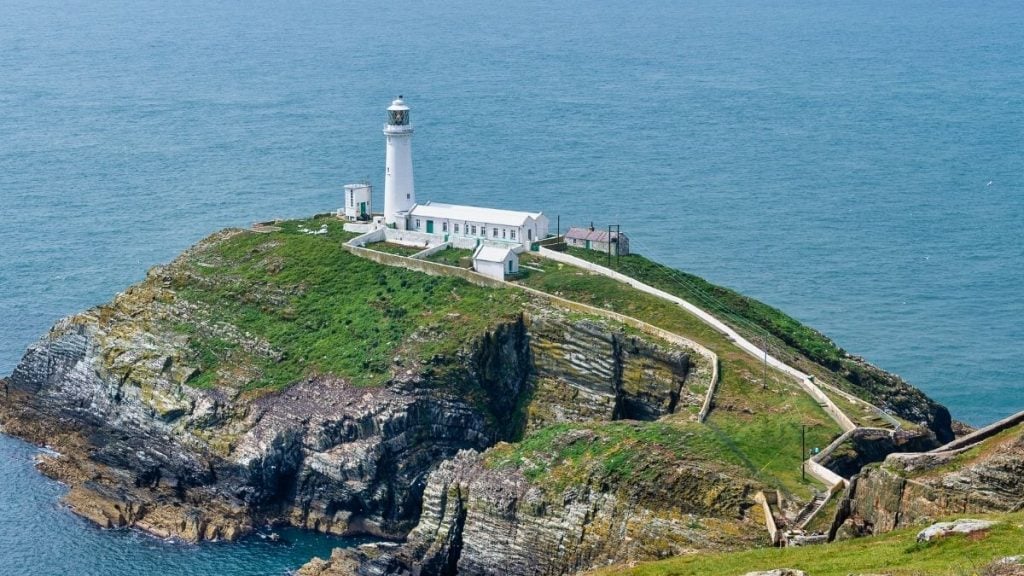
You can’t visit Anglesey without checking out the South Stack Lighthouse. Drive west toward South Stack, where the lighthouse sits on a rocky islet beneath towering cliffs. A stairway of over 400 steps leads down to the bridge and base, or you can admire the views from the RSPB visitor centre above. In spring and summer, the area is alive with puffins, razorbills, and wildflowers.
Return to Church Bay
Circle back to Church Bay for the evening, where you can enjoy another peaceful sunset or dinner at a local seafood restaurant.
Day 3: Church Bay to Moelfre
Distance: Approximately 55 miles
Driving time: Around 2½ hours (without stops)
Watch the tide at Cemlyn Bay
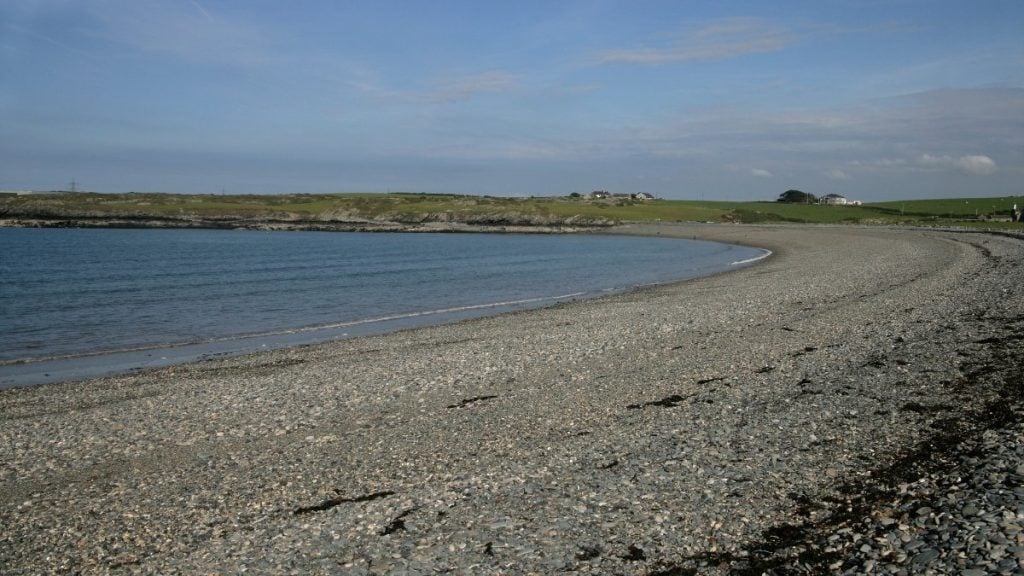
Start your day at Cemlyn Bay, where a crescent-shaped shingle beach curves around a saltwater lagoon. In summer, the lagoon becomes a nesting ground for Arctic, common, and sandwich terns, making it one of Anglesey’s most important seabird colonies. The setting is quiet and ideal for a short walk along the Anglesey Coastal Path.
Climb through copper history at Parys Mountain
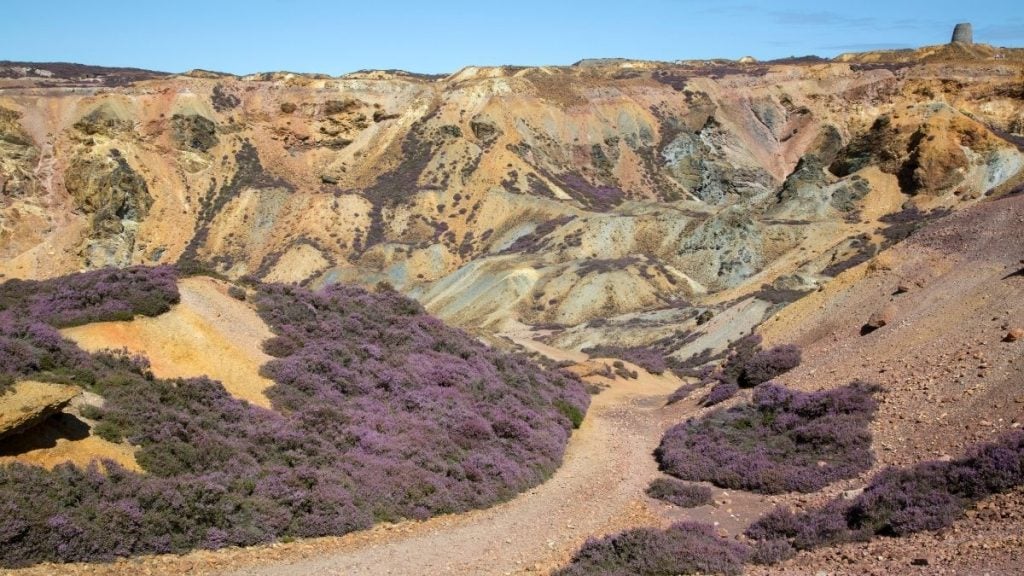
Next, head inland to Parys Mountain, once the world’s largest copper mine. The exposed landscape is vividly streaked with reds, yellows, and purples from mineral deposits, and well-marked trails loop around the old workings, offering views toward the coast.
Discover industrial heritage in Amlwch
In nearby Amlwch, the Copper Kingdom Centre provides an explanation of the town’s transformation during the 18th and 19th centuries. Housed in a restored building on the quayside, the museum features interactive displays about the miners, traders, and mariners who helped Anglesey play a significant role in the global copper industry.
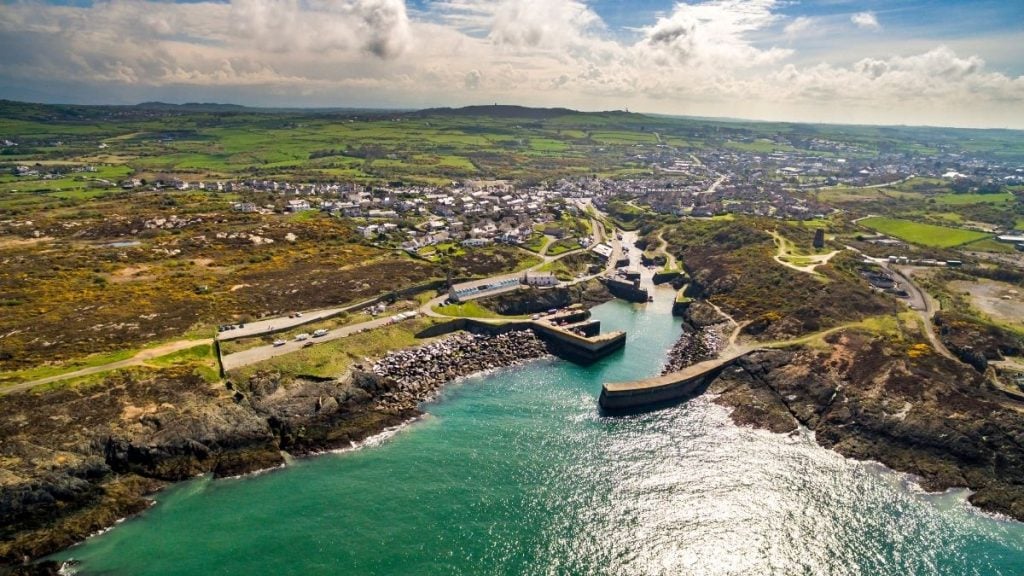

Hiring a car on Turo makes exploring Anglesey and the rest of Wales simple and stress-free. With local hosts offering a wide range of vehicles and plenty of pickup locations to choose from, you can start your journey wherever it suits you best. Skip the traditional rental counter, choose the exact car that fits your plans, and enjoy the freedom to explore at your own pace .
Visit the Mound in the Dark Grove
From Amlwch, detour inland to Bedd Branwen, known as the Mound in the Dark Grove. This Bronze Age burial site, located in a quiet woodland clearing near Pentraeth, is steeped in myth, linked to the tragic tale of Branwen from Welsh legend.
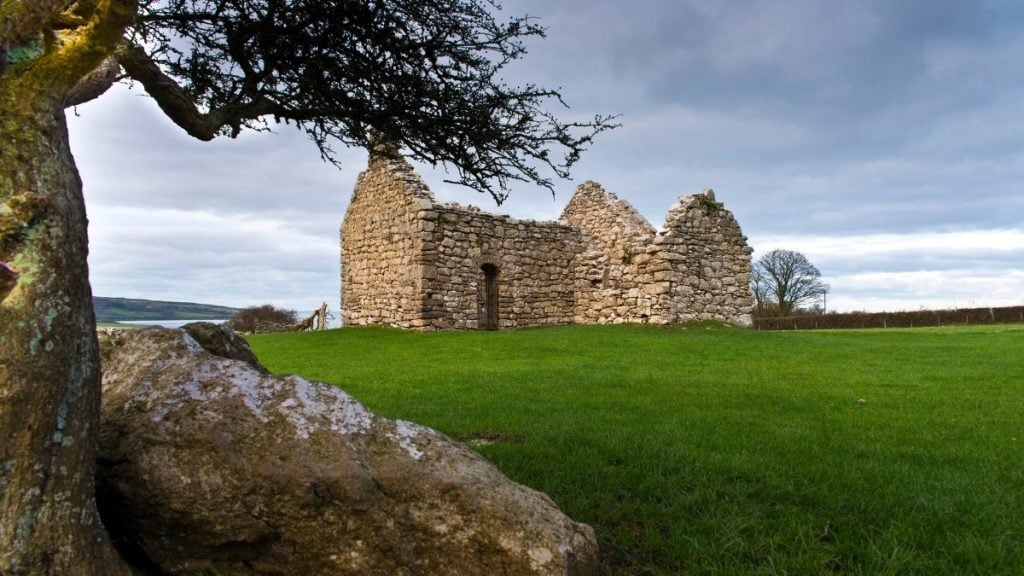
Step back in time at Din Lligwy
Near Moelfre, visit the Iron Age settlement of Din Lligwy, where circular stone outlines of dwellings and storage huts remain intact in a grove overlooking the sea. It’s a tranquil, thought-provoking place that connects modern travellers with ancient ways of life.
Explore the harbour at Moelfre
Arrive in Moelfre, a picturesque town with a long maritime history. The RNLI Seawatch Centre shares stories of daring rescues, and the Anglesey Coastal Path offers fine views of the shoreline. Stop for lunch in a seafront café before continuing.
Walk the sands at Red Wharf Bay
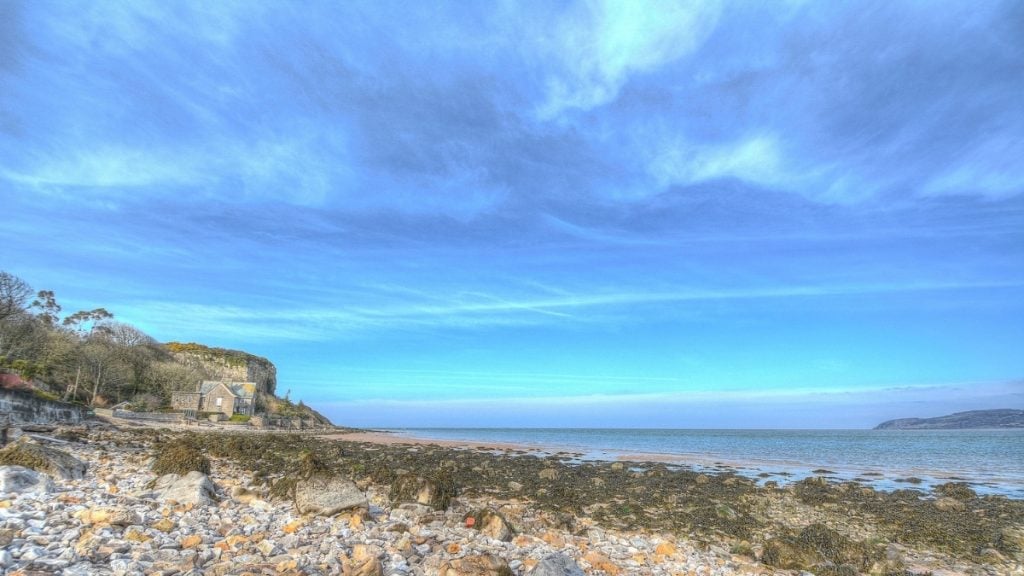
End the day at Red Wharf Bay, a vast tidal beach that stretches for nearly 10 square kilometres. The open sands are ideal for walking and birdwatching, and the bay is lined with welcoming pubs and tea rooms.
Day 4: Moelfre to Menai Bridge
Distance: Approximately 55 miles
Driving time: Around 2 hours (without stops)
Start on Anglesey’s west coast
The final day begins in Aberffraw, a small town once home to Welsh princes. Its quiet sandy beach is perfect for a leisurely stroll or simply taking in the fresh sea air. This part of the northwest coast offers breathtaking views and a glimpse into the small island’s royal and cultural past.
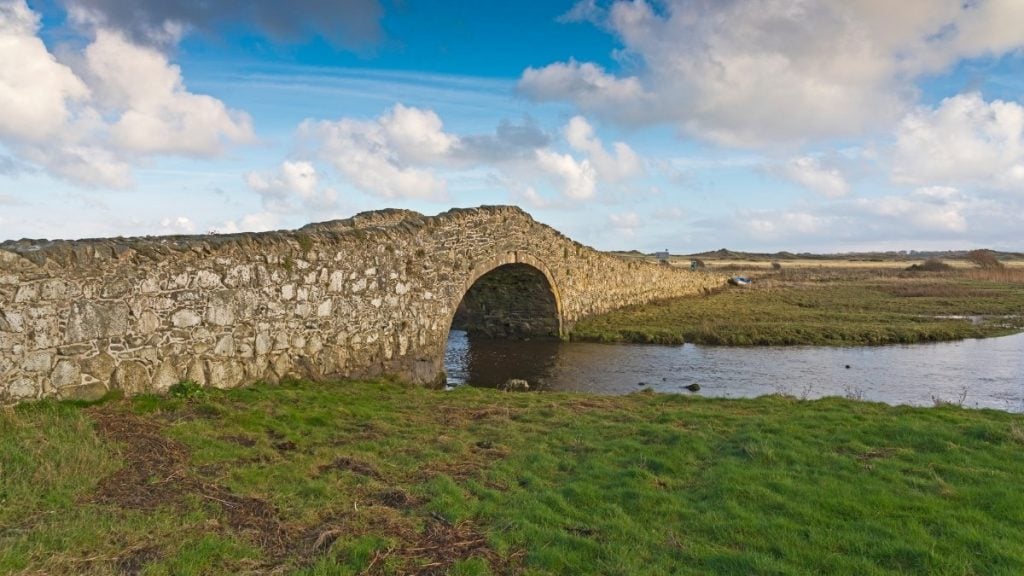
Walk to Llanddwyn Island
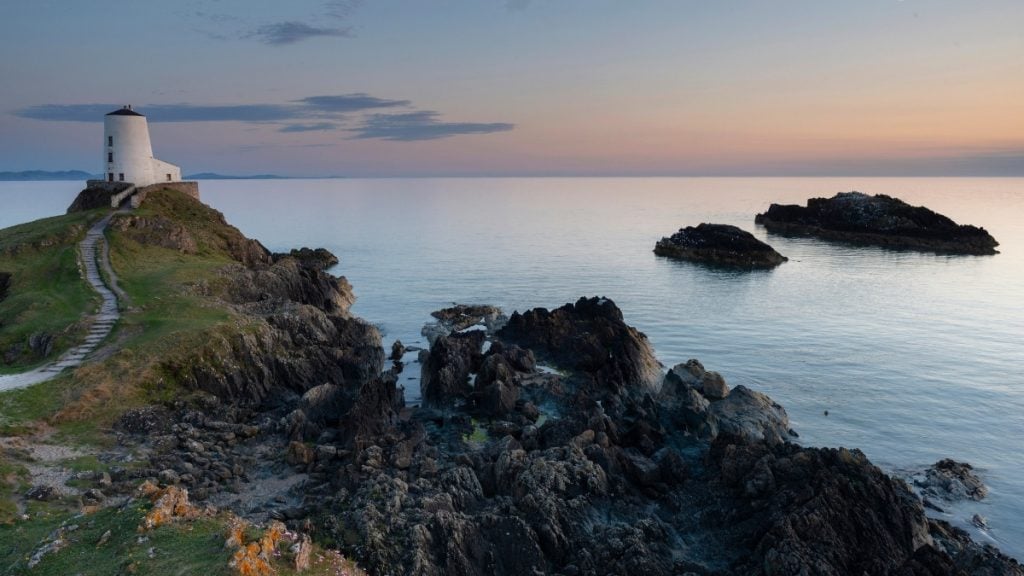
Just a short distance away lies Newborough Forest, one of the best places in Wales for spotting red squirrels. Park at the nearby car park and follow the coastal road through the forest to reach Llanddwyn Island. This tidal peninsula is rich in history and legend, with standing crosses, chapel ruins, and sweeping sea arches. It’s a perfect spot to explore ancient sites or watch for grey seals and seabirds. The views stretch across the water toward Puffin Island and back toward Yr Wyddfa, creating a strong connection between sea and mountain. An on-site cafe is a great spot to relax in after your walk.
Visit Bryn Celli Ddu
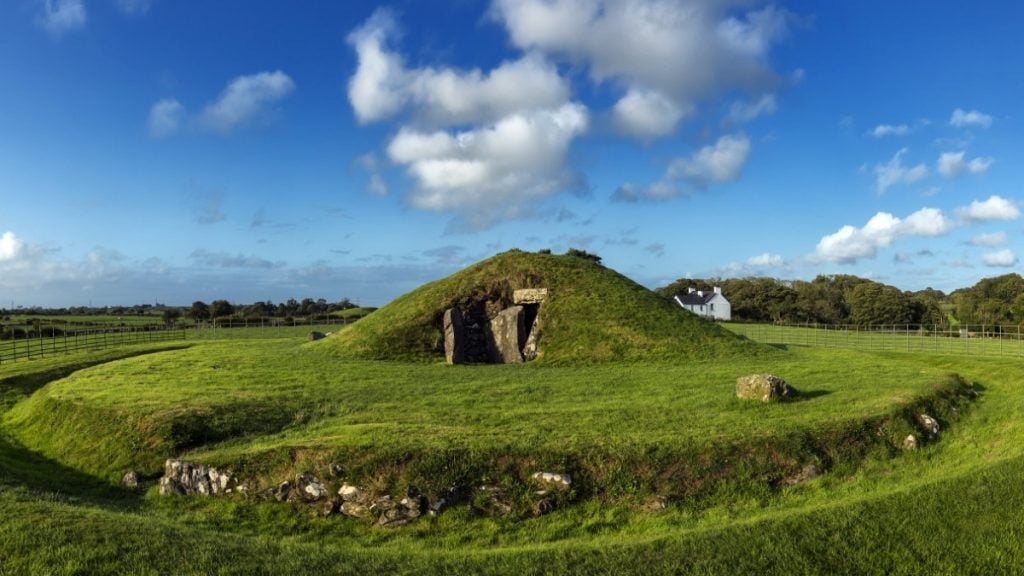
From Newborough Forest and Llanddwyn Island, drive inland to visit Bryn Celli Ddu, one of Wales’ best-preserved Neolithic passage tombs. The site aligns with the summer solstice, and stepping into the main chamber offers a vivid link to the island’s distant past. This ancient burial chamber, nestled in the countryside, continues to inspire with its quiet, sacred presence.
Return to Menai Bridge
The final stop of the Anglesey road trip is the Red Cave, a striking formation at sea level along the southern coast. Its rich colouring and remote feel make it one of Anglesey’s hidden gems. From here, continue back to Menai Bridge, Anglesey’s main town, and take a second look at the panoramic views from the Menai Suspension Bridge, a marvel of 19th-century engineering that spans the rapid whirlpool of the Menai Strait.
Why choose an Anglesey road trip?
An Anglesey road trip offers one of the most rewarding ways to experience North Wales year-round. Compact yet diverse, the island combines sandy beaches, ancient sites, and tranquil country lanes with excellent places to eat, stay, and explore. If you’re visiting North Wales for the first time or returning for a more in-depth experience, this is a trip that delivers history, nature, and panoramic views in equal measure.
Easy to navigate
Most highlights lie just a short drive from the main road that circles the island. Car parks are available near most major stops, including South Stack Lighthouse, Newborough Forest, and the beaches at Rhosneigr and Trearddur Bay. The routes are well signposted. Many scenic locations are reached by a short walk or a leisurely stroll.
Coastal scenery and natural beauty
From the striking sea arches near Llanddwyn Island to the cliffs above South Stack, Anglesey’s coastline provides plenty of dramatic moments. The northwest coast is a great spot for kite surfing, while the sweeping sands at low tide, especially at Red Wharf Bay, are ideal for walking and birdwatching. Newborough Forest offers a strong dose of natural calm. It is one of the best places in Wales to see red squirrels darting among the white hazel and pine.
A place steeped in history
The island’s ancient sites span thousands of years, from Neolithic tombs like Bryn Celli Ddu to the Iron Age village at Din Lligwy. Many are free to visit and rarely crowded. This makes them perfect for quiet discovery. History also runs through its towns and engineering feats, including Thomas Telford’s iconic Menai Suspension Bridge, which remains a vital link between the island and the mainland.
Food, cafés, and local charm
Anglesey is renowned for its rich local cuisine, featuring fresh seafood and traditional Welsh cakes. Coastal locations often feature an on-site café or tea room with sea views. Each picturesque town offers something unique, from beach kiosks to bistro-style restaurants. You might stop at a harbour for lunch, or wind down with a meal after a coastal walk. Either way, it is easy to combine the local cuisine with the day’s journey.
A trip for all seasons
Thanks to its size and accessibility, Anglesey is well-suited to flexible travel. You can easily spend a few days exploring the whole island at your own pace. Many attractions and footpaths remain open throughout the year. Even in winter, there are perfect spots to watch waves crash or the sun rise over the eastern beaches. No matter the time of year, Anglesey rewards both first-time visitors and returning travellers with fresh views and a timeless atmosphere.
Planning an Anglesey road trip
Getting around Anglesey by car is the easiest way to experience its remote beaches, quiet villages, and winding coastal roads. A bit of advance planning can help you hit the ground running. Below, you’ll find practical advice on where to pick up a vehicle, what kind of car works best, and when to travel for the smoothest experience.
Where’s the best place to collect a car for an Anglesey road trip?
The best launch point for visiting North Wales on an Anglesey road trip is Bangor or Holyhead, both well-connected by rail and road. Turo offers a flexible, convenient way to hire a car, especially if you’re arriving by train or ferry. Many hosts offer delivery options, allowing you to have your vehicle brought directly to Bangor station, Holyhead port, or even your hotel in the area. It’s a smooth way to start exploring without relying on fixed rental office hours or queues.
What kind of car should I choose for Anglesey?
Anglesey’s roads are mostly well-surfaced and easy to navigate, so the best choice depends on how you plan to explore. A small hatchback is ideal for village lanes, coastal routes, and tight parking spots near beaches and viewpoints. If you’re bringing hiking gear, bikes, or paddleboards, a compact SUV or estate car will provide you with more boot space without being bulky. For families, Turo lets you filter by extras like child seats, while outdoor enthusiasts can look for options with roof racks or bike carriers to match the island’s active appeal.
When is the best time to book and travel?
Car availability in North Wales can be limited during the busiest months, so it’s wise to book several weeks in advance if you’re planning a visit between May and September. Spring and early autumn are particularly good times for a road trip, offering quieter roads, more flexible accommodation options, and comfortable weather. Some rural fuel stations and cafés may operate with reduced hours outside of peak season, so checking ahead can help keep your journey smooth and stress-free.


Take control of your financial future and start building your car sharing business on Turo!
Get started
Browse thousands of cars for every occasion and budget near you, or wherever you’re going.
Browse cars