
by Turo
posted on 17 December 2024
Dynamic pricing is a tool designed to optimise your earnings – and it’s working. Hosts who have relied on prices suggested by dynamic pricing have seen their earnings soar.
If you’re already a successful host, you might wonder whether dynamic pricing is the right approach for you. So, let’s look at why dynamic pricing was introduced, how it works, and why it’s proving to be lucrative and stress-free for hosts.

Why dynamic pricing?
Price is the most critical factor for success on Turo, but until recently, finding the right price for a vehicle typically involved a bit of guesswork. Once set, the majority of hosts don’t adjust their price in response to dips and peaks in seasonal demand.
Since September 2024, dynamic pricing has been available in your account’s calendar. Driven by a data science model, it generates the optimal price for your car every day. It considers your cars’ age, make, model, and location, as well as the costs of owning and running a car. But, importantly, it also accounts for factors that change, like seasonality and the unique supply and demand fluctuations in your area.

Why dynamic pricing works
While some hosts might feel confident in the prices they self-select, remember that dynamic pricing accesses data that hosts can’t. For instance, dynamic pricing taps into real-time guest searches, market insight on specific makes and models, seasonal data, and thousands of previous bookings that show what guests are really prepared to pay. This data causes the daily price to rise and fall in response.
Over 70% of bookings** are with cars priced within 15% of the dynamic price.

Many hosts fail to price their vehicles effectively, especially in the shoulder seasons. Dynamic pricing, powered by data from thousands of trips, aligns with guest expectations, helping hosts set competitive rates to maximise bookings and earnings.
Hosts love dynamic pricing
Check out the feedback from our UK hosts who are already taking advantage of dynamic pricing.
I’m an advocate for dynamic pricing, I trust in the data as I know the suggested prices will be better informed than trying to figure it out myself. I can see the prices go up in peak season and down in low season and it helps me to understand seasonality.
– Elisha, London (All-Star Host)
After attending the dynamic pricing webinar, I decided to use dynamic pricing on my cars. I like that it uses market data and many other factors to calculate the suggested price, as it gives me one less thing to think about. I can see the suggested prices for December are higher than I would have thought to put myself, so far it’s working well for me and I’m happy with the bookings I’m getting.
– Vendy, Manchester (All-Star Host)
Questions about dynamic pricing
Hosts who have been on Turo for some time might feel confident in the performance of their listings and wonder why they should change a strategy that’s been working. Let’s look at some questions from hosts.

Does lower prices mean lower earnings?
Dynamic pricing is designed to help hosts price competitively and maximise their earnings. Early indicators show that’s exactly what’s happening. In fact, hosts relying on dynamic pricing are expected to earn more a year on average*, compared to hosts who self-select prices.
You’ll spot lower prices on low demand days to increase the likelihood of bookings and trip extensions. On popular dates, dynamic pricing will increase your daily rate — perhaps even above what you thought you could charge, helping boost your overall profitability.

How well does dynamic pricing know my local area?
Local knowledge is important. Dynamic pricing factors in the location of your car, drawing on historical and real-time data from your area. It also looks at a broader dataset than location, using data that hosts can’t access directly, such as factors about makes, models, and seasonal demand patterns.

Can I trust dynamic pricing?
The concept of dynamic pricing isn’t new. Airlines have used this model for years, increasing prices as fewer seats become available and decreasing fares on emptier aircraft. It’s a trusted technique to optimise pricing at any given time, whether raising or lowering prices. The Turo algorithm aligns closely with what, where and when guests are booking, demonstrating its accuracy.
Make the switch to dynamic pricing
It’s easy to allow dynamic pricing to set daily prices for your listing. Simply highlight any days you have adjusted in your vehicle calendar and set them to dynamic.
On rare occasions, a manual price can override dynamic pricing. Typically, this will be a micro-adjustment within 15% of dynamic pricing to respond to local knowledge around a specific weekend or event. Most hosts will never have to set a manual price as dynamic price does all the hard work for them.
Enabling dynamic pricing gives you access to better predictive features, too. The future prices tab allows you to see the predicted prices for your car for the next 90 days to see how your price will fluctuate over time and your potential earnings.
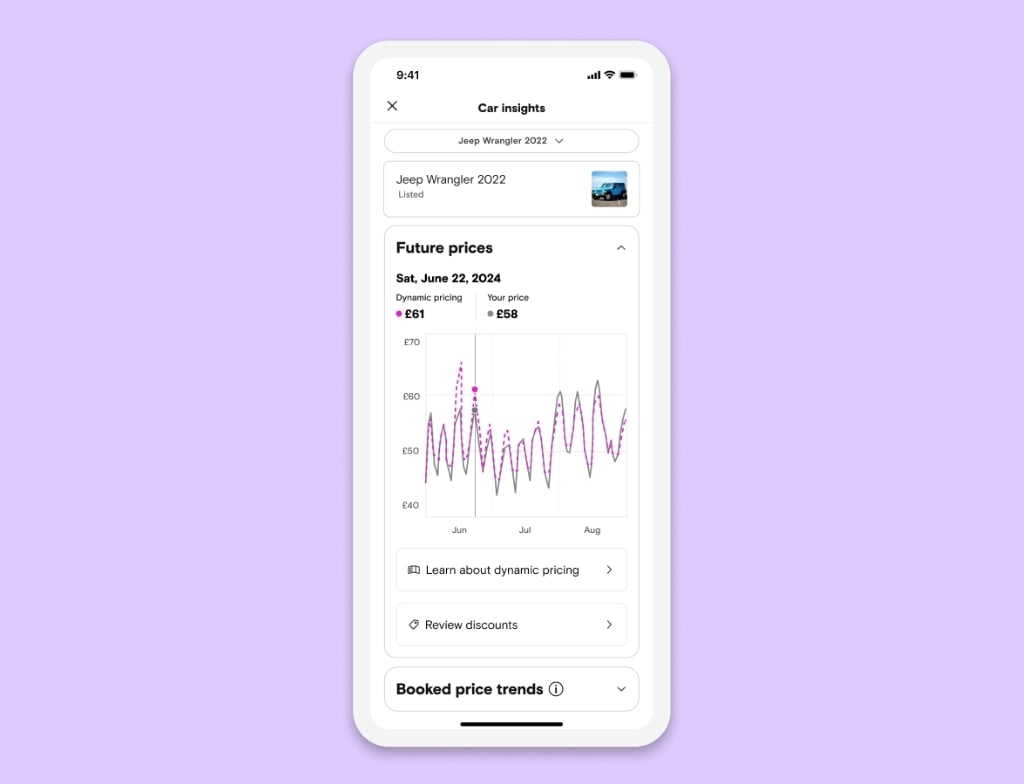
Dynamic pricing adapts day by day, making your listing competitive but lucrative, outperforming manual pricing because it flexes to real-time demand. This powerful new tool is there to help you make smarter decisions — make the most of it!
If you haven’t already, try dynamic pricing, and watch your bookings and earnings rise.
*For the period November 1st-31st 2024, All-Star hosts with vehicles valued at under £40k priced within 5% of the dynamic price earned on average 50% more than hosts with one or more vehicles priced over 15% above the dynamic price.
**For the period Oct 1 – Dec 15, 70% of booked days were with vehicles priced within 15% of the dynamic price.