
posted on November 2, 2026
Figuring out what to drive while your car is in the shop is a bit like packing for a trip when you don’t know how long you’ll be gone. The repair shop says “a couple of days,” but you’ve been here before, and you know that can easily turn into a week.
What you need will depend on your routine and how long repairs take. With Turo, you can book the exact car you want for your planned dates. If repairs take longer than expected, you can request an extension in the app.
In this guide, we’ll cover:
- What to drive based on repair time
- Your options for getting a car while your vehicle is in the shop
- How to figure out how long you’ll be without your car
- What to drive based on how long your car is in the shop
- How to match a rental car to your routine
- Making the most of the downtime
- How to get a rental car on Turo
- Frequently asked questions
What to drive based on repair time
Start with how long you expect your car to be in the shop. The shorter the repair, the less you need to think about it (you’ll likely only be without it for a couple of days). But if your repair timeline extends to multiple weeks, you need a car that suits your daily life and commute, and can flex if plans change.
| Repair length | Best way to get a car | What to drive |
|---|---|---|
| A few hours to a day | Repair shop loaner or short-ternm car rental | Whatever is easy to find and cheap to rent |
| 2–5 days | Short-term car rental | Fuel-efficient sedan, hybrid, or compact SUV |
| 1–2 weeks | Rental that feels similar to your own car | Same size and features as your own vehicle |
| 2+ weeks or open-ended | Flexible rental car that can extend as you need it | Comfortable vehicle, easy to adjust if repairs run long |
Your options for getting a car while your vehicle is in the shop
If your car is in the shop and you don’t want to rely on public transportation, ridesharing, or walking, you’ll need to secure another set of wheels. While borrowing a car from your relatives or using a traditional rental company are feasible options, renting a car on Turo is a flexible, convenient option for most scenarios. Book the exact car you want to drive, get it delivered to you, and easily request to extend your booking if your repair timeline extends.
Renting a car on Turo
- Pros: You choose the exact car you drive, vehicles can be delivered to you, you can request extensions in the app, and many listings offer discounts for longer bookings.
- Cons: Availability and delivery options vary by location, so book early if you want a specific car.
- Best for: Repairs of unpredictable or longer length, or anyone who wants a car similar to their own.
Car repairs are rarely predictable, but securing a car to drive while your own is in the shop should be. With Turo, you can find the exact car make and model you want to drive, get it delivered to you, add on extras (like unlimited mileage and child seats), and easily request to extend your booking if plans change last minute.
Getting your car fixed comes with plenty of logistics, but Turo takes the stress and guesswork out of securing a replacement car in the meantime. The best part? The exact car you book is the car you’ll drive, so you’ll never be surprised with an unexpected swap at pickup.

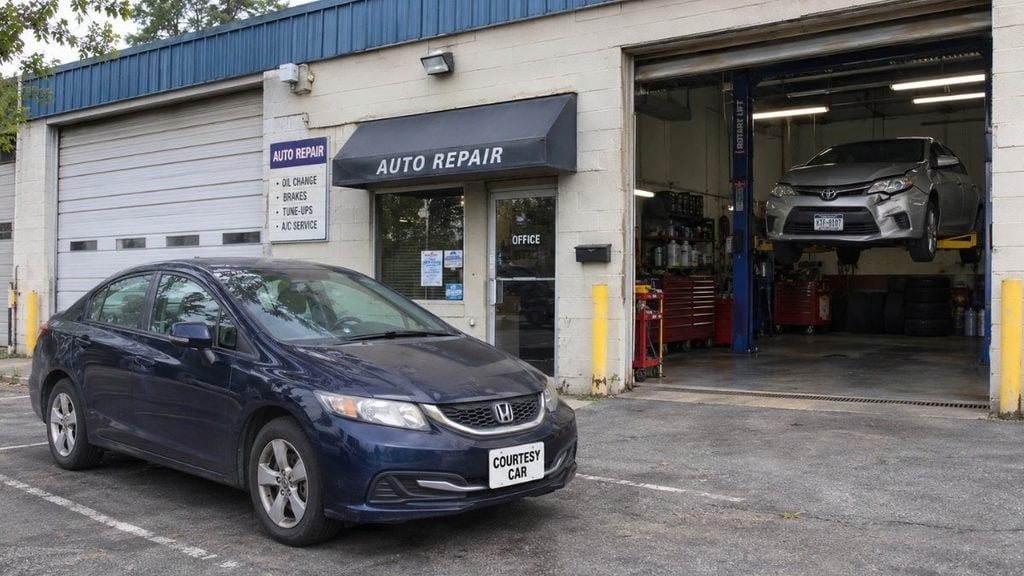
Shop loaner, dealership loaner, or courtesy car
- Pros: Free or low cost, often a newer car, and no extra trip to pick one up.
- Cons: Limited availability, usually only offered for short repairs or warranty and manufacturer service work, and there are often limits on how long you can keep it.
- Best for: Quick repairs of a day or so, warranty work, and recalls.
A shop loaner or dealership courtesy car is the easiest option when it’s available, but many independent shops don’t have a spare car to lend out. Dealership loaners are often tied to warranty or scheduled service work, too. Check the mileage limits, what you’ll need to bring (like a deposit or your license), and what happens if the repair runs over. If the answer is “no” or “only for a day,” it may be time to look at a rental.
Borrowing a car from friends or family
- Pros: Free, familiar, and no paperwork.
- Cons: Rarely sustainable for more than a few days, and it can strain the relationship if the repair drags on.
- Best for: A day or two, when someone has a spare car.
If loved ones live nearby and don’t mind you borrowing their car, this can be an option while your vehicle is in the shop. But asking for favors from friends and family gets awkward, especially when the shop says “just a few more days” for the third time. If you don’t know exactly when your car will be back, have a plan B ready.

Traditional rental car counter
- Pros: Familiar process, with plenty of rental desk locations, including airports.
- Cons: You usually only get to choose a broad vehicle class rather than a specific car, and you’ll need to get to a branch during operating hours.
- Best for: Short, one-off repairs when you’re happy to take whatever’s available.
Traditional car rentals are a good fallback when you need a car, don’t mind traveling to pick it up, and are willing to wait in a line. The drawbacks are that rental desks can get busy, availability of the car type you want isn’t guaranteed, and you might be surprised with a “similar” vehicle when it comes time to pick it up. Plus, if repair times run long you might not be able to adjust your booking, as rental desks often require fixed return dates.

A rental covered by an insurance claim
- Pros: Can reduce or remove rental costs when the repair follows a covered event.
- Cons: Often capped by daily limits and a maximum number of days, and it doesn’t usually apply to routine mechanical repairs.
- Best for: Accident or collision repairs.
If your car is in the shop after a collision or another covered event, your insurance policy may include rental coverage. It’s worth a quick call to find out before you book anything. Just keep in mind that these limits often run out before the repairs are finished, and breakdowns and routine vehicle maintenance usually aren’t covered at all. Check what you’re covered for and for how long, then pick a car that fits the rest of the timeline.
How to figure out how long you’ll be without your car
The most reliable way to estimate how long you’ll be without your car during a repair is by asking the mechanic or shop directly. These professionals will have the clearest picture of what needs to be fixed, what other jobs they’re juggling, and whether parts need to be ordered. Always build in a buffer as a visit to the shop doesn’t always run on schedule and plan for the “worst case” scenario.
Repairs tend to run over for three reasons. The shop is waiting on a part, the diagnosis turns up something new, or other cars are in line ahead of yours. Any of these can turn “a couple of days” into a week without much warning.
Not sure how long repairs might take? These general time frames can help you plan, but your repair shop can give you a more accurate estimate.
- Basic service (oil change, tire rotation): 1 to 2 hours. Often a same-day wait, or drop off in the morning and pick up at lunch.
- Major scheduled maintenance: 3 to 8 hours. Usually ready by the end of the business day.
- Minor cosmetic work (single-panel repaint): 1 to 3 business days.
- Typical drivable collision or mechanical repair: Around 1 week, depending on parts and how busy the shop is.
- Major collision or structural damage: Several weeks.
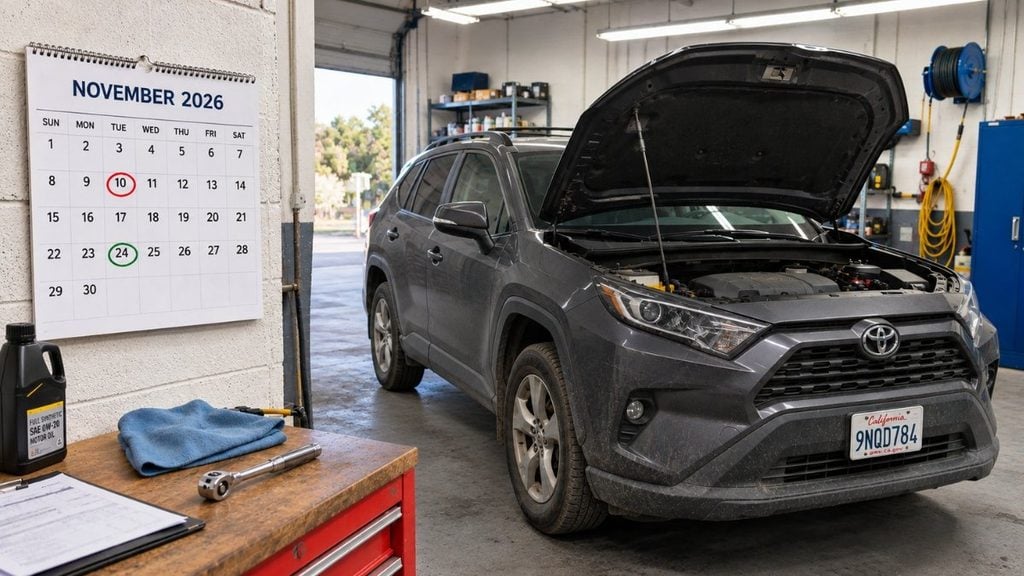
What to drive based on how long your car is in the shop
The right car to rent depends on how long your own vehicle is predicted to be in the shop. While repair times have a tendency to change, these timestamps give you a helpful gauge of whether you need a compact car or something like your current car.
A few hours to a day: Keep it simple
- What to look for: Easy pickup or delivery and a car size that’s simple to park wherever you’re headed.
- Recommended car types: Compact cars and sedans, such as the Honda Civic, Toyota Corolla, or Hyundai Elantra.
- Car rental tips: Ask about a shop loaner first. If you rent instead, set your start time around your drop-off, and check how far the pickup spot is from the shop.
For a quick fix like an oil change, tire rotation or brake pad swap, grab whatever’s easiest and closest. You won’t be in the car long enough for the details to matter much.
2–5 days: Go for fuel economy and ease
- What to look for: Fuel economy, comfortable seats, and enough space for your usual passengers.
- Recommended car types: Hybrids and efficient sedans, like the Toyota Prius, Toyota Camry Hybrid, or Honda Accord. Choose a compact SUV like the Honda CR-V if you need more room.
- Car rental tips: Check mileage allowances against your daily driving habits. If you need a car seat or extra cargo space, check the listing details or look for rentals with the optional extras you need.
A few days of commuting, errands, and school runs add up, so pick something efficient and easy to live with.
1–2 weeks: Match your own car as closely as you can
- What to look for: Similar size and seating to your own car, the features you use every day (like driver-assist features or a roomy back seat), and the same fuel type if you can.
- Recommended car types: Midsize SUVs like the Chevy Equinox, Mazda CX-5, or Toyota Highlander. For pickup owners, a Ford F-150, or Chevy Silverado.
- Car rental tips: Browse by make and model to find something familiar. Many listings on Turo offer discounts for longer bookings, so check the pricing before you book. Pick a car that suits your daily routine, not just the cheapest option.
After a week, a car that’s “close enough” could become frustrating. Aim for something that feels like yours in size, seating, and cargo space.
2+ weeks or open-ended: Prioritize comfort and flexibility
- What to look for: Comfort, good fuel economy over a long stretch, enough space for your routine, and a booking you can extend.
- Recommended car types: Comfortable all-rounders like the Toyota Camry, Honda CR-V, or Tesla Model 3 (if you have charging access), or a Kia Telluride if you need three rows.
- Car rental tips: Start with the dates you know and request an extension in the app if the shop needs more time. Check in with the shop every few days so you can plan ahead. If the repair is heading into multiple weeks or months, our guide to transportation options during a long-term vehicle repair has you covered.
If your repair runs long or the end date isn’t fixed, comfort and flexibility are key. Choose something you’d actually enjoy driving every day, and make sure the booking is flexible.
How to match a rental car to your routine
Whatever the repair length, the best rental fits your day-to-day routine. Think about where you need to go each week, how often you’re driving, and who’s in the car to pick a vehicle type that matches your lifestyle.
- Daily commute: Look for fuel economy and a comfortable car. Try a Toyota Corolla, Honda Civic, or Toyota Prius.
- School runs and family logistics: You want easy loading and a back seat that works for your crew. A Honda CR-V, Toyota RAV4, or Toyota Highlander is a good place to start.
- Carrying cargo or for work needs: Look for bed or cargo space. A Ford F-150, Toyota Tacoma, or Chevy Silverado will do the job.
- Long drives while you wait: Highway comfort and good range make a big difference, so consider a Toyota Camry or Kia Telluride. Oh, and don’t forget to filter by cars with cruise control!
Thinking about an EV like a Tesla Model 3? Check whether you can charge it at home or work before you book. If you can’t, a hybrid is an easy alternative.
Making the most of the downtime
Renting a practical car is a smart move, but who said you couldn’t have a bit of fun while your car is in the shop? While traditional rental fleets are limited to standard vehicles, you’ll find plenty of unique car makes and models ready to rent on Turo.
Maybe you’ve always dreamed of driving a sports car, a luxury SUV, or even something more exotic? If you need to rent a car anyway, why not pick something a little special? On Turo, you’ll find everything from muscle cars to convertibles and beyond. Discover the most fun cars to drive, and book one next time your vehicle is in the shop.

How to get a rental car on Turo
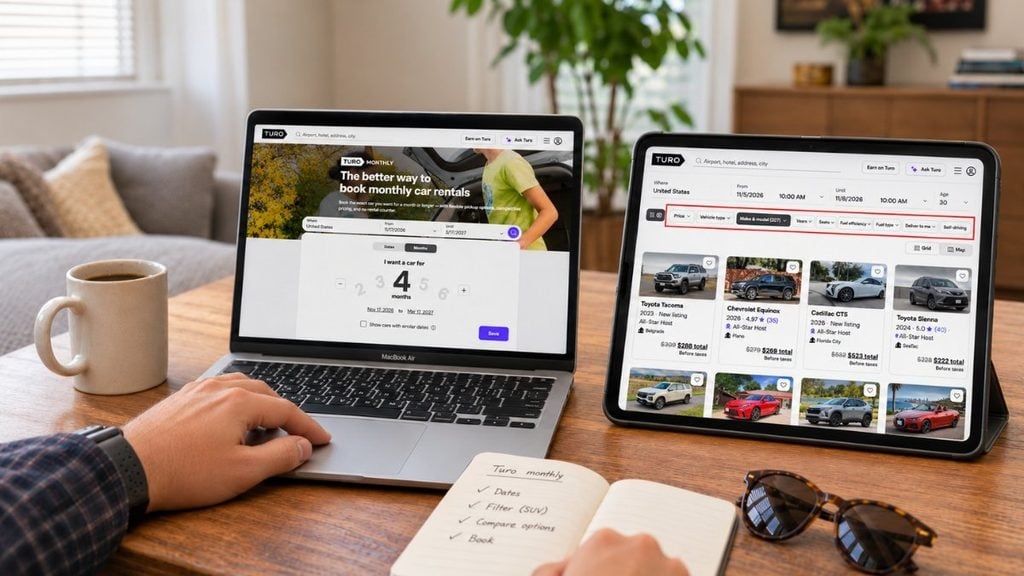
Renting a car on Turo is quick, and you can set it up around your repair. Here’s how:
- Search by location and dates: Enter the dates when your car will be in the shop, and consider adding a little buffer in case the shop runs over.
- Choose your car: Filter by type, size, or make and model to find something that suits your routine. Check the listing details for things like cargo space and mileage limits.
- Select pickup or delivery: Many cars can be delivered to your home, office, or the shop, so add your preferred address when you search to see what can come to you.
- Set your start time around drop-off: Aim to have the car in hand when you leave your own at the shop, not a day later.
- Extend in the app if you need to: If the shop calls with bad news, you can request an extension without starting a new booking.
Ready to look? Browse cars on Turo and find a car that fits.
Frequently asked questions
What should I drive while my car is in the shop?
It depends on how long you’ll be without your car. For a day or less, a compact or sedan should work. For a few days, go for something efficient. For a week or more, pick a car that’s close to your own in size and features, so your routine is less impacted.
Can I get a loaner car while my car is being repaired?
Sometimes, yes. Some shops and dealerships offer loaners, especially for warranty work or short repairs, but availability varies. Ask when you book the appointment, not when you drop off, and check the mileage limits and requirements. If not, renting a car is the next best bet.
Can I rent a different type of car than my own?
Absolutely. For a short repair, any car that gets you around will do. If you’ll have it longer, it helps to match your own car’s size and seating so daily life feels familiar. It’s also a low-pressure chance to try something new, like a hybrid, sports car or a convertible.
How long can I rent a car while mine is in the shop?
As long as you need it. On Turo, you can start with the dates you know and request an extension in the app if the shop needs more time. Repair shop loaners and counter rentals often come with tighter limits, so check the terms before you commit.
Get back on the road with Turo
Renting a car on Turo is the best way to get your own wheels while your car is in the shop. Whether you need a vehicle for a few days or multiple weeks, you can find the exact car that suits your needs and lifestyle. Browse online, get it delivered to you, and request to extend the booking if needed.
Ready to secure your wheels while your car is in the shop? Book a rental on Turo today.
Share your car, earn extra cash
Cover your car payments or earn some extra cash by sharing your car whenever you’re not using it.
Get startedHit the road
Browse thousands of cars for every occasion and budget near you, or wherever you’re going.
Browse cars
Lucinda Starr
Lucinda Starr is a travel and automotive writer with 5+ years of firsthand experience road-tripping across Australia, New Zealand, and beyond. She writes road trip guides for Turo, drawing on her experience behind the wheel to share practical insights on long-distance drives, destinations, and vehicles. Her travels have taken her across Australia’s East Coast, Victoria’s Great Ocean Road, the Northern Rivers, Byron Bay, and both islands of New Zealand. One of her most memorable journeys was an 11-day, 2,600+ km route from Auckland to Punakaiki and Queenstown. Lucinda has a particular passion for classic, rugged 4WD vehicles and the freedom they bring to exploring new places.