
posted on August 10, 2026
Every year during winter, millions of Americans leave behind the freezing temperatures and heavy snow in the Midwest, Northeast, and Great Lakes region to spend the season in Florida, Arizona, Texas, or the Carolinas.
One of the most practical questions every snowbird faces is the same: what do you do about a car? This guide covers snowbird transportation options from shipping your vehicle south to renting a car for the season. With these practical tips, snowbirds can make the decision that best fits their situation.
In this guide, we’ll be covering:
- Why transportation planning matters for snowbirds
- Comparing snowbird transportation options: 3 methods to consider
- Why Turo is a strong option for snowbirds
- Tips for planning snowbird transportation
- Frequently asked questions

Why transportation planning matters for snowbirds
Snowbirds are seasonal travelers who choose to trade bitterly cold winters for warmer weather and sunnier days. Typically, snowbirds head south from northern US states to milder spots like Florida, Arizona, or even Mexico, departing in late fall and returning in early spring.
This presents a very real challenge: how do you get around once at your destination? Spending anywhere from a few weeks to six months away from home means you need a reliable vehicle to get around. While heavy snow and ice aren’t a problem, you still need a set of wheels to hop between grocery runs, social outings, golf trips, and weekend road trips.
The transportation dilemma most snowbirds face is this: is it better to bring your own car, ship it south, or rent a vehicle at the destination?
Every transportation option comes with benefits and trade-offs. The right answer depends on how long you’re staying, how much you drive, how far you’re traveling from home, and how attached you are to having your own car.
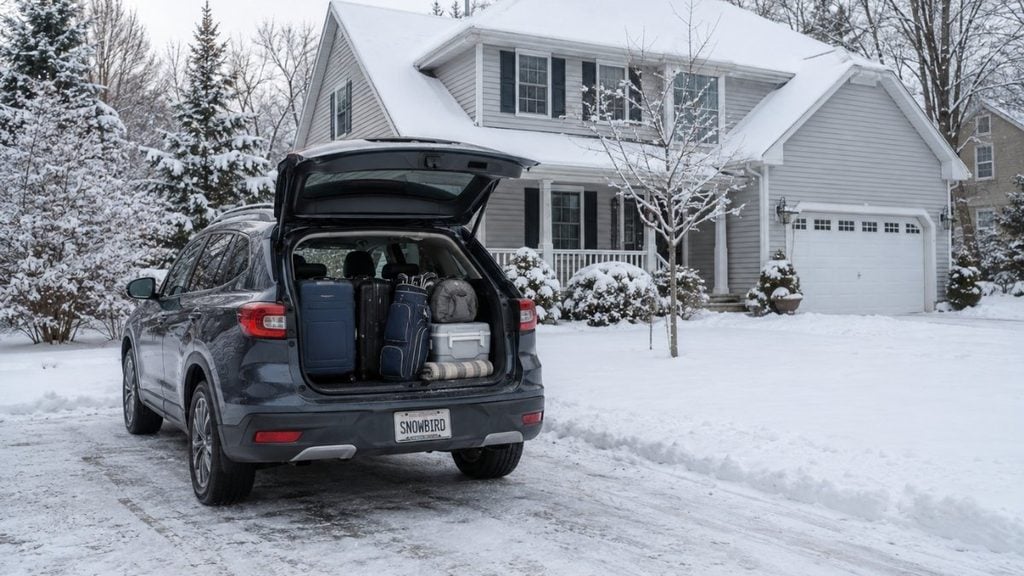
Comparing 3 snowbird transportation options
Option 1: Drive yourself south
- Pros: Full flexibility, arrive with your car immediately, the drive can be part of the experience.
- Cons: $600–$1,000+ each way in fuel, accommodations, and tolls. Round-trip adds 2,000–3,000 miles to your vehicle per season.
- Best for: Snowbirds within a 2-3 day drive of their destination who enjoy the journey and an extended road trip.
Driving your own car gives you complete control of your timeline. Using your own vehicle means you can depart and arrive exactly when you’d like, and enjoy the comforts of a familiar driving experience throughout the entire season.
For snowbirds traveling through scenic routes like Blue Ridge Parkway, the Gulf Coast Highway, or the Florida Panhandle, the drive can be a memorable part of the experience. Plus, this option is handy for drivers heading from the Midwest or Southeast with a shorter drive to navigate (typically it only takes 2-3 days to reach warmer climates from here).
The biggest drawback of driving south is the cost and mileage. Gas can easily add up, and paying for multiple nights of accommodations can be a strain for those on a tight budget. For older vehicles or high-mileage cars, it’s important to weigh up the risks of adding 2,000+ miles onto your car each season.
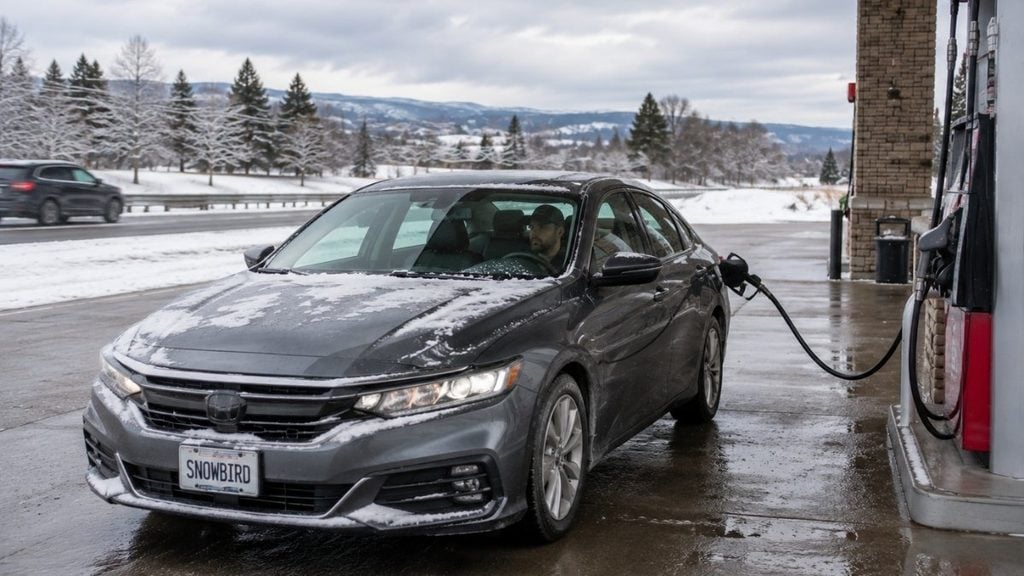
Tip from the author: Leave on a Tuesday or Wednesday morning; the I-75 and I-95 corridors toward Florida and I-10 toward Arizona are at their busiest on weekend departures.
Option 2: Ship your car to your winter destination
- Pros: Arrive by air, with a vehicle waiting for you. No long drive and no added mileage.
- Cons: $800–$1,600 one-way on popular routes; $1,600–$3,200 round-trip annually. Requires 5–10 business days transit time and advance booking.
- Best for: Snowbirds staying 4+ months who want their own car without the drive, particularly those traveling from the far North or Pacific Northwest.
Don’t want to spend multiple days getting to your destination? Shipping your car south could be a good option, particularly if you’re planning to stay for most of the winter season.
Here’s how it works: you book with an auto transport carrier, a truck picks up your vehicle, and delivers it to your winter destination (typically within 5-10 days). In the meantime, you catch a flight to reach warmer climates without spending days behind the wheel.
The standard option is open transport (meaning your car is transported on an open trailer). However, enclosed transport is a more premium option that’s better suited to higher-value vehicles or classic cars.
If you’re staying south for at least four or more months and want your own car during your visit, shipping your vehicle can be a smart move. Keep in mind that you need to book well in advance, set aside money for shipping each way along with airfare costs, and need to arrange alternative transportation while your vehicle is being shipped (which can last up to 10 days).

Tip from the author: Book your southbound shipment by mid-September, as October and November bookings fill quickly and prices climb. For the spring return, book before mid-February.
Option 3: Rent a car for a month (or more) at your destination
- Pros: No shipping logistics, no long drive, full flexibility on end date, and the ability to only pay for what you need.
- Cons: Ongoing monthly cost; requires advance booking in peak snowbird season.
- Best for: Snowbirds staying 6–10 weeks, those who fly to their destination, or those who don’t need a car every single day.
This is the transportation alternative many snowbirds overlook. Rather than driving for days or shipping a car, renting a vehicle at your destination eliminates all of the headaches and hassle of most snowbird transportation options.
If you’re unsure exactly how long you want to stay or don’t need a car for every day of your trip, renting a car on Turo can be a particularly cost-effective option. Cars can be booked for a few days, a few weeks, or even multiple months, with long-term bookings offering some of the most competitive prices and discounts too.
Unlike a traditional car rental company, you’re not limited to a standard fleet of generic cars on Turo. Instead, the exact car you book is the car you’ll drive, with hundreds of unique makes and models to choose from. Set your preferred pickup point and filter by cars that can be delivered to you (whether that’s the airport you’re flying into or the hotel you’re staying at).
Plus, you can easily request to extend your trip if you decide you want to stick around for an extra weekend, or easily book a new car if you prefer driving a different vehicle. There’s no long-term commitment, no lock-in contract, and no need to have plans solidified before you arrive.
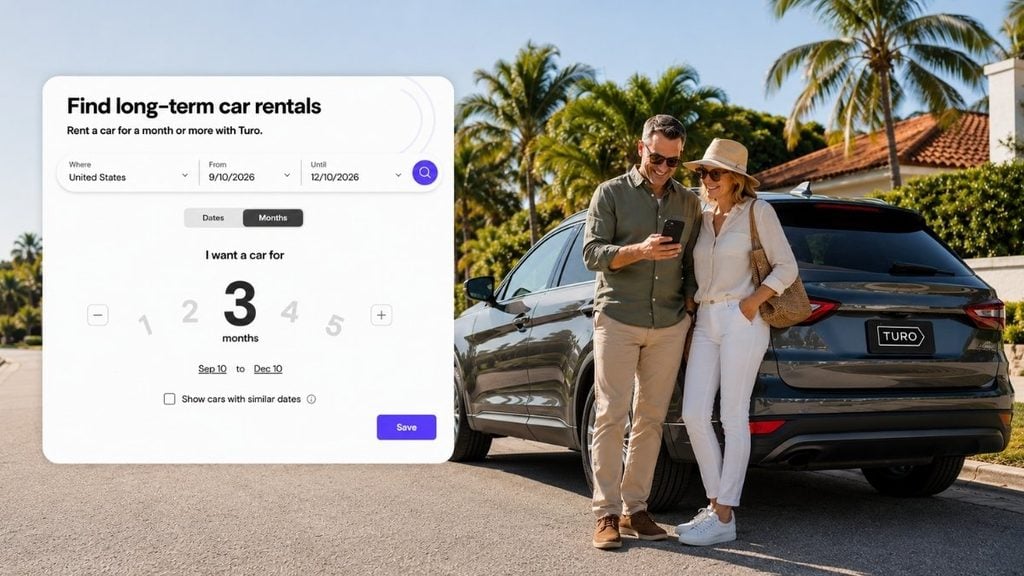
Why car rental on Turo is a strong option for snowbirds
For snowbirds who fly to their winter destination and want a reliable vehicle waiting for them (without the cost and logistics of shipping), renting a car on Turo has a few key advantages:
- Discounted pricing for long-term rentals: Many vehicle listings on Turo offer discounted pricing for long-term bookings, meaning the longer you stay, the more you can save on the cost of your rental.
- Delivery to your winter address: For added convenience, many vehicle listings offer delivery to home addresses, apartment complexes, and local airports. For a snowbird arriving by plane at their winter destination, having a car delivered to their condo, community center, or rental property removes an entire logistical step.
- Wide vehicle variety: On Turo, you’ll find everything from fuel-efficient sedans and hybrids (ideal for a snowbird who drives primarily for errands, appointments, and day trips) to larger vehicles for those who want more space. Snowbirds can choose based on their actual needs at the destination rather than being limited to fleet vehicles.
- Try before you buy: Renting for a season or two is a practical way to understand which type of vehicle suits that lifestyle before committing to a purchase. Plus, you can switch the car you book each season to test out and compare the driving experience of different vehicles, too.

The most popular snowbird destinations and what to know about getting around
Transportation needs vary by destination, but almost all snowbird spots require a car. Here’s a quick guide to the most popular snowbird locations and what to expect.
| Destination | Car dependency | Key note |
|---|---|---|
| Florida: Gulf Coast (Naples, Sarasota, Fort Myers, Clearwater) | Very high | A vehicle is essential for grocery shopping, appointments, and exploring. Public transportation is limited outside of larger cities. |
| Florida: Atlantic Coast (Palm Beach, Fort Lauderdale, Boca Raton) | High | Boca Raton and Fort Lauderdale have better transit infrastructure than the Gulf Coast, but a car is still necessary for most daily needs. |
| Arizona: Phoenix, Scottsdale, Tucson | Very high | The Phoenix metro area is heavily car-dependent; Scottsdale and the East Valley have virtually no practical public transportation option. A car is non-negotiable. |
| Texas: Rio Grande Valley | Very high | The southernmost tip of Texas is a warm and affordable snowbird destination, attracting visitors primarily from the Midwest and Great Plains. A car is essential. |
| The Carolinas and Georgia (Hilton Head, Myrtle Beach, Savannah) | High | Hilton Head, Myrtle Beach, and Savannah are popular spots to visit, and a car is essential for most locations. |
Looking for road trip inspiration during your winter weather escape? Dive into our ultimate Florida road trip guide or discover the top things to see and do in Florida Keys.
Tips for planning snowbird transportation
Ready to hit the road? Here’s what you need to consider when planning for your seasonal escape:
- Start planning earlier than you think: Whether you’re shipping, driving, or renting, transportation is most stressful when left until the last minute. Auto transport bookings fill fast in October and November, and the best vehicles on Turo at popular destinations book out in peak season.
- Run the full numbers before deciding: The cheapest option on paper isn’t always the cheapest in practice. Driving looks inexpensive until you add fuel, accommodations, and meals. On the flip side, long-term rentals on Turo get more affordable thanks to competitive, discounted pricing. Run the numbers for your specific situation and length of stay.
- Consider how much you actually drive at your winter home: Many snowbirds overestimate how much they’ll drive day-to-day. If your winter home is walkable, in a golf cart community, or close to amenities, a car may be more of a weekly convenience than a daily necessity, which changes the math significantly.
- Book a rental car on Turo early for peak snowbird season: Turo listings in popular Florida and Arizona destinations fill up during peak snowbird months (November through March). Book early for the best range of cars, ideally 4–8 weeks before your planned arrival date.
- Check if your winter accommodation has transportation: Many snowbird-friendly retirement communities, condo complexes, and resort villages offer shuttle services or golf carts for on-site travel. Factor this in before committing to a full-time rental.
Frequently asked questions
What do snowbirds do for a car?
Snowbirds typically choose between three main options: driving their own vehicle to the winter destination, shipping it through an auto transport carrier, or renting a vehicle at the destination. The right choice depends on the distance traveled, the length of stay, and how much driving is needed day-to-day. Long-term rental through Turo is an increasingly popular option for those who want a reliable vehicle without shipping logistics or long drives.
How much does it cost to ship a car as a snowbird?
Auto transport for popular snowbird routes (Midwest or Northeast to Florida; Midwest to Arizona) typically costs $800–$1,600 one-way during peak season, with round-trip costs of $1,600–$3,200 annually. Prices increase significantly for late bookings during the October–November southbound rush and March–April northbound return. Booking 4–6 weeks in advance reduces both cost and stress.
Is it worth shipping a car for winter?
For snowbirds staying 4–6 months and driving regularly at their winter home, shipping can be cost-effective compared to a full-season car rental. For those staying 6–10 weeks, or those who don’t drive every day at their destination, a car rental on Turo is often more practical: there’s no transit window, no advance booking complexity, and full flexibility on the end date.
Can snowbirds rent a car for several months on Turo?
Yes. Cars can be rented on Turo for anything from a single day to several months, and many listings offer discounts for longer bookings. This makes Turo a practical solution for snowbirds who want a reliable vehicle at their winter destination without the logistics of shipping.
What are the most popular snowbird destinations in the US?
Florida’s Gulf Coast (Naples, Sarasota, Fort Myers, Clearwater) is the most popular overall, followed by Arizona (Phoenix, Scottsdale, Tucson). Texas’s Rio Grande Valley, the South Carolina coast (Hilton Head, Myrtle Beach), and Savannah, Georgia are also popular with snowbirds from the Midwest and Mid-Atlantic. All of these destinations are heavily car-dependent.
Find the perfect car at your winter destination with Turo
Snowbird transportation doesn’t have to be complicated. Whether you prefer the freedom of driving south, the convenience of shipping your vehicle, or the flexibility of a car rental waiting for you when you land, there’s a practical option for every situation and every length of stay.
Browse Turo for car rental options in your winter destination, with a wide range of vehicles, delivery options, and flexible booking lengths from a single day to several months.
Share your car, earn extra cash
Cover your car payments or earn some extra cash by sharing your car whenever you’re not using it.
Get startedHit the road
Browse thousands of cars for every occasion and budget near you, or wherever you’re going.
Browse cars
Lucinda Starr
Lucinda Starr is a travel and automotive writer with 5+ years of firsthand experience road-tripping across Australia, New Zealand, and beyond. She writes road trip guides for Turo, drawing on her experience behind the wheel to share practical insights on long-distance drives, destinations, and vehicles. Her travels have taken her across Australia’s East Coast, Victoria’s Great Ocean Road, the Northern Rivers, Byron Bay, and both islands of New Zealand. One of her most memorable journeys was an 11-day, 2,600+ km route from Auckland to Punakaiki and Queenstown. Lucinda has a particular passion for classic, rugged 4WD vehicles and the freedom they bring to exploring new places.