
posted on September 2, 2026
Whether you’re moving to a new city, replacing an aging vehicle, or driving less often than you used to, the choice between buying and renting a car largely depends on how often you need to drive.
Car ownership comes with costs beyond the purchase price, including insurance, registration, maintenance, repairs, and depreciation. For drivers who only need a car occasionally or for specific periods, renting can offer an alternative to taking on the ongoing costs and responsibilities of ownership.
In this comparison guide, we’ll break down the costs of owning vs. renting a car, when each option makes financial sense, and how renting a car on Turo can fit into your transportation budget.
In this guide, we’ll cover:
- What factors determine whether buying or renting makes sense for you
- The real cost of owning a car
- The real cost of renting a car
- Buying vs. renting: A side-by-side cost comparison
- When renting makes the most financial sense
- When buying makes the most financial sense
- How to get the best deal on a rental car with Turo
- Why Turo is often the smarter rental choice
- Frequently asked questions
What factors determine whether buying or renting is best for you?
The best way to compare the costs of buying vs renting a car is to assess your usage patterns, driving habits, and vehicle requirements. A handy place to start is to ask yourself a few questions about how often you drive, what type of car you need, and your budget.
A few helpful questions to ask:
- How often do you actually need a car? Daily use is often more suited to owning, while driving only a few times a month tends to make renting a better fit.
- How long do you need it for? A weekend, a season, or year-round changes the math significantly.
- What are you using it for? A daily commute is a very different proposition from the occasional road trip or hauling boxes when moving.
- Where do you live? City dwellers paying for parking face different costs than drivers in areas with no alternative to a car.
- How many miles do you expect to put on it? High-mileage, long-distance driving makes car ownership more cost-effective, while infrequent local trips are ideal for renting a car.
- What’s your budget, both upfront and ongoing? Renting avoids the upfront cost entirely; owning trades a high upfront/financed cost for year-round ongoing costs.
Once you know your usage pattern, it’s easier to compare the real cost of each option below.
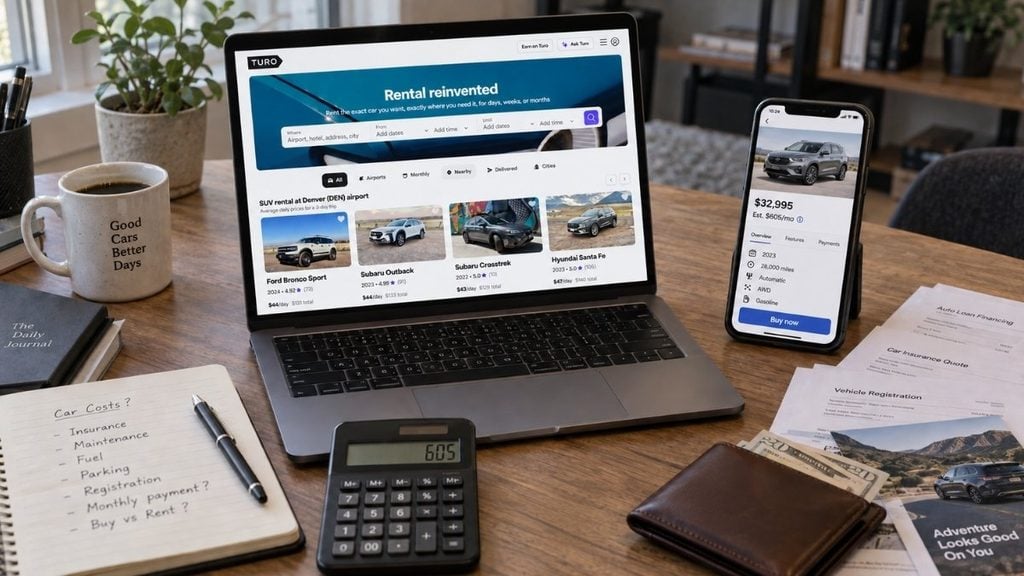
The real cost of owning a car
Car ownership brings a range of upfront and ongoing car costs that can make it expensive, particularly for infrequent or occasional use. Buying a brand-new car requires significant upfront capital, especially if you’re committed to buying a new model from a dealership or showroom. Plus, maintenance costs can climb if you’re regularly driving long distances.
On average, the annual cost of car ownership is estimated to sit at $12,297 (or roughly $1,025 per month). But there are several factors and other costs to consider too, including:
- Purchase price and depreciation: A car starts losing value the moment it’s driven off the lot. Depreciation is one of the highest, least visible costs of ownership.
- Financing costs: For most buyers, a car loan means paying interest on top of the purchase price over several years.
- Insurance: Insurance premiums are an ongoing monthly cost regardless of how much the car is actually driven.
- Maintenance and repairs: Routine maintenance costs (from oil changes to new tires) are a must for all cars, plus the risk of unexpected repair bills, which tend to increase as a car ages.
- Fuel, parking, and registration: Ongoing costs that scale with usage and location, especially for those living in a city and paying for parking.
- Opportunity cost: Money is tied up in a depreciating asset that could otherwise be invested or saved.
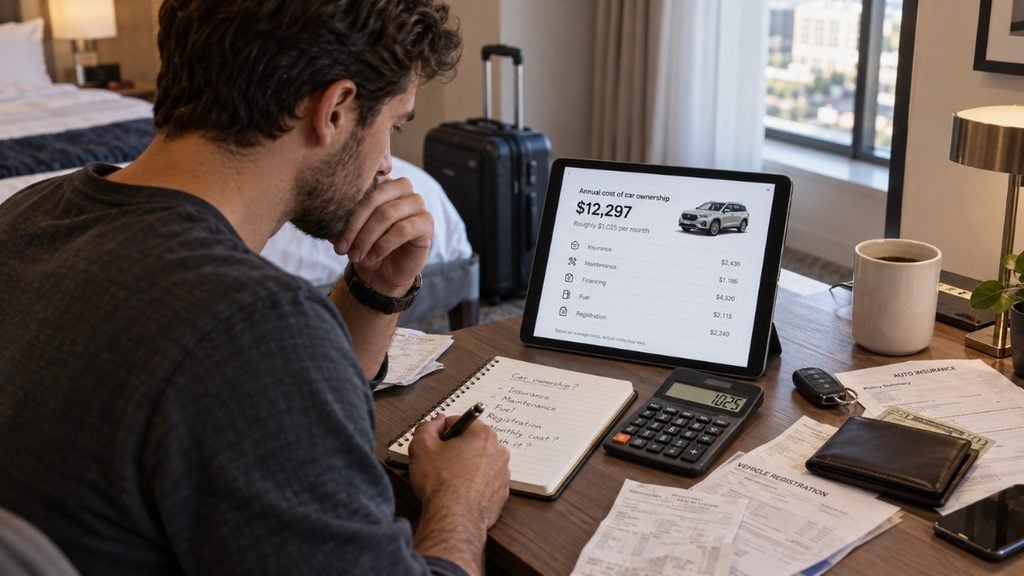
The real cost of renting a car
On the flip side, a rental vehicle has no upfront costs and lets you match your booking period to your usage habits. The cost of renting a car depends on several factors, including how long you need the vehicle, what you drive, and where you rent. Here are some of the main costs to consider:
- No purchase price or depreciation risk: A rental car’s cost is tied to usage, not ownership.
- No maintenance or repair costs: These are the vehicle owner’s responsibility, not the renter’s.
- No ongoing insurance policy for the rental vehicle: Unlike owning a car, renting doesn’t require maintaining year-round insurance for that vehicle, though insurance and protection costs can vary.
- Costs scale with actual use: Pay only for the days a rented car is genuinely needed, rather than year-round costs for a vehicle that may sit unused much of the time.
- No long-term commitment: Swap vehicles trip to trip based on what’s needed (a compact car for a city errand or an SUV for a road trip).
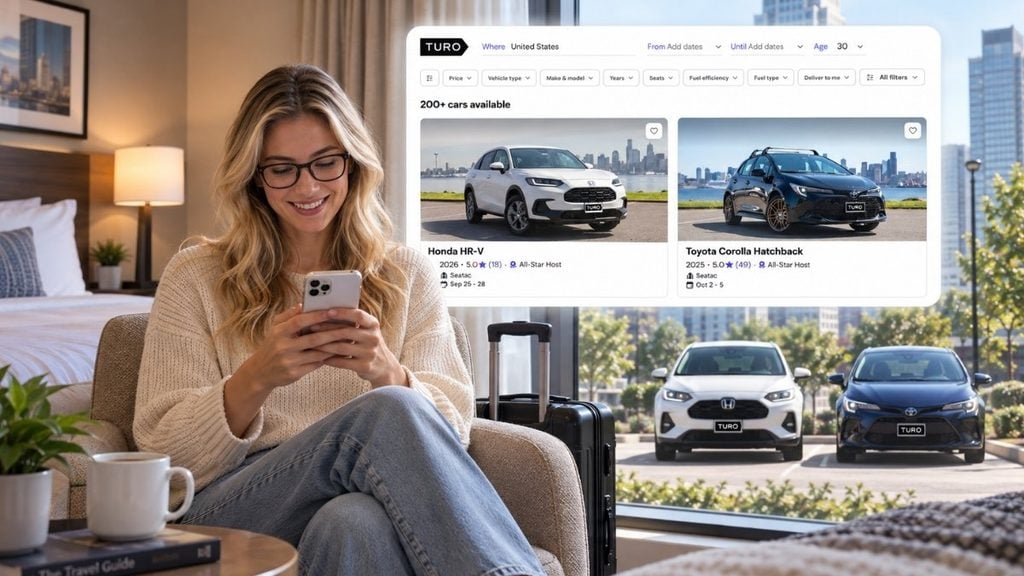
Buying vs. renting: A side-by-side cost comparison
The biggest cost difference between buying a car and renting a car is the upfront investment and risk of depreciation. Car ownership means paying thousands for the purchase price (or down payment), and depreciation can cause an initial drop of at least 10% as soon as you drive it off the lot.
In contrast, renting a car comes with no upfront investment or depreciation concerns. Instead, you can pay only when you need a car and adjust your ride to match your plans. There’s no need to worry about maintenance costs, either.
| Buying a car | Renting a car on Turo | |
|---|---|---|
| Upfront cost | Purchase price or down payment | None |
| Ongoing costs | Financing, insurance, maintenance, fuel, parking, registration, year-round regardless of use | Pay only for days actually used |
| Depreciation risk | Yes, a real, ongoing cost | None |
| Maintenance & repairs | Owner’s responsibility | Owner’s responsibility |
| Flexibility | Fixed to one vehicle | Match the right car to each specific need/trip |
| Best for | Frequent, high-mileage daily use | Occasional use, city living, trying before buying, and seasonal needs |
When renting a car makes the most financial sense
Renting a car is a practical way to enjoy the convenience of your own vehicle, without the high upfront costs and depreciation risks of ownership. Renting tends to be most cost-effective in the following scenarios:
- Occasional or infrequent driving: If a car spends most of its time parked, the fixed costs of ownership (insurance, depreciation, and financing) are paid for very little actual use.
- City living: Parking costs, tolls, and traffic alone can make car ownership impractical, while renting only when a car is needed avoids those costs (and the extra fees that can come with owning a car in a dense city) entirely.
- Trying before buying: Renting a specific make or model is a practical way to test whether a car fits your needs before committing to a purchase.
- Occasional long trips or road trips: Renting gives you the flexibility to secure the right vehicle for a specific trip (an SUV for a ski trip, or even a convertible for driving up the West Coast).
- Seasonal or temporary needs: Situations like a car in the shop, a move, a visiting family member, or a short-term work assignment are better suited to renting than buying.
- Avoiding depreciation and resale hassle entirely: No need to worry about a car’s resale value or the effort of eventually selling it.
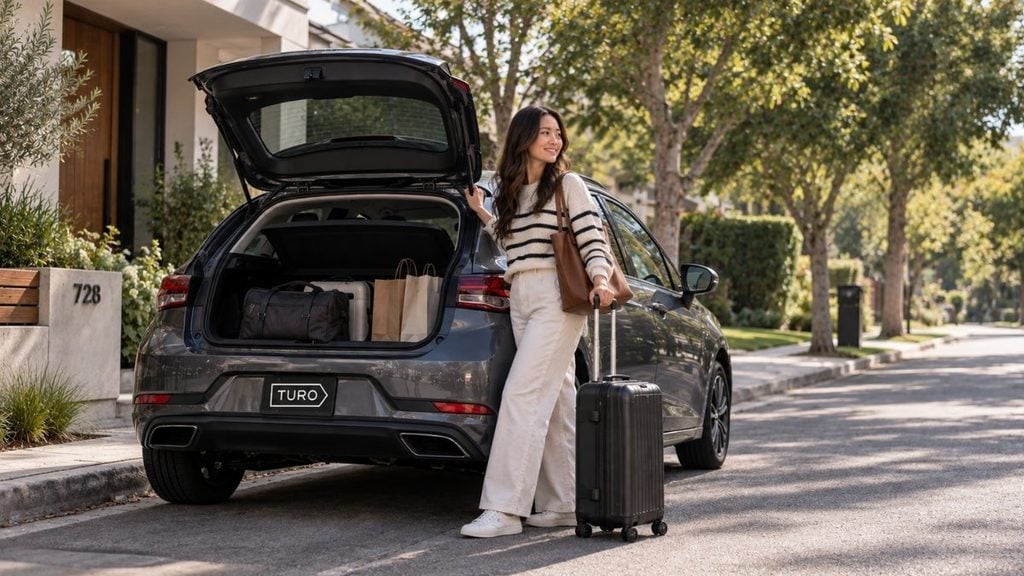
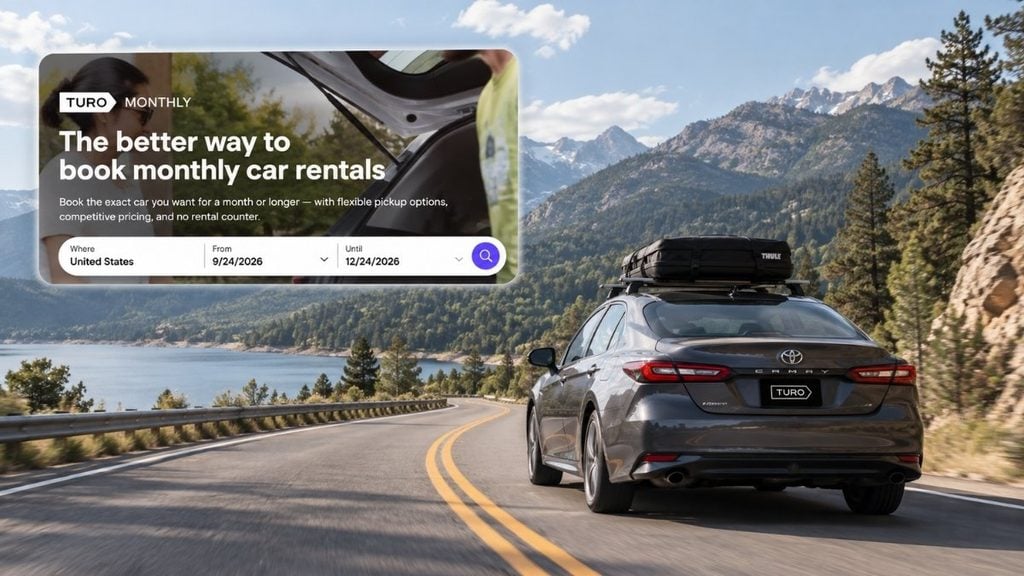
Tip from the author: Need a car for an extended period of time? Rent a car for a month or more on Turo for flexible pickup options, competitive pricing, and no waiting at a rental counter.
When buying makes the most financial sense
Some situations make car ownership a more cost-effective option, such as when you’re traveling long distances on a daily basis.
- Frequent, high-mileage use (long daily commutes, rural areas with limited alternatives, or drivers covering so many miles that renting long term would add up) tends to favor ownership over time, since rental costs can add up with frequency.
- Business use with applicable tax deductions can shift the math in favor of buying for some owners. Check with a tax professional to see whether the costs stack up for your specific situation.
- Daily use of a niche or highly specialized vehicle for work or personal use. For example, if you’re a builder who requires a custom truck built out with your own tools, car ownership is likely a more convenient and cost-effective option.

How to get the best deal on a rental car with Turo
Renting a car on Turo is one of the most flexible ways to secure your own vehicle. If you’re looking to get the best deal and stick to your budget, consider renting for at least one month, comparing vehicle pickup locations, and adjusting your travel dates to an off-peak time period.
- Book longer trips to unlock lower daily rates. Many vehicles offer discounted pricing for extended and monthly bookings, so a longer rental can end up cheaper per day than a shorter one.
- Compare similar vehicles before booking. Since pricing is set by individual vehicle owners, two similar cars can come in at very different rates. Comparing a few options for the same trip is one of the simplest ways to find the best deal.
- Consider a neighborhood pickup instead of the airport. Rental cars closer to a neighborhood or city center are sometimes more competitively priced than airport pickups.
- Shift travel dates to midweek where possible. Demand (and pricing) tends to be higher on weekends, so a midweek pickup or return can lower the overall cost.
- Avoid peak season where the trip allows it. Booking outside of the busiest travel weeks can mean more competitive pricing and better availability.
For budget-conscious renters, these small adjustments can lower the cost of renting a vehicle on Turo.
Why Turo is often the smarter rental choice
Looking for a long-term car rental or new model car (without the high costs of ownership)? Renting on Turo gives you access to a wide range of vehicles across the country, available to book for exactly as long as you need.
Here’s why Turo is a smarter, more cost-effective option than buying a car or using a traditional car rental company:
- On Turo, you’ll find a wide vehicle selection, which means you can match the right car to the actual need. Book a compact car for city errands, a truck for a move, or an SUV for a family trip, rather than paying for one car that has to do everything.
- No traditional rental counter or long-term contract means you can book, pick up (or arrange delivery), and return on your own terms.
- Pricing is often more competitive than a traditional rental car company, particularly for longer bookings, since many hosts offer discounts for extended trips.
For someone weighing “should I even own a car,” using Turo regularly is a low-commitment way to find out. There’s no upfront purchase, financing, or depreciation risk involved, making it a great option for occasional drivers.
Frequently asked questions about buying vs. renting a car
Is it cheaper to rent a car than to own one?
For infrequent or occasional drivers, renting is often cheaper overall once depreciation, insurance, maintenance, and financing are factored into the true cost of ownership. For very frequent, high-mileage use, owning a car tends to be more cost-effective over time.
How much does owning a car actually cost per year?
The cost of owning a car varies significantly by vehicle, location, and financing terms. On average, the annual cost of car ownership in the US is estimated to sit at $12,297 (or roughly $1,025 per month).
When does it make more sense to buy a car instead of renting long term?
Buying a car tends to make more sense for frequent, high-mileage daily use, particularly in areas without practical alternatives to driving, where the cost of frequent or long-term rentals would add up faster than ownership costs.
What are the main advantages of renting a car instead of owning one?
Renting a car can reduce the ongoing responsibilities that come with ownership, such as maintenance, repairs, registration, and depreciation. It also gives drivers the flexibility to choose different types of vehicles for different trips rather than committing to one car.
See what renting a car on Turo could save you
At the end of the day, the choice between buying and renting comes down to how often you actually need a car. For many drivers, renting only when needed means avoiding many of the ongoing costs that come with car ownership.
With Turo, there’s no down payment, no loan, and no depreciation to worry about. Instead, you can book the exact car you need, for exactly as long as you need it, and put the money you’d have spent on ownership toward the trip itself.
Ready to see how much you could save? Take a more flexible, cost-effective approach by renting a car on Turo today.
Share your car, earn extra cash
Cover your car payments or earn some extra cash by sharing your car whenever you’re not using it.
Get startedHit the road
Browse thousands of cars for every occasion and budget near you, or wherever you’re going.
Browse cars
Lucinda Starr
Lucinda Starr is a travel and automotive writer with 5+ years of firsthand experience road-tripping across Australia, New Zealand, and beyond. She writes road trip guides for Turo, drawing on her experience behind the wheel to share practical insights on long-distance drives, destinations, and vehicles. Her travels have taken her across Australia’s East Coast, Victoria’s Great Ocean Road, the Northern Rivers, Byron Bay, and both islands of New Zealand. One of her most memorable journeys was an 11-day, 2,600+ km route from Auckland to Punakaiki and Queenstown. Lucinda has a particular passion for classic, rugged 4WD vehicles and the freedom they bring to exploring new places.