posted on August 6, 2026
Remote and hybrid work has made a lot of things possible. Living outside of a major city, reclaiming time previously spent commuting, and fitting in a load of laundry on your lunch break are just some of the perks. But one of the biggest shifts is being able to ask yourself: Do I really need to own a car?
The remote work boom means your commuting habits likely look a lot different. For many remote workers, a car is no longer a daily necessity but an occasional convenience. That makes other transportation options a smarter way to save money and fit into your current lifestyle.
Are you wondering how remote workers can avoid owning a car? This piece explores how to lean into that shift: what you give up, what you gain, and how renting a car through Turo lets you access a vehicle exactly when you need one, without the fixed costs of owning one.
In this guide, we’ll be covering:
- The real cost of car ownership for remote workers
- Honest questions to ask before going car-free
- Transportation alternatives for remote workers
- How to handle the times you do need a car
- How Turo works for remote workers
- Tips for going car-light or car-free
- Frequently asked questions
The real cost of car ownership for remote workers
Owning a car is a higher cost than you might realize.
Data from AAA reveals the cost of owning and operating a new car in the US exceeds $12,000 a year, factoring in costs like loan payments, insurance, gas, maintenance, tire changes, registration, and depreciation. This report shows that people spend over $1,000 every month on car-related costs.
For a remote worker who drives 4,000–6,000 miles per year instead of 12,000–15,000, much of that cost is paying for a vehicle that spends more time in the garage than on the open road.
Without a daily commute, you no longer need to spend hundreds a month owning a reliable mode of transportation for work. While insurance premiums might drop as your annual mileage decreases, other fixed costs (like depreciation, loan payments, and registration) remain the same, whether the car is used or not.
If you’re working remotely, renting a car only on the days you need it often costs much less than owning a vehicle. Plus, you have the added benefit of getting to pick the right vehicle for each trip, whether that’s a box truck for furniture shopping or your dream classic car for a milestone anniversary.
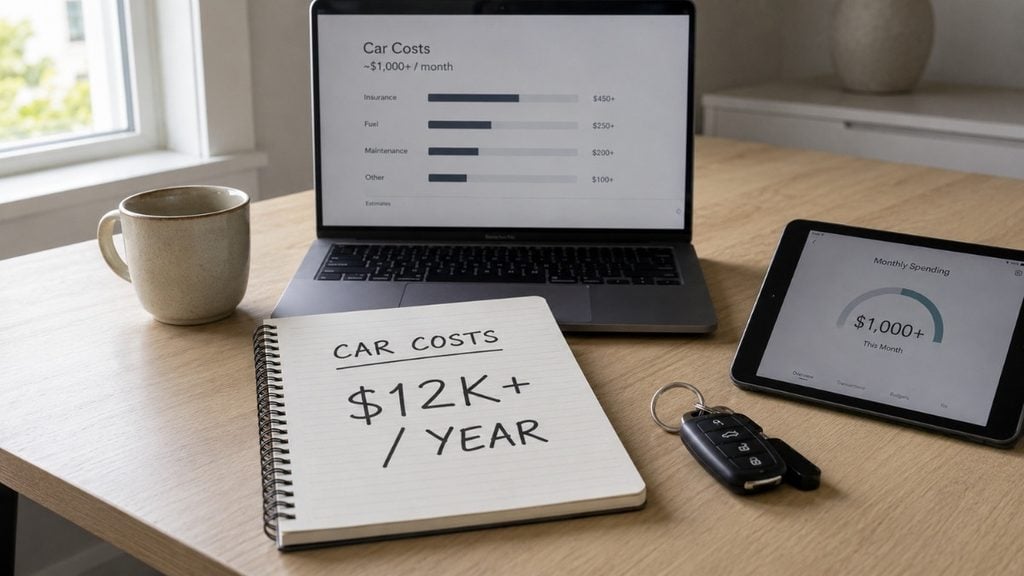
Tip from the author: Run your own car ownership math before making any decision. Add up your monthly loan payment, insurance, average gas spend, and a rough maintenance estimate ($100–$150/month for a typical vehicle). That’s your baseline for comparing against renting on-demand through Turo. And if you have a vehicle that is sitting for long periods of time, consider renting out your vehicle to offset costs.
Honest questions to ask before going car-free
Stepping away from car ownership makes sense for some remote workers and not others. These questions help you figure out which situation you’re in.
- Where do you live? Location is the single most important factor when deciding if you need to own a car or not. Dense urban areas with walkable neighborhoods, bike infrastructure, and reliable public transportation make car-free life feasible (and even preferable). Suburban and rural locations often make it impractical, so be honest about your neighborhood and whether a car is a daily necessity or not.
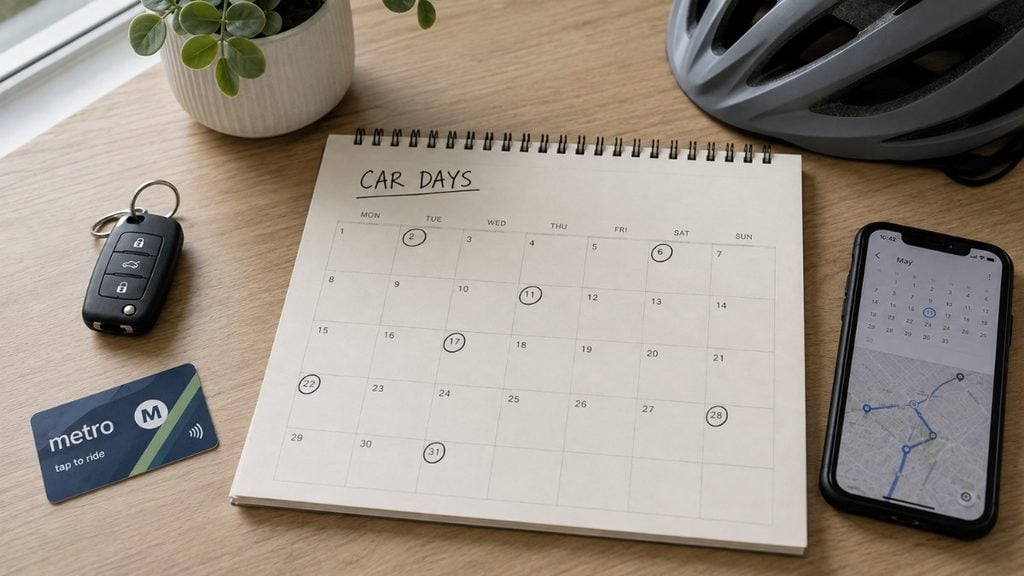
- How often do you need a car? Keep a rough log for a month. Count the trips that required a car; not ones where it was convenient, but ones where there was no reasonable alternative. Many remote workers discover this number is much lower than they think.
- Do you have occasional vs. regular car needs? Occasional needs (weekend trips, errands, and visiting family a few times a year) are easily handled by renting a car. Regular needs (weekly grocery runs in a car-dependent area, frequent road trips, and regular care responsibilities requiring transportation) are harder to manage without car ownership. Figuring out where you sit on this line can help inform your decision about owning or renting a car.
- What is your housing situation? Parking costs are a big part of car ownership math in many cities (sometimes $150–$300/month or more for a dedicated spot). Remote workers in cities who can give up a parking spot significantly reduce their housing costs as a bonus of going car-free.
- Do you have children or caregiving responsibilities? School runs, after-school activities, and caring for elderly parents can make regular car access a practical necessity rather than a preference.
Transportation alternatives for remote workers
Without a daily commute, remote workers have the flexibility to explore alternative transportation options. Below, we break down the alternatives that best suit remote workers and how to find the right fit for your needs.
Car rental on Turo
- Best for: Remote workers with occasional but not regular car needs
- Key limitation: Requires a bit of extra planning; less convenient than a car in your garage
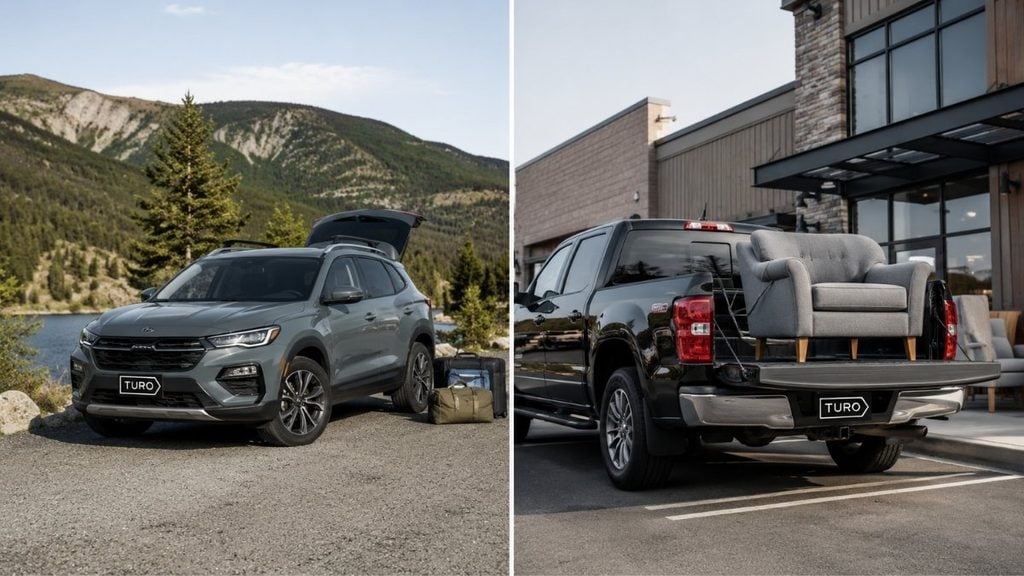
If getting behind the wheel only happens occasionally, renting a car on Turo is the smartest way to keep costs down while enjoying the benefits of your own vehicle. Road trips, long weekends, moving furniture, and visiting family can all be handled with a car booked on Turo.
Renting means there are no fixed costs of ownership and you’re only paying for a vehicle exactly when you need it (with the ability to tailor the car type to the needs of your trip). Plus, you don’t have to accept the hassle and trade-offs of public transportation timetables or the unpredictable pricing of rideshares.
Need a car for a few weeks or months? Many vehicles are available for long-term bookings, with competitive pricing and discounts available for many cars booked for one month or more, too.
Public transportation
- Best for: Remote workers in major metros with comprehensive transit coverage
- Key limitation: Less convenient, meaning you’re reliant on a timetable and modes of transport that might not get you exactly where you need to go
For remote workers in cities with strong transit networks (think: New York, Chicago, Boston, Washington, D.C., Seattle, and San Francisco), public transportation covers most daily needs. Grocery runs, social outings, and errands can often be organized using public transportation at a fraction of car ownership cost.
Many cities offer monthly passes (typically priced around $80–$130), which offer a significant cost saving when compared to $800–$1,000+ per month for car ownership. The limitation is geography: public transportation works well in dense urban areas and poorly in suburban and rural ones. For hikers and adventurers who love venturing into the outdoors on the weekend, public transportation alone won’t be enough to get you around.

Cycling and e-bikes
- Best for: Remote workers in bike-friendly cities with moderate commute distances to regular destinations
- Key limitation: Not suited to scenarios where you need to haul goods and cargo or when you want to travel with multiple passengers
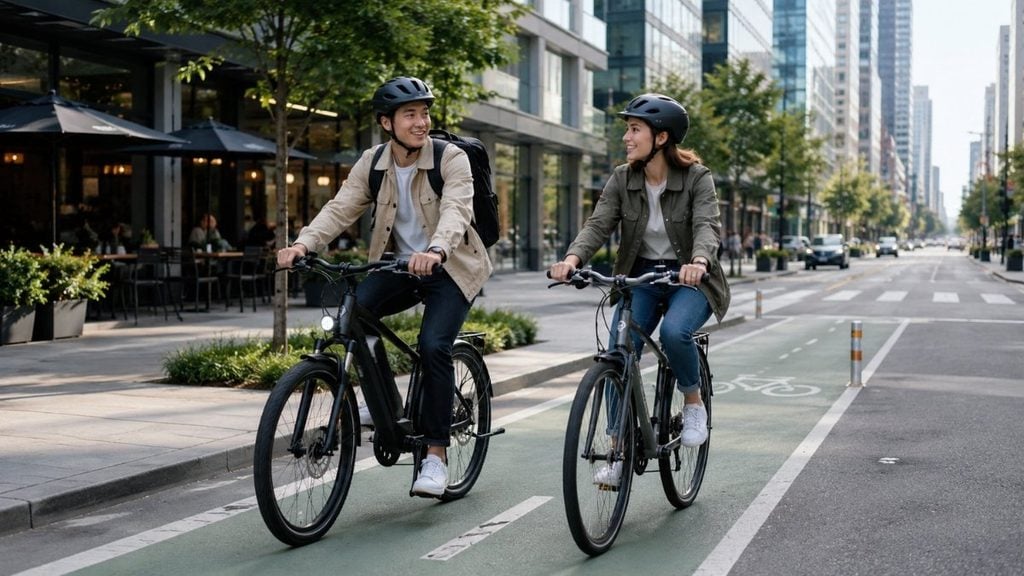
If you’re located within a few miles of your most frequented destinations (like your gym, grocery store, and favorite restaurant), a bike or e-bike can handle most trips effectively. E-bikes are particularly convenient, with an added push that makes hills, headwinds, and longer distances more manageable.
A quality e-bike will set you back upwards of $1,500 and is paid off much faster than a car loan. However, bikes aren’t suited to many situations: poor weather, traveling long distances, or hauling cargo aren’t easy or possible with a bike alone. In most cases, you’ll still need to occasionally rent a car.
Rideshare
- Best for: Low-frequency car needs in areas with reliable rideshare coverage
- Key limitation: Cost adds up quickly with regular use; less practical in areas with limited rideshare availability
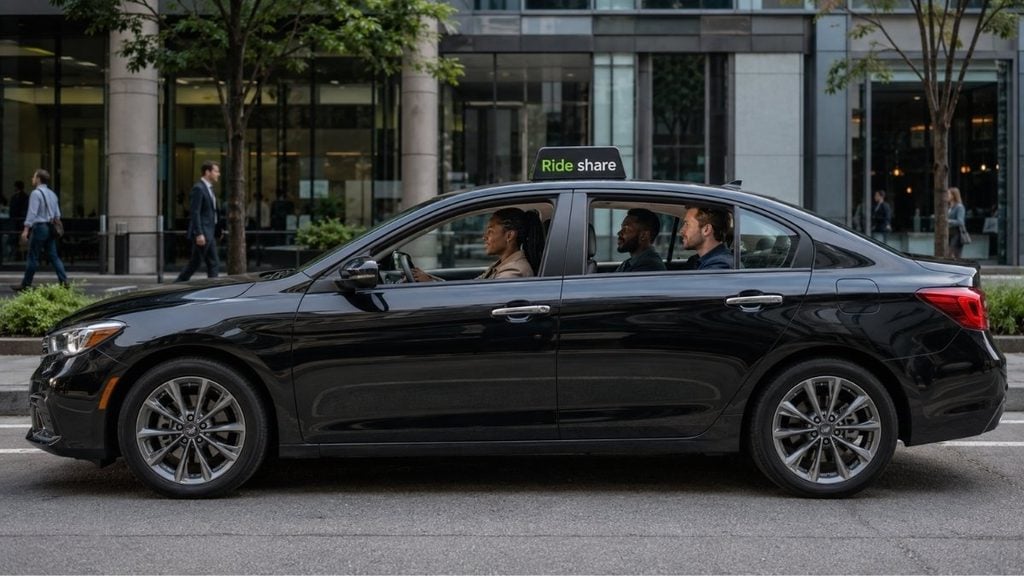
If you’d prefer not to drive and only occasionally need to travel by car, using rideshare apps can get you where public transportation and cycling can’t. But it’s important to do the math: if you’re taking 2–3 rideshare trips per week averaging $20 each, that’s $160–$240 per month, which is still significantly less than car ownership.
But the math breaks down if rideshare becomes a daily habit. Suddenly, the initial cost savings are replaced by expensive rideshare trips (particularly if you’re traveling at peak times when surge pricing is at its highest).
How to handle the times you do need a car
Even the most committed car-free remote worker will occasionally need a vehicle, and for nearly every one of these situations, Turo is the smartest way to get one.
- Weekend trips and road trips: Rent a car through Turo for exactly as long as you need. Browse vehicles in your area, book for the weekend, and return it when you’re back. Plus, there are hundreds of unique car makes and models to choose from, making it easy to tailor your car to your itinerary.
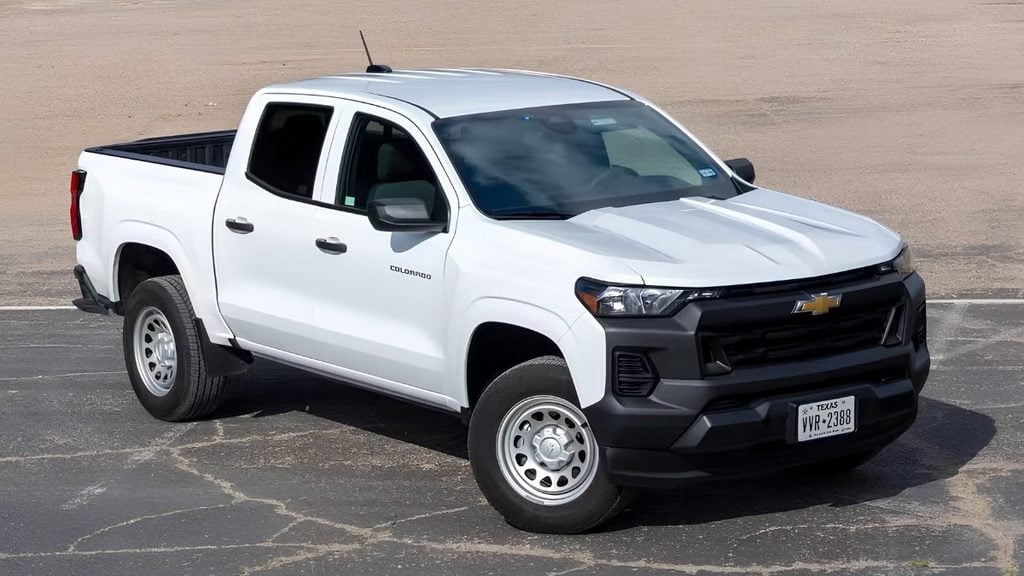
- Large purchases or furniture: Many furniture stores and marketplaces offer delivery. For when you need to move something large, Turo allows you to rent pickup trucks and larger vehicles for a day or two; allowing you to use a truck, rather than having to own one full-time for occasional hauling needs.
- Visiting family or traveling longer distances: Fly and rent a car at the destination, or rent locally for a longer multi-day booking through Turo. Plus, many listings come with discounts for longer bookings of one month or more (perfect for extended vacations or long-distance family visits).
- Emergencies: A rideshare or taxi covers most emergencies. Building a small emergency transportation fund (equivalent to one or two months of saved car costs) provides a cushion for unexpected needs.
- Short local errands: Public transportation, cycling, or walking cover most of these occasions. Plus, a cargo bike or e-bike significantly expands what’s manageable without a car, including groceries and moderately bulky purchases.
How Turo works for remote workers
Renting a car on Turo is the most flexible alternative to car ownership for remote workers. Here’s why:
- Flexibility without commitment: Cars on Turo can be rented for a single day or even several months, with no monthly payments, no insurance policy to maintain, no depreciation, and no registration fees. Remote workers pay for a car only when they need one.
- Vehicle variety for different needs: One of the real advantages of Turo for remote workers is access to the right vehicle for each specific trip. That could mean a fuel-efficient compact for a weekend getaway, a pickup truck for a furniture haul, or a spacious SUV for a road trip with friends. With Turo, you’re not limited to a single leased car or whatever you already own.
- Custom delivery options: Many listings offer delivery to home addresses, which means a car can come to you rather than you needing to figure out how to get to a pickup location. For remote workers who’ve gone car-free and need a vehicle delivered to their apartment for a weekend, this is a particularly useful feature.
Tips for going car-light or car-free as a remote worker
Going car-free (or ditching car ownership) is easier with a plan. With Turo, you can enjoy all the perks of car ownership without the high fixed costs and overheads, while still using other modes of transportation when convenient. Here are a few ways to make the transition even smoother:
- Test it before committing: Before selling your car or letting a lease expire, experiment for a month with not using the car unless absolutely necessary. This reveals whether there’s a car dependency or if renting might be a better fit.
- Move the financial logic to savings: If you eliminate a $500/month car payment and $150/month insurance premium, that’s $650/month that can go toward savings, experiences, or a transportation fund for rental days.
- Build a small transportation fund: Set aside the equivalent of one or two months of former car costs as a buffer for transportation needs. Knowing you have a reserve makes going car-free significantly less stressful when a need arises.
- Use Turo for planned trips, rideshare for spontaneous ones: Having a plan for both types of car needs removes the anxiety of not having a car. Turo handles anything you can see coming; rideshare handles the rest.
Frequently asked questions about remote workers and car ownership
Should remote workers own a car?
Car ownership depends entirely on where you live and how often you need a vehicle. In walkable urban areas with good public transportation, the case for car ownership is significantly weaker for remote workers without a daily commute. In suburban or rural areas where a car is essential for most daily tasks, ownership often still makes sense. The answer starts with an honest look at how many days per month you truly need a car.
How much do remote workers save by not owning a car?
The average American spends over $12,000 per year on car ownership, including loan payments, insurance, gas, maintenance, and depreciation. Remote workers who eliminate or reduce their driving significantly often qualify for lower insurance premiums as well. For those who go car-free entirely, the savings typically range from $800–$1,200 per month depending on their vehicle and location, offset by the cost of alternatives on the days they need transportation.
Does working from home reduce car insurance costs?
It can. Some insurers offer low-mileage discounts for drivers who significantly reduce their annual mileage, and some offer programs that track driving behavior and reward low usage. If you’re working from home and driving significantly fewer miles than before, contact your insurance company to ask about low-mileage discounts or usage-based programs.
Can remote workers rent a car on Turo instead of owning one?
Yes. Turo’s flexible booking lengths (from a single day to several months) make it a practical alternative to ownership for remote workers with occasional or irregular vehicle needs. You can rent exactly the type of vehicle you need for each specific trip, pay only for the days you use it, and avoid the fixed costs of ownership.
What’s the best way to handle grocery shopping without a car?
Grocery delivery services handle most grocery needs without a car in areas where they’re available. For larger stock-up trips, renting a vehicle for a few hours through Turo or using rideshare options is practical. In walkable neighborhoods, a cargo bike or rolling cart covers regular grocery runs. Many car-free city residents find grocery delivery is the single most effective tool for making car-free life work day-to-day.
Go car-light and keep the freedom with Turo
Remote work has changed the transportation equation for millions of Americans. Without a daily commute, the case for full car ownership becomes a question worth asking honestly rather than assuming. For many remote workers in the right cities, pairing cycling with on-demand rentals through Turo is not only financially smart, but it’s also simpler.
When you do need a car, Turo makes it easy. Browse a wide range of vehicles, book for exactly as long as you need, and return it when you’re done. No monthly payments and no insurance policy to maintain.
Share your car, earn extra cash
Cover your car payments or earn some extra cash by sharing your car whenever you’re not using it.
Get startedHit the road
Browse thousands of cars for every occasion and budget near you, or wherever you’re going.
Browse cars
Lucinda Starr
Lucinda Starr is a travel and automotive writer with 5+ years of firsthand experience road-tripping across Australia, New Zealand, and beyond. She writes road trip guides for Turo, drawing on her experience behind the wheel to share practical insights on long-distance drives, destinations, and vehicles. Her travels have taken her across Australia’s East Coast, Victoria’s Great Ocean Road, the Northern Rivers, Byron Bay, and both islands of New Zealand. One of her most memorable journeys was an 11-day, 2,600+ km route from Auckland to Punakaiki and Queenstown. Lucinda has a particular passion for classic, rugged 4WD vehicles and the freedom they bring to exploring new places.